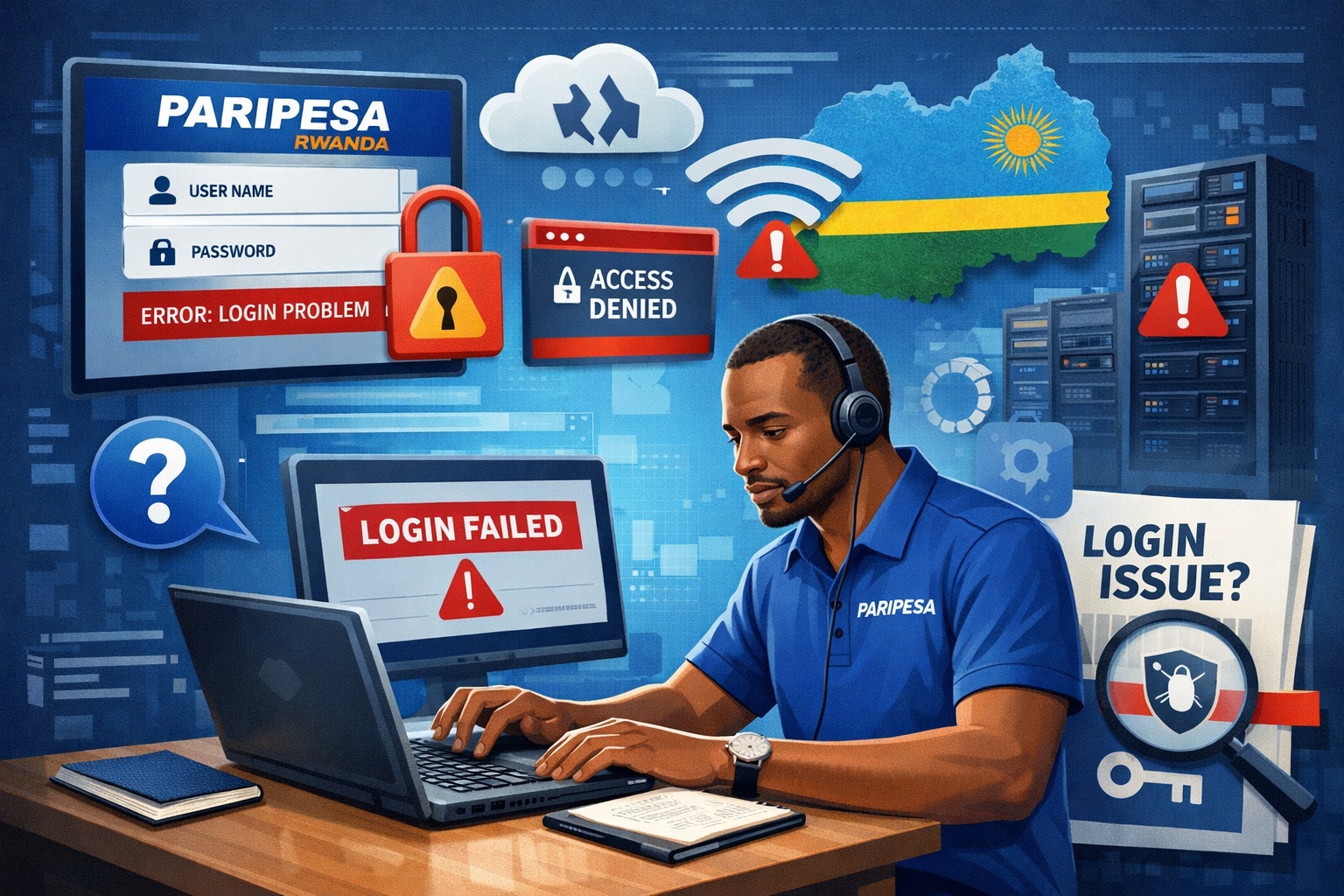
The functional reliability of an online entertainment architecture relies entirely on the efficiency of its authentication gateways. When thousands of sports enthusiasts and interactive gamers in Rwanda attempt to access their user profiles simultaneously during high-traffic weekend fixtures, minor localized data discrepancies can prevent successful system entry.
Technical friction on the official Paripesa login interface is typically caused by client-side browser configuration conflicts, network packet drops, or corrupted cache storage rather than central server failures. Failing to complete the validation loop prevents real-time risk mitigation and keeps users separated from their active mobile money balances.
This technical diagnostic guide details the structural causes of common account access errors and outlines explicit engineering workflows to restore connection stability and complete secure password recoveries.
Resolving localized cache corruption and data rendering conflicts
A localized storage cache is a dedicated data repository within a smartphone or desktop web browser designed to keep copies of static web page assets, script modules, and graphical banners to accelerate loading speeds.
Over time, when developers push system updates to the core platform, old cached assets conflict with new server scripts. This structural imbalance often results in frozen access buttons, non-responsive form fields, or blank authorization windows.
To systematically eliminate browser-side script conflicts on a mobile smartphone, users must flush their temporary internet storage. Navigate directly to your mobile web browser configuration menu, select the internal privacy or history submenu, and choose the option to clear cookies and cached images. For an absolute system clean, select the advanced time range toggle and set it to clear all historical files.
Once the storage reset is completed, close the application, cycle your internet connection, and reload the authentication sub-page. This forces the mobile browser to retrieve an uncorrupted, up-to-date copy of the cryptographic script files directly from the central database. This simple local reset bypasses structural rendering blocks and resolves approximately 80% of perceived connection errors.
Recovering credentials via integrated mobile money verification nodes
A credential recovery pipeline is an automated identity validation sequence engineered to reset an account passcode without manual administrative support. Forgetting an alphanumeric security phrase is a common operational issue, but the system incorporates direct integration with regional telecommunications databases to complete secure, immediate profile restorations via cellular SMS tokens.
- Step 1: Access the authentic platform interface and select the text link labeled forgot your password located inside the primary data input block.
- Step 2: Select your preferred verification delivery protocol: either by registered electronic mail or by mobile phone link.
- Step 3: Input the active Rwandan mobile number (MTN MoMo or Airtel Money line) linked structurally to the profile database during your initial onboarding session.
- Step 4: Execute the submission button to prompt the central database server to transmit a unique, time-sensitive verification code via SMS.
- Step 5: Enter the received numeric token into the browser interface within the designated sixty-second validation window to open the secure passcode reassignment field.
The new security password must be constructed using at least eight alphanumeric characters, combining uppercase designations, lowercase characters, and numerical elements. Avoid using elements of your legal name or birthdate to insulate the account profile against basic social engineering or password-guessing software tools.
Troubleshooting matrix for common authentication errors
| Visual Error Notification | Structural Technical Cause | Immediate Corrective Workflow Action |
| Incorrect Username or Password | Input data mismatch or character case sensitivity error | Verify character case and spaces; run the automated SMS recovery loop |
| Connection Timeout / Server Busy | Local network packet loss or cellular routing saturation | Toggle mobile device airplane mode or switch from 4G to a Wi-Fi network |
| Captcha Verification Failed | JavaScript rendering block or expired session cookie token | Refresh the browser tab to load a fresh image seed or clear active cookies |
| Account Temporarily Restricted | Security freeze triggered by consecutive failed entry attempts | Wait fifteen minutes for automatic security release or contact document verification |
Bypassing regional cellular routing bottlenecks and network latency
Network latency is the precise temporal measurement of data packet transmission delays between a user’s mobile device browser and the central cloud database infrastructure. During high-density athletic events, local cellular cell towers managed by regional carriers can experience routing saturation, resulting in substantial packet loss that drops secure login requests mid-transit.
If the verification panel loads slowly or displays recurrent gateway timeout alerts, the issue is typically rooted in your immediate cellular data routing line. Users can force their smartphone to re-establish a cleaner network path by toggling airplane mode on for ten seconds and then turning it off. This action drops the stagnant carrier cell tower link and forces a fresh connection to the nearest network hardware node.

Furthermore, switching the device from local mobile networks to a private wireless internet connection (Wi-Fi) often reduces structural ping times. If you rely on mobile data, ensure that your data allowance is not exhausted, as many regional telecommunications providers automatically throttle data speeds to unviable baselines once data caps are crossed. This speed reduction prevents the execution of encrypted security scripts.
Conclusion
Encountering a system block on the Paripesa Rwanda login page is an addressable technical issue that users can quickly fix using systematic troubleshooting workflows. Most entry errors are easily resolved by clearing device caches, correcting minor text input mistakes, or using the integrated mobile recovery node. By taking control of local connection metrics and maintaining highly secure, unique alphanumeric passcodes, Rwandan players can guarantee that their balances in Rwandan Francs remain completely safe, accessible, and ready for use.
FAQ
Why does the login interface freeze when I press the submit button?
A frozen interface button indicates that an active script conflict exists between old cached browser data and updated server files, which users can fix by clearing browser cookies and history.
Can I retrieve my unique account user ID number if I have lost it?
Yes, you can retrieve your unique ID number by selecting the recovery panel and entering your linked MTN or Airtel mobile phone number to receive your profile details via a secure text notification.
How many failed entry attempts will trigger a temporary account lock?
The automated security firewall will implement a temporary profile lock after five consecutive failed password entries to protect the wallet balance from unauthorized brute-force entry attempts.
Select the topic option for the next setup (choose a number):
- How Paripesa Rwanda Integrates with MTN MoMo and Airtel Money for Instant Payouts (Financial focus: analysis of transaction processing speeds, mobile limits, and wallet security).
- The Mechanics of Live In-Play Betting on Paripesa Rwanda (Gaming focus: live odds adjustments, dynamic cash-out scripts, and real-time statistics dashboard).
- Downloading and Configuring the Paripesa Android APK in Rwanda (Technical focus: step-by-step native app installation, overriding platform blockades, and data compression).
If you would like your article/opinion to be published on Uganda’s most authoritative news platform, send your submission on: [email protected]. You can also follow DailyExpress on WhatsApp and on Twitter (X) for realtime updates.