
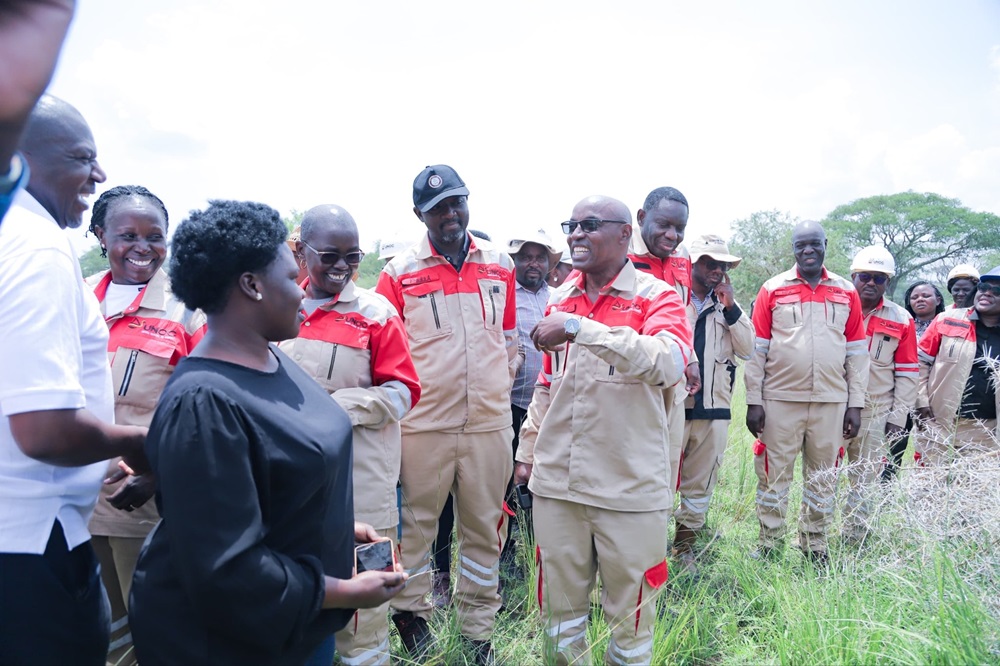
Buliisa, Uganda: The Chief Justice of Uganda, Justice Dr. Flavian Zeija, has announced that the Judiciary will establish a specialised Environment and Infrastructure Division to strengthen its capacity to handle disputes arising from Uganda’s growing infrastructure, extractive industries and oil and gas sector.
The announcement was made on Thursday as the Judiciary concluded a four-day field study visit to Uganda’s oil and gas region in the Albertine Graben, an initiative aimed at equipping judicial officers with practical knowledge ahead of the country’s anticipated first oil production.
The excursion was organised by the Judicial Training Institute (JTI) in partnership with the Bank of Uganda (BoU), the Uganda Revenue Authority (URA), the Petroleum Authority of Uganda (PAU) and the Uganda National Oil Company (UNOC).
Speaking at the closing ceremony, Justice Zeija said judicial officers must possess a practical understanding of the petroleum sector to fairly, efficiently and competently determine disputes that may arise as Uganda’s oil industry expands.
“It is important that, as judges, we understand the sector. If a dispute arises, how do you adjudicate it when you don’t even know it? There is nothing as good as adjudicating in an area you understand well,” Justice Zeija said.

He said the proposed specialised division will position the Judiciary to effectively manage the increasing number of cases expected from major infrastructure projects, environmental matters and the country’s extractive industries.
Justice Zeija emphasised that while the Judiciary remains independent, it also has a responsibility to support national development by ensuring timely and informed administration of justice.
“As the Judiciary, we must have a development mindset. We are training judges to ensure they appreciate these projects and determine disputes in a manner that promotes justice while supporting the country’s development,” he said.
The Chief Justice added that the Judiciary would continue collaborating with institutions in Uganda’s petroleum sector to strengthen the capacity of judges and judicial officers before commercial oil production begins.
As part of the study visit, the delegation toured the Tilenga Project after receiving a technical briefing at TotalEnergies EP Uganda’s offices in Buliisa District.
The project comprises six production fields, Jobi-Rii, Ngiri, Gunya, Kasamene-Wahrindi, Kigogole and Nsoga, with 34 well pads and about 420 production wells.
Officials informed the delegation that Tilenga is Uganda’s largest upstream oil development project, spanning parts of Murchison Falls National Park and the districts of Buliisa and Nwoya.

Jobi-Rii field, the largest production area within the project, derives its name from the Acholi (Luo) words Jobi (buffalo) and Rii (giraffe), reflecting the wildlife found within Murchison Falls National Park.
The Tilenga Project is expected to produce up to 190,000 barrels of oil per day at peak production and has attracted an estimated US$6 billion in investment, making it one of Uganda’s largest strategic infrastructure projects.
The judicial delegation also toured the 302-hectare Tilenga Industrial Area, which houses the Contractor Support Base, Central Processing Facility, Drilling Support Base, solar power plant and Construction Camp Area supporting petroleum operations.
At the rehabilitated Jobi-Rii 2 (JBR2) exploration well, Justice Zeija praised the restoration works undertaken after exploration activities. “Other than the monument, you cannot tell there was ever exploration here. This demonstrates a high level of compliance with environmental restoration requirements,” he said.
He also expressed satisfaction with the environmental safeguards implemented across the project, saying wildlife conservation and ecosystem restoration had been integrated into petroleum development.
“The developers are sensitive to environmental protection and appear to be complying with the required standards. We have also been assured that the safety systems in place can detect any leakages or spillages at an early stage,” Justice Zeija noted.
The Chief Justice said such practical engagements enable judicial officers to better appreciate the technical, environmental and commercial aspects of Uganda’s petroleum industry, ensuring future disputes are resolved based on informed judicial decision-making.
If you would like your article/opinion to be published on Uganda’s most authoritative news platform, send your submission on: [email protected]. You can also follow DailyExpress on WhatsApp and on Twitter (X) for realtime updates.