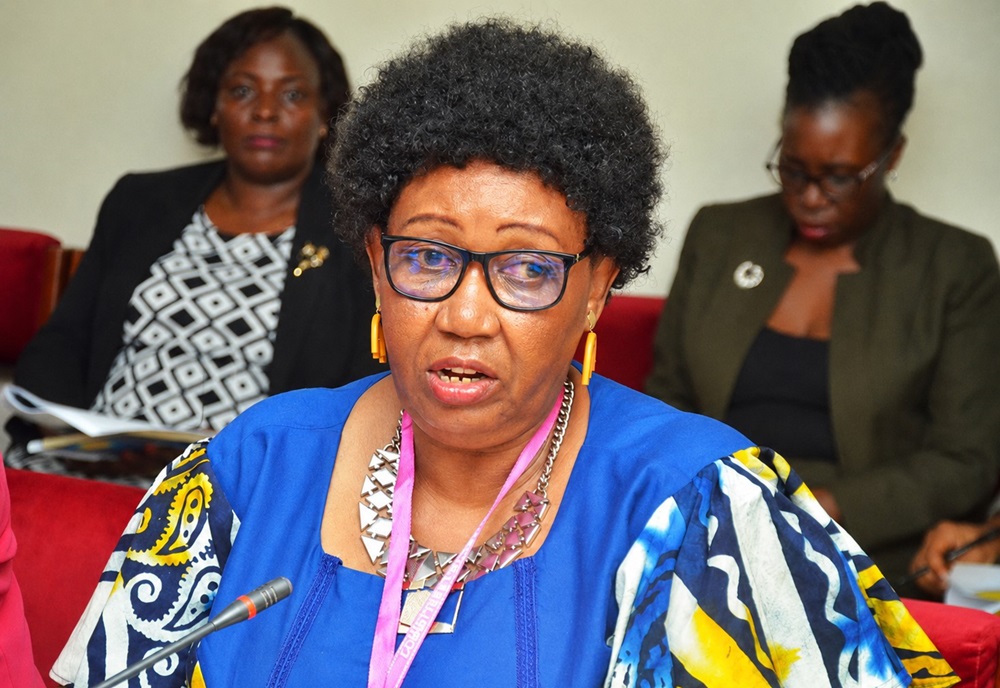
The Uganda Human Rights Commission has come under scrutiny over delays in investigating human rights complaints, inspecting detention facilities and disposing of tribunal cases, with Parliament questioning whether increased government funding is translating into improved service delivery.
The Public Accounts Committee on Commissions, Statutory Authorities and State Enterprises (COSASE) has raised concerns over the performance of the Uganda Human Rights Commission (UHRC), citing gaps in the execution of its mandate despite a substantial increase in public funding.
Presenting the committee’s report on the Auditor General’s audit of UHRC’s financial statements for the year ended December 31, 2025, COSASE chairperson Muwada Nkunyingi said the commission had fallen short in several areas, including financial management, procurement, asset management and implementation of its strategic plan.
The report was presented during a plenary sitting chaired by Speaker of Parliament Jacob Markson Oboth on Thursday, October 15, 2026.
According to the committee, UHRC received Shs28.95 billion in the 2024/2025 financial year, up from Shs18.34 billion in the preceding year. Of the total, Shs28.87 billion was released from the Consolidated Fund, while Shs88 million was generated from non-tax revenue.
However, the increase in funding has not translated into commensurate progress in the commission’s core responsibilities, particularly the investigation and resolution of complaints and the protection of people held in detention facilities.
“The inability to conclude tribunal cases, undermined access to justice during the just concluded strategic plan period of FY 2020/21–FY 2024/25,” the report states.

An assessment of 22 targets under the commission’s 2020/2021–2024/2025 strategic plan showed that 13 were fully achieved, while nine were only partially implemented.
The commission inspected 1,054 detention facilities against a target of 1,350, leaving 296 facilities without inspection during the period under review.
The committee further found that 19 per cent of registered complaints remained uninvestigated. UHRC concluded only 50 complaints through its tribunal against a target of 250, while 49 cases were mediated against a target of 400.
The figures have raised questions about the commission’s capacity to deliver timely remedies to victims of human rights violations, particularly as delays in investigations and tribunal proceedings risk prolonging the suffering of complainants seeking redress.
COSASE attributed the shortfalls partly to inadequate funding, delayed recruitment and weaknesses in the allocation of available resources. It urged the commission to prioritise expenditure on activities directly connected to its constitutional mandate.
The committee also called for compliance with the Treasury Instructions, 2017, which cap employee compensation at 65 per cent of recurrent expenditure, warning against resource allocation that could constrain the implementation of essential programmes.
Procurement and asset management concerns
The committee also questioned the commission’s failure to complete head-office partitioning works valued at Shs70.4 million.
According to the report, the money was redirected towards the purchase of office furniture after plans emerged to relocate the commission to the Justice, Law and Order Sector (JLOS) House in Naguru.
However, the committee said supporting evidence confirming the purchases had not been provided, raising accountability concerns over the expenditure.

It recommended that the funds be accounted for and called for appropriate action by the Inspectorate of Government and the Directorate of Public Prosecutions in relation to the matter.
The report further highlighted inconsistencies in the commission’s asset records, as well as concerns over the management of its vehicle fleet and land holdings.
Twenty vehicles valued at Shs2.484 billion had exceeded their five-year useful life, according to the committee, which also flagged underutilised land among the commission’s asset management challenges.
The findings raise questions about the commission’s stewardship of public resources at a time when it faces pressure to improve its performance in investigating complaints, monitoring detention conditions and resolving disputes through its tribunal.
Internal conflicts blamed for operational weaknesses
Beyond financial and administrative shortcomings, COSASE identified persistent conflicts among commission members and staff as another factor undermining UHRC’s operations.
The committee recommended legal reforms to address the challenges and called for action against public officers implicated in persistent conflicts that affect institutional performance.
The concerns come as the commission is expected to play a central role in promoting and protecting human rights, investigating alleged violations and providing avenues for victims to seek redress.
Parliament has yet to debate the findings and recommendations, with consideration of the COSASE report deferred to a later sitting.
The outcome of that debate is expected to determine the next steps on the committee’s recommendations, including accountability for questioned expenditure and measures to address delays in the commission’s core functions.
If you would like your article/opinion to be published on Uganda’s most authoritative news platform, send your submission on: [email protected]. You can also follow DailyExpress on WhatsApp and on Twitter (X) for realtime updates.