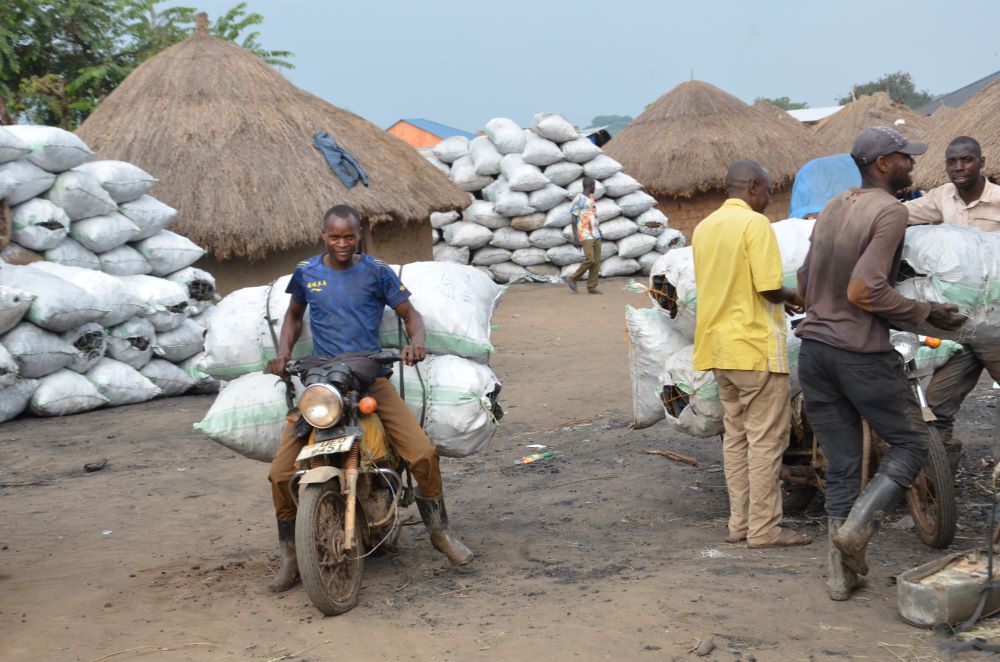
The opposition Forum for Democratic Change (FDC) has urged government to abandon punitive enforcement of restrictions on commercial charcoal trade and instead develop a phased transition plan that protects livelihoods while addressing environmental degradation.
The party says the suspension of the ban by Parliament presents an opportunity for government to engage charcoal traders, local leaders and affected communities before introducing alternative measures.
Speaking during a press briefing at the party headquarters in Najjanankumbi, Kampala, on Monday, FDC vice chairperson Robert Franco Centenary said the government should prioritise consultation and affordable alternatives to charcoal rather than rely on force to enforce its environmental policy.
“If clean energy is the ultimate goal, government must genuinely subsidize electricity tariffs for cooking and bring the cost of gas refills down to a level that low-income earners can afford,” Mr Centenary said.
He argued that many households and small-scale traders depend on charcoal for their livelihoods because cleaner cooking alternatives remain beyond their financial reach.
The commercial charcoal restrictions, driven primarily by Presidential Executive Order No. 3 of 2023, triggered public outcry over their economic impact, particularly on traders and communities that depend on the charcoal value chain.
Parliament subsequently suspended the ban, prompting renewed calls for government to reconsider its approach to forest conservation and the regulation of charcoal production and trade.

Mr Centenary said enforcement measures that involve burning trucks, harassing traders and deploying security personnel against charcoal dealers risk deepening poverty without addressing the underlying causes of deforestation.
“Government must immediately stop the burning of trucks, harassment of traders, and militarized enforcement that is impoverishing citizens,” he said.
The FDC official also accused government of focusing disproportionately on informal charcoal traders while failing to adequately address corruption, unregulated commercial logging and the economic pressures driving communities to depend on forest resources.
He called for stronger action against those responsible for illegal logging and other activities contributing to the depletion of Uganda’s forest cover.
The party proposed a nationwide reforestation campaign as an alternative way of strengthening environmental protection. Under the proposal, the National Forestry Authority (NFA) would distribute free tree seedlings to citizens during monthly community service days to encourage mass planting and restoration of degraded forests.
Mr Centenary said the parliamentary suspension should be used to formulate a practical environmental policy that balances conservation with the economic realities facing ordinary Ugandans.
He cautioned that environmental protection measures should not disproportionately burden low-income households while more affordable and sustainable alternatives remain inaccessible.
Beyond the charcoal dispute, the FDC called for government intervention to cushion vulnerable households against rising costs of food, transport, fuel and other essential commodities.

The party urged investment in domestic agriculture, agro-processing and manufacturing to strengthen local production, reduce dependence on imports and support the stability of the shilling.
While acknowledging recent interventions by the Bank of Uganda to manage foreign exchange market pressures and stabilise the local currency, Mr Centenary argued that monetary measures alone would not provide lasting relief without broader economic reforms.
The party said expanding local production and making essential goods more affordable would be necessary to improve household welfare and reduce the pressure on citizens already struggling with the cost of living.
The charcoal debate comes against the backdrop of Uganda’s continued dependence on biomass for cooking. Figures cited from the Uganda Bureau of Statistics indicate that between 87 and 94 per cent of households rely on biomass energy, mainly charcoal and firewood, while approximately 80 per cent of Kampala residents depend specifically on charcoal.
The figures underscore the challenge facing policymakers as they seek to curb deforestation without disrupting access to an energy source on which millions of households and businesses depend.
For the FDC, a sustainable solution requires government to combine forest restoration and stronger action against illegal logging with affordable clean cooking alternatives, meaningful consultation and protection for livelihoods.
The government’s next steps following Parliament’s suspension of the commercial charcoal ban will be critical in determining how environmental conservation measures are implemented while accounting for their economic consequences.
If you would like your article/opinion to be published on Uganda’s most authoritative news platform, send your submission on: [email protected]. You can also follow DailyExpress on WhatsApp and on Twitter (X) for realtime updates.