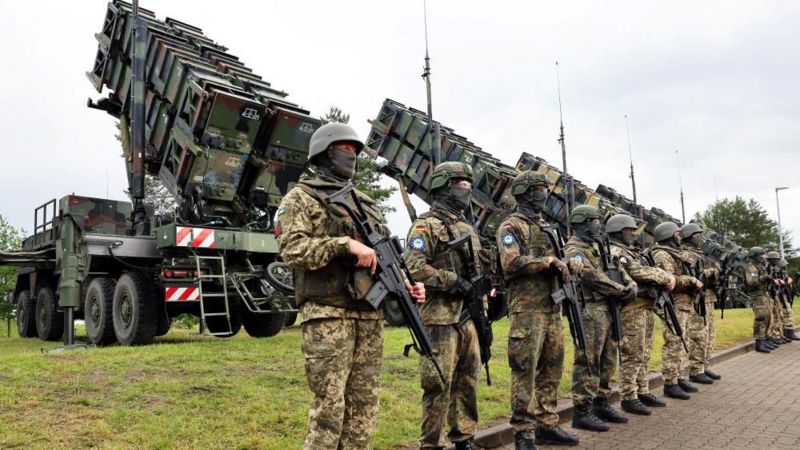
In Summary: The United States has approved a proposed $2.1 billion sale of 500 advanced Patriot PAC-3 interceptor missiles to Ukraine, with Canada, Germany, Norway and European Union-backed financing expected to cover the cost. However, President Volodymyr Zelensky has warned that the urgently needed weapons could take several years to arrive.
Washington, USA — The United States has approved a proposed sale of 500 advanced Patriot air defence interceptor missiles to Ukraine at an estimated cost of $2.1 billion, in a move aimed at strengthening Kyiv’s ability to defend against escalating Russian missile attacks.
The US State Department announced the approval on Friday, October 30, 2026, saying the proposed Foreign Military Sale would include Patriot Advanced Capability-3 Missile Segment Enhancement (PAC-3 MSE) interceptors, spare parts, logistical support and other programme assistance.
However, the approval does not mean the missiles will be delivered immediately. Ukrainian President Volodymyr Zelensky has warned that the delivery timeline could stretch to several years, despite Ukraine’s urgent need for additional interceptors to defend its cities and critical infrastructure.
In a statement, the State Department said the proposed sale would support US foreign policy and national security objectives by improving the security of Ukraine, which it described as a partner contributing to political and economic stability in Europe.
The department said the purchase would be funded entirely by Ukraine’s international partners, with no American government funds involved.
Ukraine will finance the acquisition through contributions from Canada, Germany and Norway under the US JUMPSTART programme, alongside national funds financed through the European Union’s Ukraine Support Loan.
American defence manufacturer Lockheed Martin has been identified as the principal contractor for the proposed sale.
The package is also subject to the applicable US congressional review process, meaning the announcement represents approval of a proposed transaction rather than confirmation that the missiles are already being manufactured or dispatched.
Zelensky demands urgent deliveries
Welcoming the announcement, Zelensky said Ukraine needed the Patriot interceptors immediately, warning that the country could not afford to wait several years while Russian attacks on its territory continued.
The Ukrainian leader had earlier complained that Kyiv had waited almost a month for Washington to approve critical missile supplies as Russia intensified attacks on energy infrastructure and other strategic facilities ahead of winter.
In a statement posted on X on Friday, Zelensky said Russia had carried out more than 30 strikes against critical components of Ukraine’s power grid over the preceding two weeks.
He has repeatedly urged Washington and its allies to accelerate deliveries, arguing that the interceptors are essential for countering Russian ballistic missiles.
Ukraine has also faced shortages of the advanced ammunition amid competing international demands and increased consumption of air defence weapons in other conflicts.
The PAC-3 MSE missiles are designed to intercept incoming ballistic and other aerial threats, making them particularly important to Ukraine’s efforts to protect major population centres and strategic infrastructure.
US-Ukraine tensions and wider diplomatic developments
The latest approval comes amid a period of strained relations between Zelensky and US President Donald Trump, following disagreements over Washington’s approach to Russia and the pace of military assistance to Kyiv.

The tensions intensified after the United States eased certain sanctions on Russia as part of arrangements to secure Russian diesel supplies, drawing criticism from Ukrainian officials.
Trump also questioned Zelensky’s leadership and said Ukraine needed a new leader to negotiate an agreement to end the war.
Relations subsequently showed signs of easing after Zelensky held discussions with US envoys in Oslo on October 20.
Meanwhile, diplomatic tensions over Russia’s invasion of Ukraine were also visible at the G20 foreign ministers’ meeting hosted in Atlanta by US Secretary of State Marco Rubio.
Several European diplomats reportedly declined to stand for an official group photograph alongside Russian Foreign Minister Sergei Lavrov, in protest against Moscow’s continued military campaign.
British Foreign Secretary Ed Miliband directly challenged Lavrov over Russia’s role in the conflict, accusing Moscow of killing innocent civilians in Ukraine.
Russia launched its full-scale invasion of Ukraine in February 2022, following its 2014 annexation of Crimea and military involvement in parts of eastern Ukraine.
The approval of the Patriot missile sale therefore represents another significant development in international efforts to strengthen Ukraine’s air defences, although the delivery timeline remains a major concern for Kyiv.
If you would like your article/opinion to be published on Uganda’s most authoritative news platform, send your submission on: [email protected]. You can also follow DailyExpress on WhatsApp and on Twitter (X) for realtime updates.