
In Summary: District leaders in Apac have raised concerns over excessive agricultural chemical use, allegations of chemical preservation of tomatoes by market traders and the rising cost of seeds and fertilisers, calling for stronger sensitisation, monitoring and accountability to protect farmers and consumers.
Apac, Uganda — Concerns over the excessive use of agricultural chemicals in Apac District have sparked fresh debate about food safety, farming practices and the rising cost of agricultural inputs, with local leaders warning that consumers could face health risks if the situation is not urgently addressed.
The concerns were raised during a stakeholders’ meeting at Apac District Council Hall on Friday, November 6, 2026, where district leaders called for greater responsibility in the application, handling and monitoring of agricultural chemicals.
Apac District Local Council V Vice Chairperson and Leader of Government Business, Charles Hilton Ogang, said the increasing reliance on agrochemicals to control weeds, pests and crop diseases had reached worrying levels.
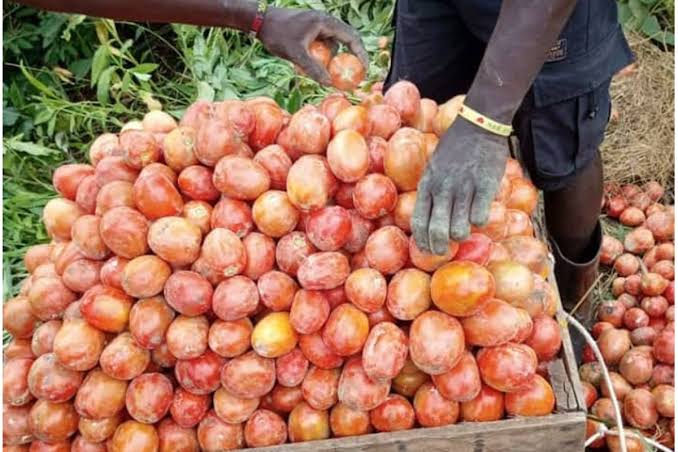
He expressed particular concern about tomatoes appearing on the local market, some of which he said had developed numerous spots, raising questions about the chemicals used during production and handling.
“The amount of chemicals being used on crops and soils is alarming,” Ogang warned, urging farmers to reconsider their dependence on chemical products. “There is need to reduce the use of agrochemicals in controlling weeds, pests and diseases on crops because the levels are now very high,” he said.
His concerns have brought into focus the safety of agricultural produce sold in local markets, particularly tomatoes, which are widely consumed by households across the district.
However, visible spots on tomatoes alone cannot establish whether the produce contains harmful chemical residues. Such a determination requires appropriate laboratory testing to establish whether pesticide residues are present and whether they exceed accepted safety limits.
The concerns nevertheless raise questions about the monitoring of agricultural chemicals and the safety measures in place before produce reaches consumers.
Farmers warned against indiscriminate chemical application
The Acting Apac District Production Officer, Betty Jokene, said the production department was conducting sensitisation programmes to educate farmers on the proper application of agricultural chemicals.
She said the initiative was intended to ensure farmers understood the appropriate methods of using chemicals to control weeds, pests and diseases without exposing themselves, consumers and the environment to unnecessary risks. “We are sensitizing farmers on the best way to use chemicals when weeding their crops and controlling diseases that may affect their production,” Jokene said.
However, the challenge facing the district appears to go beyond sensitisation. For many farmers, agricultural chemicals have become an important part of crop production, particularly where pest infestations, weeds and diseases threaten yields.
Improper dosage, poor handling, failure to observe recommended pre-harvest intervals and the use of inappropriate or unapproved products can expose farmers, consumers and the environment to potential harm.
The district production department therefore faces the challenge of ensuring that sensitisation reaches farmers at grassroots level and translates into safer practices in the fields. There are also questions about whether farmers have adequate access to agricultural extension workers who can guide them on approved products, application rates and safer alternatives.
Chemicals used to preserve produce
In a further development that widened the food safety debate, Apac Municipal Production Officer Anna Grace Akite raised concerns about the alleged use of chemicals by some women selling tomatoes in Apac Main Market.
Akite accused some traders of using excessive chemicals to preserve their tomatoes and maintain their appearance for sale the following day. She warned that the alleged practice could expose consumers to health risks, particularly if substances not approved for food preservation were being used.
“Women selling tomatoes in Apac Main Market are killing people because of the excessive use of chemicals to preserve their tomatoes for the next day.”
Her remarks shifted attention from farmers to the post-harvest handling of agricultural produce, suggesting that food safety concerns could extend beyond the farm to the marketplace. The allegations, if established, would raise serious questions about market surveillance, consumer protection and enforcement of food safety regulations.
However, the claims require investigation and scientific evidence before any particular trader or produce can be declared unsafe.

Public health officials and market authorities need to establish what substances, if any, are being used, whether they are approved for food handling and whether tomatoes sold in the market meet the required safety standards.
The issue also highlights the economic difficulties facing small-scale traders, who often suffer losses when perishable produce remains unsold overnight. However, efforts to preserve business stocks should not compromise consumer safety.
Agro-input dealers face scrutiny over high prices
Beyond the chemical safety concerns, Akite also turned her attention to agro-input dealers, accusing some suppliers of charging excessively high prices for agricultural inputs. She cited the cost of agricultural seeds and fertilisers, saying prevailing market prices were placing additional pressure on farmers.
The complaints have opened another front in the district’s agricultural debate, raising questions about whether farmers are facing unjustified pricing practices when purchasing essential production inputs.
For smallholder farmers, the cost of seeds, fertilisers, herbicides and pesticides directly affects their ability to cultivate land, manage crops and generate income. High input costs can also discourage farmers from investing in improved seeds and appropriate crop protection products, potentially affecting productivity.
Akite’s concerns have therefore placed agro-input dealers under scrutiny, with the business community expected to explain the factors influencing prices in the local market.
Chamber of Commerce drawn into pricing debate
The Chairperson of Apac District Chamber of Commerce, Denis Obete, was drawn into the discussion following concerns that agro-input dealers were selling seeds and fertilisers at excessively high prices.
The business community’s position is important because agro-input dealers operate within a supply chain affected by procurement costs, transportation, distribution expenses, taxation and currency fluctuations.
The debate presents an opportunity for district leaders and the business community to examine the actual costs of agricultural inputs, promote fair pricing and encourage transparency in the supply of essential farming products.
The concerns raised during the stakeholders’ meeting point to possible gaps in the monitoring of agricultural chemicals, food handling and the distribution of agricultural inputs in Apac.
While the district production department says it is sensitising farmers, questions remain about the effectiveness of inspections, enforcement and consumer protection mechanisms. The challenge now is to ensure that farmers receive appropriate guidance, traders observe safe food-handling practices and consumers have confidence in the produce sold in local markets.
If you would like your article/opinion to be published on Uganda’s most authoritative news platform, send your submission on: [email protected]. You can also follow DailyExpress on WhatsApp and on Twitter (X) for realtime updates.