

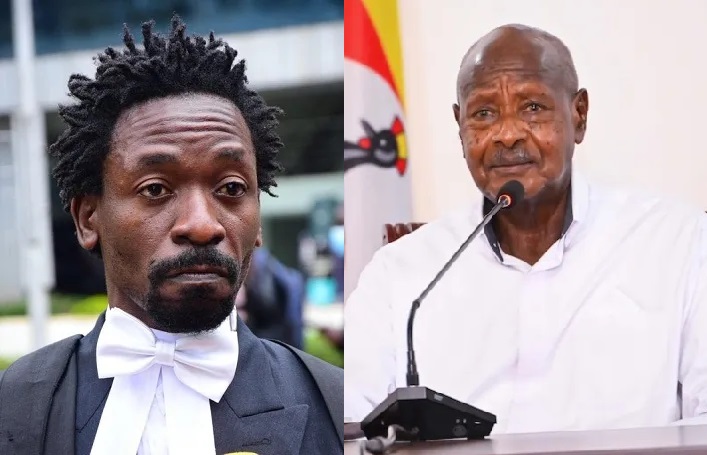
In Summary: The lawyers’ body has raised specific concerns over appointments to the Inspectorate of Government, the Public Service Commission and the Clerk to Parliament, warning that the process could undermine the independence of constitutional institutions.
Kampala, Uganda — The Uganda Law Society (ULS) has strongly challenged the legality of President Museveni’s latest public service appointments, accusing him of bypassing constitutional safeguards, undermining the independence of the Public Service Commission and interfering with institutions that are constitutionally protected from ordinary executive control.
In a statement issued on Monday, November 9, 2026, ULS President and Head of the Bar Isaac K. Ssemakadde condemned the manner in which Museveni named 13 people for appointment as Permanent Secretaries and Clerk to Parliament before directing the Public Service Commission to assess their suitability.
The self-exiled ULS Boss argues that the President’s approach reverses the constitutional appointment process by presenting the commission with candidates already selected by the Executive instead of allowing it to independently advise on the appointments. “These are not personal staff posts of the President,” Ssemakadde wrote, referring to the offices of Permanent Secretaries.
Under Article 174(2) of the Constitution, a Permanent Secretary is appointed by the President acting in accordance with the advice of the Public Service Commission.
However, ULS argues that the President’s directive to the commission to assess the suitability of the named individuals risks reducing its constitutional role to endorsing decisions already made by the Executive.
“Treating them as if they do — by headhunting names in secret and then presenting the Public Service Commission with a pre-selected list for formal endorsement — reduces the Commission to a rubber stamp,” the statement reads.
The society maintains that the process violates the independence of the Public Service Commission guaranteed under Article 166(2) of the Constitution.
Ssemakadde also argues that appointments to senior public offices should be competitive and transparent, warning that secretive selection could exclude qualified Ugandans who do not have connections to those involved in the selection process.
“These appointments must be competitive and transparent,” he wrote, adding that secretive selection followed by a directed assessment excludes qualified citizens on grounds unrelated to merit.
The lawyers’ body further cites Articles 21 and 38 of the Constitution, which provide for equality before the law and the right of citizens to participate in the affairs of government. It also refers to Uganda’s international obligations under the International Covenant on Civil and Political Rights and the African Charter on Human and Peoples’ Rights regarding equal access to public service.
Three appointments singled out
ULS has particularly questioned three of the 13 appointments, arguing that they involve institutions with specific constitutional independence safeguards and should not be treated as ordinary government ministry positions.
The first is the nomination of Maureen Kasande to head the Inspectorate of Government. The Inspectorate is established under Chapter 13 of the Constitution, with Article 227 providing that it shall be independent in the performance of its functions, shall not be subject to the direction or control of any person or authority, and shall only be responsible to Parliament.
ULS argues that placing a presidential nominee in charge of its administration through the ordinary Permanent Secretary appointment procedure risks subordinating an independent anti-corruption and accountability institution to the Executive.
“The Inspectorate is established under Chapter 13 of the Constitution as an independent constitutional body,” the statement says.
The second appointment concerns Betty Mutesa Cwinya-ai, who was named for the Public Service Commission. The commission is itself an independent constitutional body established under Articles 165 and 166.
ULS argues that directing it to assess a pre-selected nominee for its own secretary is constitutionally problematic because the commission would be involved in endorsing a candidate for its own administrative leadership. “Directing the Commission to assess a pre-selected nominee for its own Secretary under the Article 174 model is circular, improper,” Ssemakadde wrote.
The society further points to the Public Service Commission Act, which it says provides for the appointment of the commission’s secretary by the President acting in accordance with the advice of the commission itself.
The third appointment concerns Dr Edward Sengonzi Damulira, who was nominated to replace Adolf Mwesige Kasaija as Clerk to Parliament. ULS argues that Parliament is an independent arm of government and that the Clerk’s appointment must be considered under the specific constitutional provision governing that office rather than treated as an ordinary Permanent Secretary appointment.
Article 87(1) provides that the Clerk to Parliament is appointed by the President acting in accordance with the advice of the Public Service Commission, but the society also distinguishes the Clerk’s appointment from that of other parliamentary staff, who are appointed, disciplined and removed by the Parliamentary Commission under Article 87(3).
It argues that subjecting the Clerk’s appointment to what it describes as an executive-directed process risks eroding the institutional independence of Parliament and the separation of powers.
“In all three cases, the President has misapplied Article 174 to offices that are deliberately insulated from ordinary executive control,” ULS states. “This is not a technical error; it is a systemic expansion of executive dominance over independent constitutional institutions.”
ULS alleges wider executive influence
Beyond the specific appointments, the lawyers’ body argues that the latest developments form part of what it describes as a wider pattern of executive interference in independent public institutions.

Under a section titled State Capture, by shadow elites, Ssemakadde says the President’s executive authority under Article 99 must be exercised in accordance with the Constitution rather than personal discretion.
He also raises concerns about alleged informal vetting and influence by individuals outside the established constitutional appointment process.
Ssemakadde’s statement specifically names Gen Salim Saleh and Gen Muhoozi Kainerugaba, arguing that neither they nor other individuals in the President’s close circle should have a role in the appointment of Permanent Secretaries or other public officers outside the constitutional process.
The ULS President sternly warned that choosing senior accounting officers and technical heads of ministries through personal connections rather than open competition could weaken public service delivery and the management of public resources.
“When senior accounting officers and technical heads of ministries are chosen by connection rather than open competition, service delivery suffers,” Ssemakadde wrote, adding that “Public money is less likely to be spent efficiently or honestly.”
The ULS has called on the Public Service Commission to insist on open advertisement, competitive selection and genuine independent advice, arguing that it is not obliged to endorse a pre-selected list, and further urges Ugandans to use peaceful civic avenues, including petitions, peaceful assemblies and public demands for accountability, to push for transparent appointment procedures.
Society calls for withdrawal of nominations
In its final demands, ULS calls on Museveni to withdraw the nominations and follow what it considers the constitutionally prescribed appointment procedures. It also urges the Public Service Commission, Inspectorate of Government and Parliament to defend their independence.
The society has separately called on the Judiciary to expedite pending constitutional cases concerning the administrative independence of the Judiciary and the office of Permanent Secretary/Secretary to the Judiciary.
The dispute follows Museveni’s November 5 communication, in which he named 13 individuals for appointment to senior public offices and directed the Public Service Commission to assess their suitability.
The nominees include Emmanuel Freddie Mugunga for the Office of the Prime Minister; Maureen Kasande for the Inspectorate of Government; and Sheeba Kyobutungi Rujoki for the Office of the President, responsible for Science, Technology and Innovation.
Others are Kenneth Akiri for the Ministry of Water and Environment; Barbara Namugambe for the Ministry of Agriculture, Animal Industry and Fisheries; Charles Ssentongo for Foreign Affairs; and Prof. Stephen Akandwanaho for the Ministry of ICT and National Guidance.
Mark Sseremba was named for the Ministry of Public Service, while Engineer Flavia Guto Bwire was nominated for the Ministry of Works and Transport.
The other nominees are Edith Butuuro for the Ministry of Defence and Veteran Affairs, Aggrey Wunyi for the Ministry of East African Community Affairs, Betty Mutesa Cwinya-ai for the Public Service Commission and Dr Edward Sengonzi Damulira for Clerk to Parliament.
If you would like your article/opinion to be published on Uganda’s most authoritative news platform, send your submission on: [email protected]. You can also follow DailyExpress on WhatsApp and on Twitter (X) for realtime updates.


