
In Summary: The Society says Uganda’s military sacrifices in Somalia since 2007 were intended to help rebuild a country founded on democracy and the rule of law, warning that those sacrifices must not be betrayed by the erosion of the institutions they helped protect.
Kampala, Uganda — The Uganda Law Society (ULS) has condemned the unfolding constitutional crisis in Somalia, calling on President Hassan Sheikh Mohamud’s government to respect a Supreme Court ruling rejecting attempts to extend the mandates of the country’s presidency and Parliament.
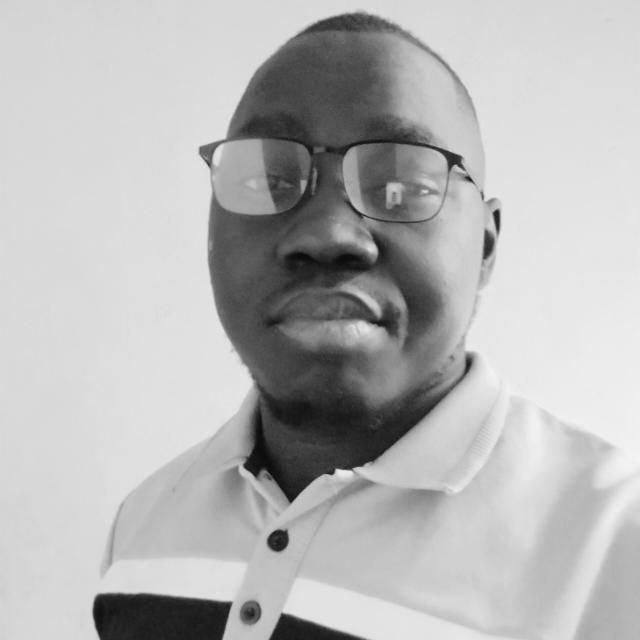
Speaking from self-exile on Tuesday, November 10, ULS President Isaac K. Ssemakadde expressed concern over what he described as an attempt to extend presidential tenure beyond the constitutionally prescribed term.
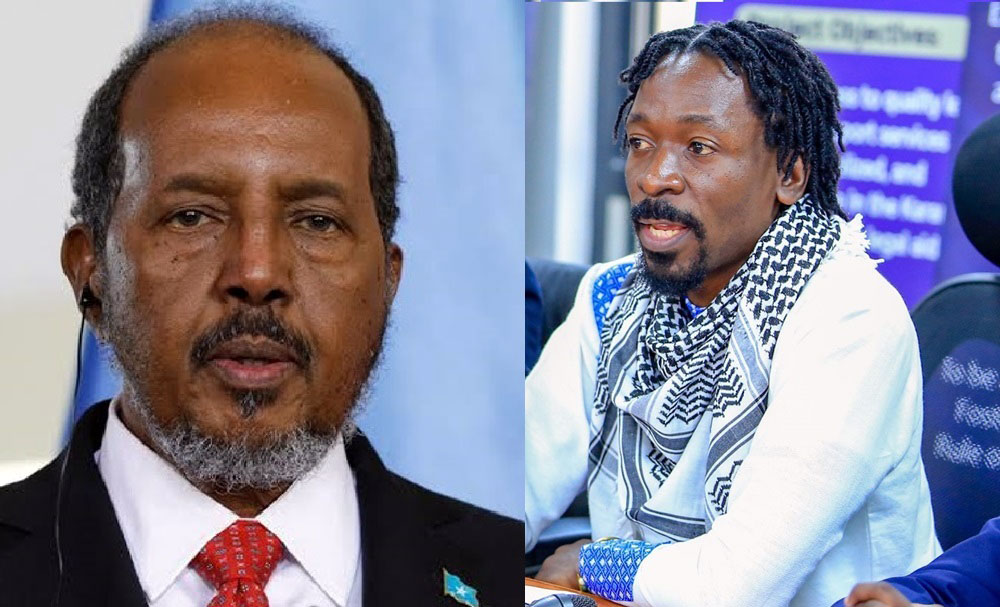
“The Uganda Law Society is deeply alarmed by the unfolding constitutional crisis in the Federal Republic of Somalia, following President Hassan Sheikh Mohamud’s attempt to extend his presidential tenure beyond the constitutionally prescribed term,” Ssemakadde wrote.
The Society’s intervention comes days after Somalia’s Supreme Court, on November 5, ruled that constitutional amendments adopted in March 2026 did not automatically extend the mandates of the incumbent President and Parliament.
The court determined that President Mohamud’s four-year term expired on May 15, 2026, while the mandates of both Houses of Parliament ended on April 14, 2026. It consequently directed political leaders to agree on an electoral framework within 30 days and conduct elections within 90 days, while limiting the government’s authority to routine administrative functions pending the elections.
The judgment rejected the President’s position that constitutional changes extending presidential and parliamentary terms from four to five years entitled the current officeholders to remain in power until 2027.
The constitutional standoff has also extended into Somalia’s judiciary, raising concerns about the independence of the country’s courts.
On November 4, President Mohamud dismissed Chief Justice Baashe Yusuf Ahmed and appointed a replacement, a move that came as the Supreme Court was handling the dispute over the extension of presidential and parliamentary mandates.
However, the Supreme Court subsequently declared the Chief Justice’s dismissal unconstitutional and null and void.
Despite the court’s decision, Mohamud proceeded to swear in the newly appointed Chief Justice on November 7, further deepening the institutional confrontation. AP News+1
The Uganda Law Society described the developments as particularly concerning given Uganda’s historical involvement in Somalia’s peace and security efforts. “These developments are particularly touching to Uganda, which has been an integral part of Somalia’s journey to peace,” the statement reads in part.
Uganda’s military sacrifices in Somalia
Uganda was the first country to deploy troops under the African Union Mission in Somalia (AMISOM) in March 2007, when it committed its soldiers to an international effort to help the war-torn country restore peace, security and stability.
The deployment marked the beginning of Uganda’s longstanding military involvement in Somalia, supporting efforts to confront Al-Shabaab militants and strengthen the country’s security institutions.
Uganda’s contribution continued through subsequent African Union-led security arrangements, including the African Union Transition Mission in Somalia (ATMIS).
In April 2023, Uganda’s Ministry of Defence reaffirmed the country’s commitment to supporting Somalia’s peace and security efforts while outlining plans for the phased withdrawal of troops serving under ATMIS.
Reflecting on the sacrifices made by Ugandan soldiers, the ULS said their mission went beyond ending armed conflict to supporting the reconstruction of Somalia around democratic governance and respect for human rights.
“These sacrifices were made not only for the absence of war, but for Somalia to rebuild a country founded on peace, dignity, democratic governance and the rule of law,” the statement reads, adding that the sacrifices “must not be betrayed by the erosion of the very institutions they helped protect.”
ULS invokes East African Community obligations
The Uganda Law Society further invoked Somalia’s obligations as a member of the East African Community (EAC), arguing that the country’s constitutional conduct should reflect the regional bloc’s commitment to democratic governance and the rule of law.
Somalia became the EAC’s eighth Partner State in 2024, expanding the regional integration bloc’s membership and strengthening its political and economic links with the Horn of Africa.
“As a member of the East African Community, Somalia is bound by Articles 6(d) and 7(2) of the Treaty for the establishment of the East African Community, which require adherence to democracy, the rule of law, accountability, good governance and the protection of human rights,” the statement further reads.
Article 6(d) identifies good governance, democracy, the rule of law, accountability, transparency and the protection of human rights as fundamental principles of the Community, while Article 7(2) requires Partner States to observe principles of good governance, including democracy, the rule of law, social justice and universally accepted human rights standards.
The Society argued that Somalia must uphold these principles by respecting judicial decisions, protecting constitutional term limits and safeguarding the independence of its judiciary.
“The Uganda Law Society therefore calls upon the Government of Somalia to respect the Supreme Court’s judgments, uphold constitutional term limits and protect judicial independence,” the statement reads.
Ssemakadde further called on “the East African Community, the African Union and the international diplomatic community to urgently engage Somalia and demand compliance with national, regional and international laws on democracy, constitutionalism and the rule of law.”
Baashe welcomes ULS Statement
Chief Justice Baashe Yusuf Ahmed welcomed the statement in a Facebook post, thanking the Uganda Law Society for supporting judicial independence during what he described as a critical moment for Somalia.

“On behalf of the Supreme Court of the Federal Republic of Somalia, I extend my profound gratitude to the Uganda Law Society for its principled statement in defence of Somalia’s Constitution, judicial independence and the rule of law,” he wrote.
He said the intervention demonstrated that constitutional principles were a shared responsibility among African countries. “At this decisive moment, your voice reminds us that constitutionalism is a shared African commitment, not a burden carried by one nation alone,” Baashe said.
The chief justice also acknowledged Uganda’s military contribution to Somalia since 2007, saying the sacrifices of Ugandan soldiers should be honored through respect for democratic institutions.
“Somalia will never forget that Uganda was the first to stand with us in 2007, and that Ugandan soldiers gave their lives so that our country could rise again,” he wrote.
He also thanked Ugandan legal professionals and Senior Counsel Abdinasir for supporting efforts to defend judicial independence.
Background to Somalia’s crisis
Somalia has struggled with political instability, weak central institutions and prolonged armed conflict since the collapse of the government of former President Mohamed Siad Barre in 1991. The country adopted a Provisional Federal Constitution in 2012 as part of efforts to rebuild state institutions and establish a federal system of governance.
For years, Somalia’s leadership selection process relied on an indirect electoral arrangement commonly known as the 4.5 formula, under which clan representatives selected lawmakers, who subsequently elected the President.
President Mohamud, who returned to office in 2022, has championed constitutional and electoral reforms aimed at introducing direct universal suffrage and strengthening democratic participation.
However, the proposed changes have generated disagreements between the Federal Government, opposition politicians and some regional administrations over the electoral process, constitutional amendments and the distribution of political authority.
In March 2026, Somalia’s Parliament approved constitutional changes extending presidential and parliamentary terms from four to five years, effectively pushing the expected elections to 2027.
The amendments were opposed by political figures who argued that the changes should not be used to extend the mandates of incumbent officeholders without an agreed constitutional basis.
The Supreme Court’s November 5 ruling has now intensified that dispute by determining that the amended term provisions did not automatically extend the mandates of those already in office.
The political standoff has also unfolded against a security backdrop, with Al-Shabaab continuing to control parts of rural Somalia and carrying out attacks in Mogadishu and other population centres.
The AssociatedPress reported that the closure of the United Nations political mission in Somalia had further complicated efforts to mediate the electoral dispute, with rival political leaders yet to agree on a replacement mediation arrangement.
If you would like your article/opinion to be published on Uganda’s most authoritative news platform, send your submission on: [email protected]. You can also follow DailyExpress on WhatsApp and on Twitter (X) for realtime updates.


