


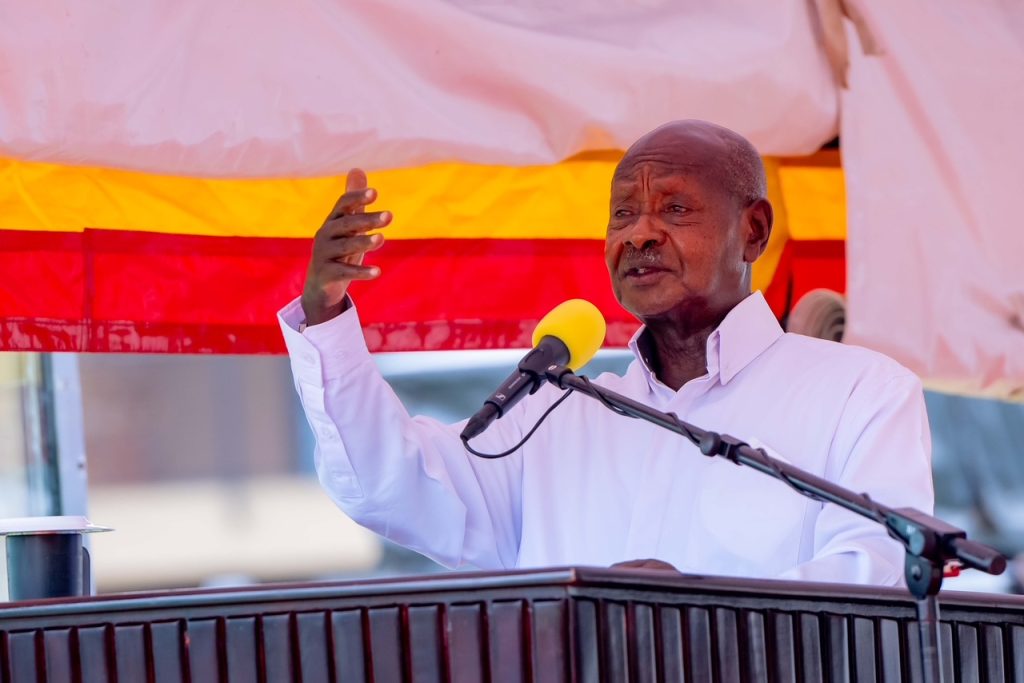
Kampala, Uganda: President Yoweri Kaguta Museveni has urged East African countries to embrace regional integration as the surest path to prosperity, security, and socio-economic transformation.
Speaking at the opening of the 1st Regional Ministerial Conference on the East African Community Common Higher Education Area (EACCHEA) at Speke Resort Munyonyo, the President outlined five key pillars of integration: prosperity, socio-economic transformation, Pan-Africanism, democracy, and strategic security.
Museveni stressed that prosperity is only possible if families, companies, and individuals produce goods or services sustainably and sell them in wider markets.
“The only way to achieve prosperity is when each family, company, or individual is involved in producing a good or a service with ekibaaro (calculation). If you do that sustainably and sell it, you will get money and solve your problems,” he said.
The Head of State further argued that integration strengthens unity, expands markets, and overcomes divisive politics of identity, while education must play a role in equipping citizens to tap into regional opportunities. He also linked Uganda’s progress as a lower-middle-income country to regional stability, warning that weak, fragmented states cannot survive global shocks.
“With all that is happening all over the world, if you are weak, you cannot survive. Apart from economic integration for the whole of Africa, where possible, there should also be political integration,” he emphasized.
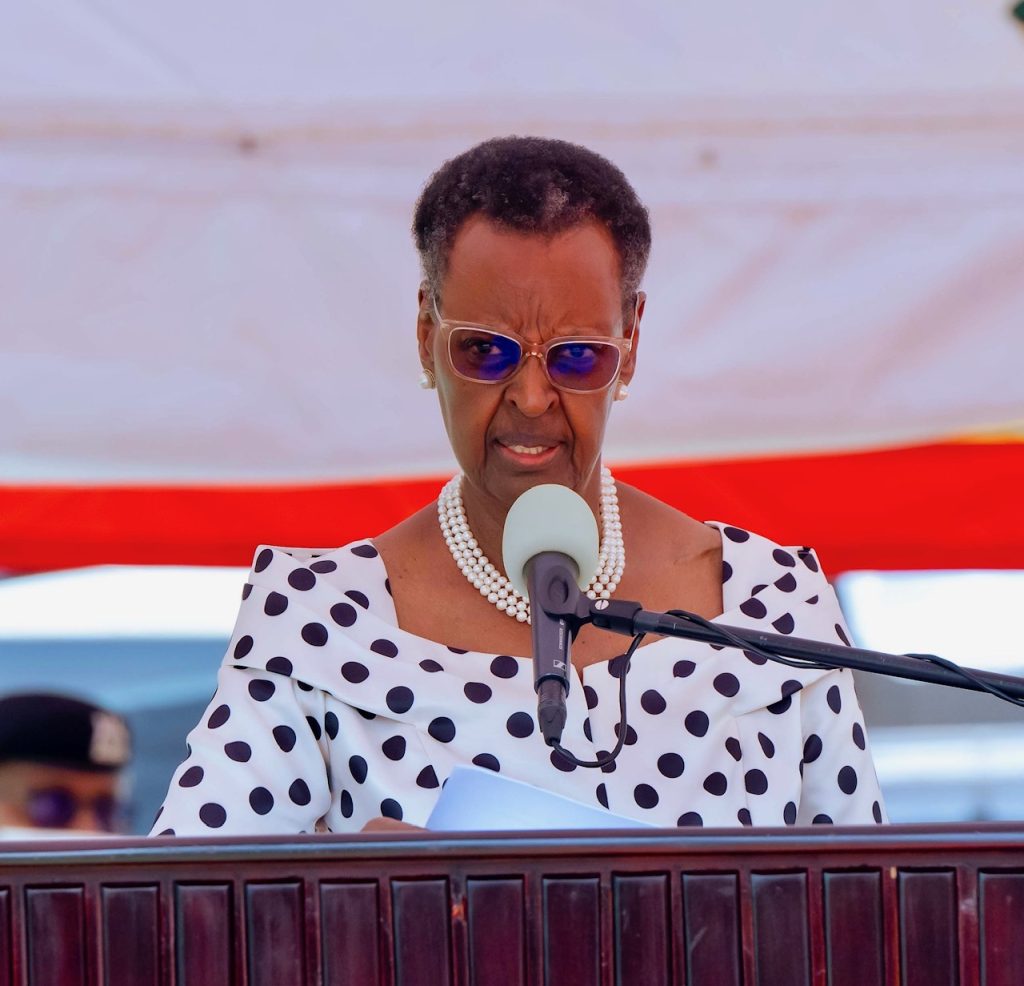
On her part, First Lady and Education Minister Maama Janet Museveni explained that the EAC Common Higher Education Area (EACCHEA), declared in 2017, is critical in transforming education into a driver of innovation, research and grassroots development.
She highlighted the need for higher education institutions to align with initiatives such as the Parish Development Model (PDM) by providing practical solutions to everyday socio-economic challenges.
Maama Janet urged higher education to shed its “ivory tower” image and instead focus on producing innovations that fuel industries, create jobs and support cottage industries across the region.
“The ever-increasing population of the East African Community presents a valuable asset and market to the Higher Education sub-sector to position itself as an indispensable driver of socio-economic transformation,” she said.
The National Council for Higher Education Executive Director, also chairperson of the Forum of CEOs of National Council and commissions for Higher Education in East Africa, Prof. Mary J.N. Okwakol, described the conference as a landmark moment for the region.
“This Conference signals a shared commitment to a higher education setting that is coherent, competitive, and trusted across the region,” Prof. Okwakol said.
She underscored the need to harmonize education systems, boost student and labor mobility, strengthen research collaboration, and address quality assurance challenges, while commending President Museveni for his support of science and innovation.

The Executive Secretary of the Inter-University Council for East Africa (IUCEA), Professor Gaspard Banyankimbona, praised President Museveni’s vision and Uganda’s hosting of the event, saying the meeting was a “landmark event” in East Africa’s integration journey.
He reaffirmed IUCEA’s commitment to advancing curriculum harmonization, academic mobility, and collaborative research. “The free movement of skilled graduates, enabled by mutual recognition of qualifications and supported by scholarship programs, is not a distant ideal. It is a necessary condition for the success of the EAC Common Market and the broader integration agenda,” he said.
Prof. Banyankimbona urged partner states to use the conference not just to celebrate progress but to strengthen institutional mechanisms that will sustain the EACCHEA for generations to come.
Representing the EAC Secretary-General, Hon. Andrea Ariik, Deputy Secretary-General of the EAC, described the conference as “historic,” being the first time ministers responsible for higher education have convened specifically on the regionalization agenda.
He highlighted key milestones since the 2017 declaration of the EACCHEA, including the East African Qualifications Framework for Higher Education, the regional quality assurance framework, and policies supporting staff and student mobility and credit transfer.
“By working together, our higher education institutions can break barriers, harmonize standards, and unleash the full potential of our youth, academics, and researchers,” Hon. Ariik said.
While noting these achievements, he pointed to challenges such as underfunding, outdated infrastructure, and staff shortages. He called for urgent investment in digital transformation and sustainable research financing.
If you would like your article/opinion to be published on Uganda’s most authoritative news platform, send your submission on: [email protected]. You can also follow DailyExpress on WhatsApp and on Twitter (X) for realtime updates.