

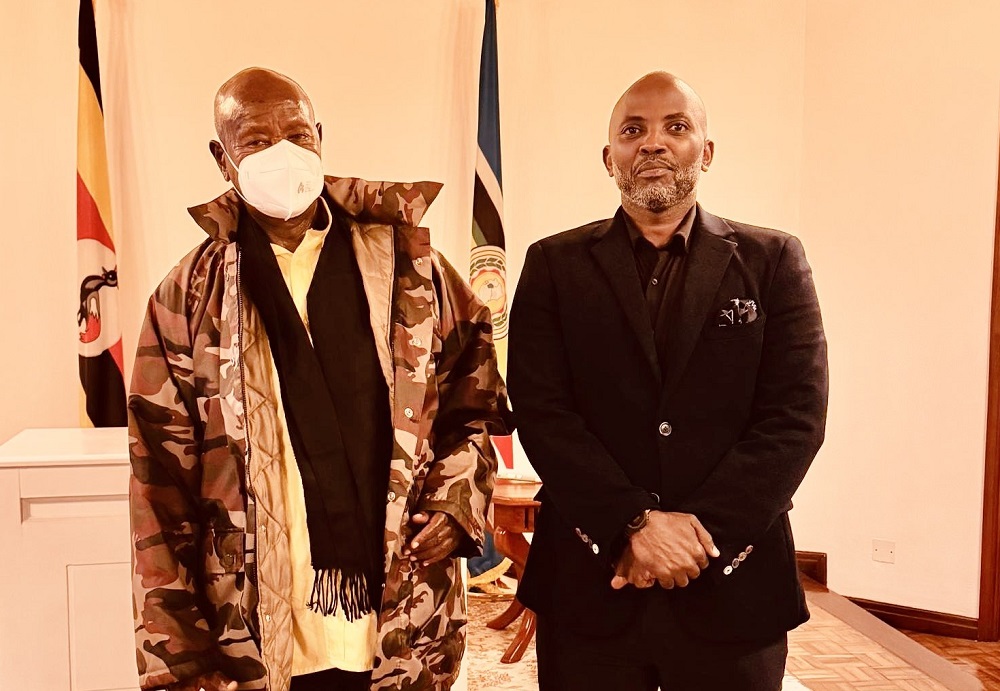
KAMPALA, Uganda: Few appointments in President Museveni’s newly unveiled 2026-2031 cabinet have generated as much debate as that of Dr Lawrence Muganga, the celebrated academic, education reform advocate and Vice Chancellor of Victoria University, who was named State Minister for Internal Affairs.
For supporters, Muganga’s appointment represents the arrival of a globally exposed technocrat into frontline government leadership. For critics, it has revived unresolved questions about citizenship, eligibility and the interpretation of Uganda’s dual citizenship laws.
What began as excitement over the appointment of one of Uganda’s most recognizable university leaders has now evolved into a constitutional debate that could test Parliament’s interpretation of citizenship rights under the 1995 Constitution.
Excitement Over a Technocrat’s Entry Into Government
When President Museveni announced his new cabinet last week, Muganga’s name stood out among the fresh faces.
The academic has spent much of the last decade building a reputation as a vocal advocate for education reform, digital transformation and innovation. As Vice Chancellor of Victoria University, he became one of the country’s most visible university administrators, frequently engaging government on education, youth empowerment, technology and skills development.
His appointment was largely welcomed by sections of the private sector, academia and Uganda’s diaspora community, who viewed it as a sign that the President was bringing technocratic expertise into government.
Shortly after the appointment, Muganga expressed gratitude to Museveni. “With a grateful heart, I sincerely thank His Excellency President Yoweri Museveni for appointing me Minister of State for Internal Affairs. It is a great honour, and one I do not take lightly.”
He added: “I step into this role with humility, with a deep sense of duty, and with a strong desire to serve well. My focus will be simple and clear: to help keep our people safe, to protect peace in our country, and to serve Uganda with all the energy and care I have.”
For many supporters, those remarks reflected the profile of a professional transitioning from academia into public service.
The Petition That Changed the Conversation
The celebrations, however, were short-lived. Within days, Kampala lawyer and Democratic Front Deputy Secretary General Deric Fredric Namakajo filed a petition before Parliament seeking to block Muganga’s approval.

The petition argues that Muganga allegedly holds dual citizenship and is therefore barred from serving as a minister under provisions of the Uganda Citizenship and Immigration Control (Amendment) Act, 2009.
According to the petitioner, the Ministry of Internal Affairs is particularly sensitive because it oversees immigration, citizenship, passports, national identification and internal security.
The petition requests Parliament to establish whether Muganga currently possesses foreign citizenship and whether he satisfies all legal requirements for appointment to ministerial office.
The challenge immediately ignited national debate, with social media platforms, legal commentators and political actors sharply divided over the matter.
Rashid’s Constitutional Counterargument
Perhaps the most comprehensive defence of Muganga’s appointment has come from advocate Ssemambo Rashid, who argues that the debate is being driven more by political emotion than constitutional law.
In a lengthy legal opinion that has since circulated widely online, Rashid contends that Uganda’s Constitution, not an ordinary Act of Parliament, must ultimately determine eligibility for ministerial office.
According to Rashid, Article 113 of the Constitution allows ministers to be appointed from among Members of Parliament or persons qualified to become Members of Parliament.
He further notes that Article 80 only requires a person seeking parliamentary office to be “a citizen of Uganda.”
“It is clear from the foregoing provisions that whereas the Constitution limits the eligibility of persons seeking election to the office of President to only those who are citizens by birth, the same Constitution allows all citizens to be appointed as Ministers. There is no qualification or limitation expressed thereby,” Rashid argues.
The lawyer maintains that attempts to exclude dual citizens from ministerial appointments amount to introducing restrictions that do not exist within the Constitution itself.
“It is my humble submission therefore, that to limit by excluding dual citizens from appointment as Ministers, is unconstitutional and thereby null and void in terms of Article 2(2) of the Uganda 1995 Constitution.”

His argument is rooted in the doctrine of constitutional supremacy. Article 2 of the Constitution provides that the Constitution is Uganda’s supreme law and that any law inconsistent with it becomes void to the extent of the inconsistency.
Rashid, therefore, argues that even if statutory provisions appear to restrict dual citizens from ministerial appointments, those provisions cannot override the Constitution.
Beyond the Court of Public Opinion
The Muganga debate has also reopened broader questions about Uganda’s relationship with its diaspora.
Dual citizenship was introduced specifically to allow Ugandans living abroad to maintain ties with their homeland while acquiring citizenship elsewhere.
Successive governments have encouraged skilled professionals in the diaspora to return home, invest, transfer knowledge and participate in national development.
Supporters of Muganga argue that it would be contradictory for Uganda to actively court diaspora professionals and then prevent them from serving in public office because they acquired foreign citizenship while studying or working abroad.
Muganga himself embodies that profile.
After studying and working in Canada, he returned to Uganda and became one of the country’s most prominent education leaders. His supporters argue that such international exposure is precisely what government needs as Uganda seeks to modernize public institutions.
Parliament Faces a Defining Test
The debate now moves to Parliament, which must determine whether Muganga’s nomination proceeds.
While the petitioners insist the law bars his appointment, defenders maintain that constitutional provisions take precedence and that any eligibility questions must be viewed through the lens of constitutional supremacy.
The outcome could have implications far beyond one ministerial appointment. It may ultimately shape how Uganda interprets dual citizenship, diaspora participation and eligibility for public office in the years ahead.
But as for now, the central question remains unresolved.
Should Dr Lawrence Muganga’s fate be decided by political pressure and public sentiment, or by a strict reading of the Constitution? The answer, many legal observers argue, should be found not in social media debates or partisan battles, but in the law itself.
If you would like your article/opinion to be published on Uganda’s most authoritative news platform, send your submission on: [email protected]. You can also follow DailyExpress on WhatsApp and on Twitter (X) for realtime updates.


