
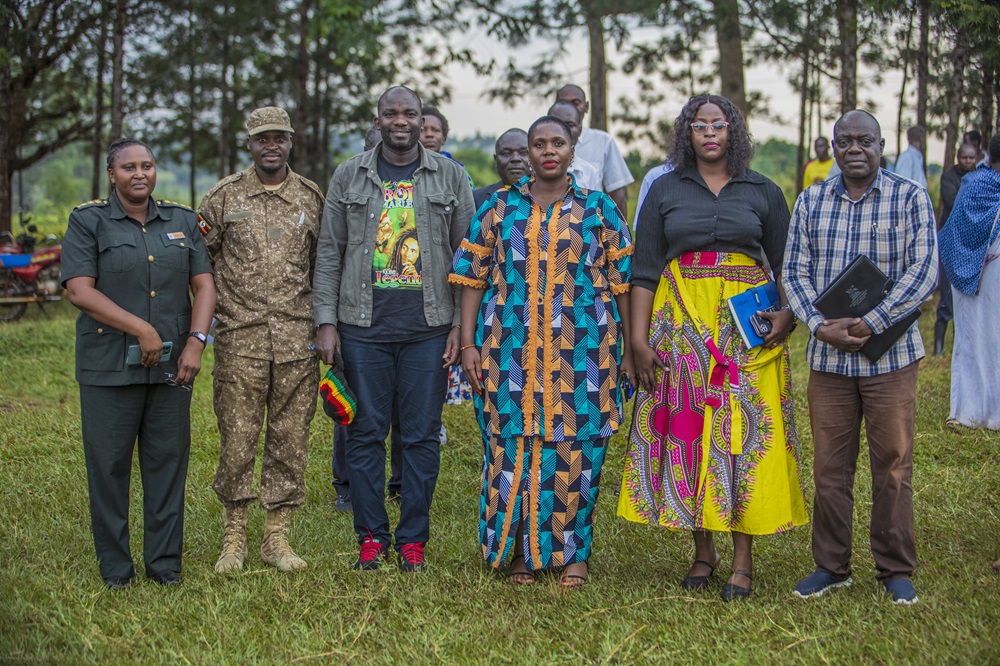
Kiryandongo, Uganda: Residents living along the boundaries of Murchison Falls National Park have renewed calls for urgent government intervention to end a human-wildlife conflict they say has devastated livelihoods for nearly three decades.
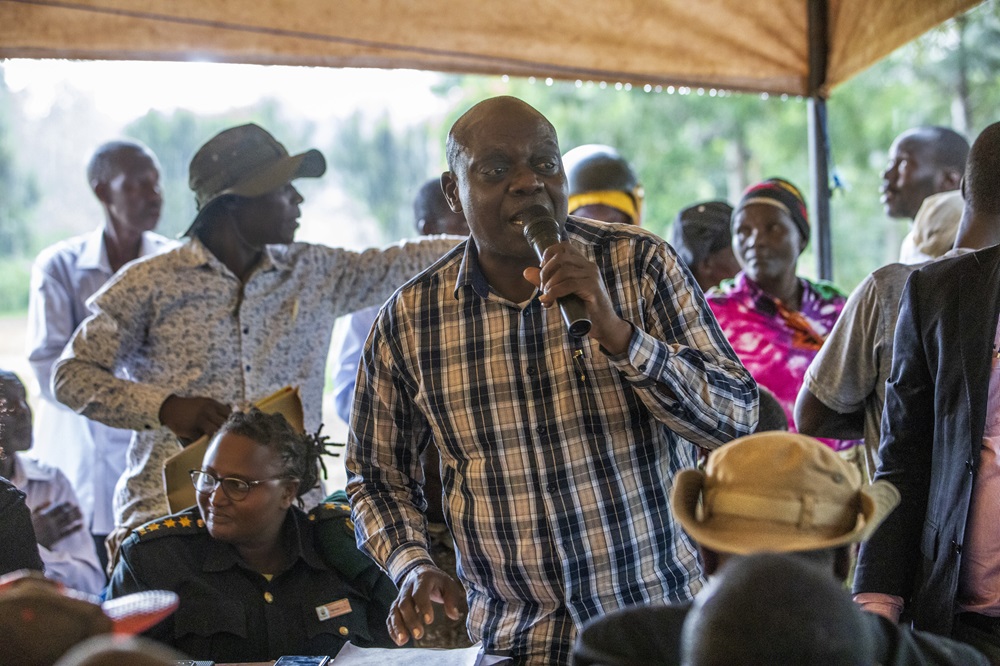
The concerns dominated a community dialogue in Mpumewe Parish, where residents, local leaders and officials from the Uganda Wildlife Authority (UWA) discussed the persistent destruction of crops, delayed compensation and the need for stronger measures to protect communities.
The meeting was attended by Kibanda South MP Jacob Karubanga Ateenyi, Kibanda North MP Lino Ngompek, Kiryandongo District Woman MP Jovia Katusiime, Assistant Resident District Commissioner Natasha Gloria Nisaku, Kigumba Sub-county Chairperson Ulama Museveni, and UWA officials.
Residents said the conflict has persisted since 1999, with elephants, baboons and monkeys regularly destroying crops and threatening lives.
Representing the community, Adam Watuwa said many families have been pushed deeper into poverty despite depending on agriculture for survival.
“We support wildlife conservation but conservation should not mean sacrificing our families. Every planting season has become a gamble because elephants destroy crops at night, while baboons and monkeys complete the destruction during the day. Families are becoming poorer every year despite working hard.”
Residents said elephants frequently invade villages at night, destroying plantations of bananas, cassava, sweet potatoes, maize, mangoes and jackfruit, leaving households with little to harvest.
They added that the repeated losses have made it increasingly difficult to feed their families, pay school fees and recover financially.
The community also raised concerns over security at Mpumewe Health Centre, where a damaged perimeter fence has left patients and health workers vulnerable to roaming elephants.
Residents recalled the death of Kawaya Sikuku, 22, who was killed by an elephant in 2013 while trying to protect community gardens. They further cited livestock losses, declining land values and recurring cases of sleeping sickness, which they associate with tsetse flies originating from the conservation area.

Compensation Delays Frustrate Residents
Much of the discussion focused on the wildlife compensation programme, which residents described as slow and ineffective.
Several farmers questioned why crop values assessed in the field are often reduced before compensation is paid, while others said compensation files had disappeared despite being submitted years earlier.
They also criticised the costs involved in repeatedly travelling to follow up claims and questioned how revenue-sharing funds are allocated, arguing that communities rarely participate in deciding how the funds are invested.
Hon Jacob Karubanga Ateenyi (Kibanda South) said communities deserve a faster and more accessible compensation system.
“Justice delayed is justice denied. Families who lose their crops cannot afford to wait years for compensation. We shall continue engaging Parliament and the relevant authorities to ensure services are decentralised and brought closer to the communities that need them most.”
He reaffirmed his commitment to lobbying for the completion of the electric fence intended to minimise elephant incursions into community land.
Hon Karubanga also donated UGX 1 million to community wildlife scouts trained by UWA, commending them for risking their lives to protect residents from dangerous animals.
He further urged the wildlife authority to ensure qualified young people from Kiryandongo are fairly considered during recruitment exercises.
Kibanda North County Legislator, Hon Lino Ngompek, appealed for reforms to speed up compensation payments and reduce bureaucracy while urging parents to educate children about the dangers of the electric fence once completed.
Kiryandongo Woman MP, Hon Jovia Katusiime, called for quicker emergency responses whenever elephants stray into communities. “Communities should never be left alone to confront elephants. Wildlife officers must respond quickly whenever residents raise alarms because every delayed response places lives at risk.”

She also asked UWA to provide a clear timeline for completing the remaining sections of the electric fence.
UWA Promises Action
Responding on behalf of the Uganda Wildlife Authority, sociologist Lavynah Mbambu Marvle apologised for the absence of senior officials and assured residents that their concerns had been documented.
She said construction of the remaining sections of the electric fence is expected to begin in August 2026, subject to the availability of government funding.
Mbambu clarified that although parts of the fence appear to extend onto community land, the official park boundary has not changed, explaining that engineering considerations sometimes require slight adjustments during construction.
On compensation, she acknowledged delays but said some claims had been slowed by incomplete documentation and incorrectly completed forms.
According to Mbambu, UWA has trained Local Council officials, veterinary officers and agricultural officers to improve the quality of compensation claims.
She also explained that final compensation amounts may differ from initial assessments where available evidence does not fully support the value claimed.
Mbambu revealed that compensation funds allocated to Kiryandongo had been exhausted due to increasing claims across the country but expressed optimism that additional funding would be released during the current financial year.
She added that the revenue-sharing programme would continue independently of the electric fence project, noting that it is intended to reward communities for supporting conservation rather than compensate for crop losses.
After the engagement in Mpumewe Parish, the delegation travelled to Kyankende Sub-county, where residents presented similar concerns over continued human-wildlife conflict.
While residents welcomed the commitments made during the meeting, many said they would judge success by tangible action rather than promises, expressing hope that the engagement would lead to practical solutions enabling communities and wildlife to coexist safely.
If you would like your article/opinion to be published on Uganda’s most authoritative news platform, send your submission on: [email protected]. You can also follow DailyExpress on WhatsApp and on Twitter (X) for realtime updates.