

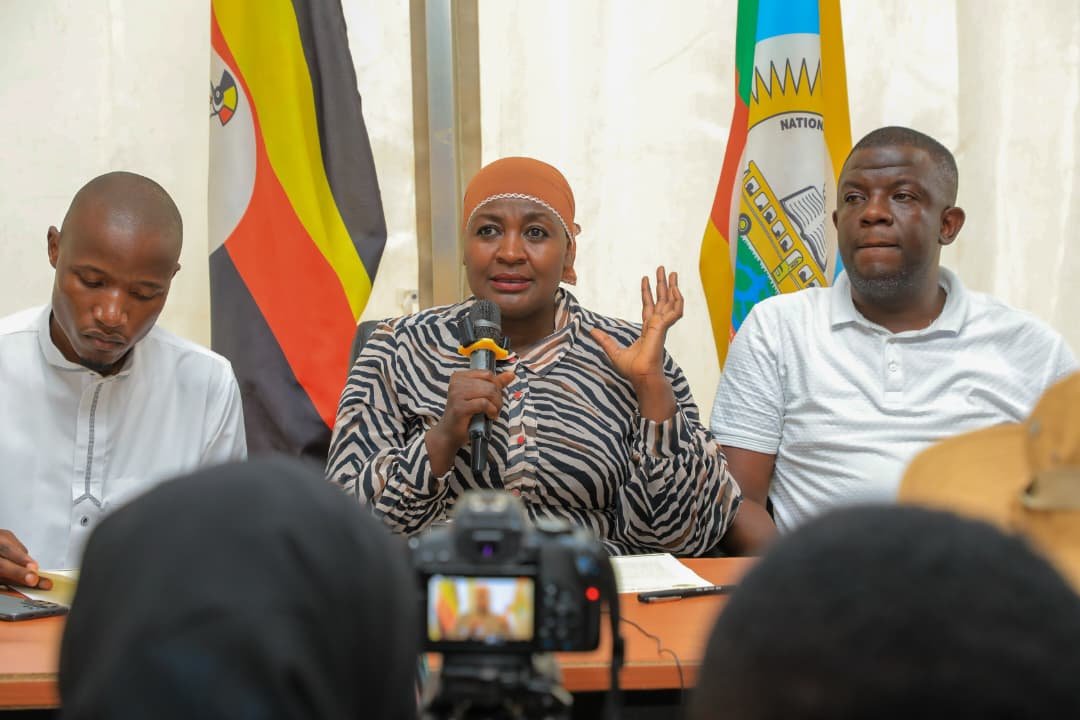
In Summary: Hajjat Hadijah Namyalo has asked Parliament to commission a forensic audit of UEDCL’s reported Shs1.71 trillion in electricity-related collections, accusing the state distributor of failing to deliver affordable and reliable power. She claims about 400,000 customers who paid for connections remain unconnected, while the utility faces scrutiny over electricity losses, outages and its performance since taking over from Umeme in April 2025.
Kampala, Uganda — The head of the Office of the National Chairman (ONC), Hajjat Hadijah Namyalo, has called for a forensic audit of Uganda Electricity Distribution Company Limited (UEDCL), questioning the utilisation of Shs1.71 trillion reportedly handled by the state utility amid complaints about delayed electricity connections, power outages and high consumer costs.
Addressing journalists in Kampala on Monday, October 26, Namyalo accused UEDCL of failing to fulfil expectations that followed the government’s takeover of electricity distribution from Umeme, arguing that many Ugandans who paid for new connections are still waiting for supply.
She said UEDCL had announced 236,000 new connections but that approximately 400,000 customers who had paid remained without electricity, with some reportedly having poles installed and wires in place but lacking meters or transformers.
Namyalo questioned how the utility could report handling such a substantial amount of money while customers continued waiting for the service they had paid for. She called on Parliament to investigate the funds and establish why the outstanding connections had not been completed.
Her allegations come amid wider scrutiny of UEDCL’s performance since it assumed responsibility for the distribution network on April 1, 2025, following the expiry of Umeme’s 20-year concession on March 31, 2025.
The transition was presented as a move towards state management of electricity distribution, but consumers have continued to raise concerns about reliability, delayed connections and the cost of power.
Namyalo questions electricity losses and tariffs
Namyalo also accused UEDCL of failing to reduce electricity distribution losses, claiming they had increased from 15 per cent to 19 per cent, with the cost of lost power ultimately affecting consumers.
She argued that technical inefficiencies and other losses undermine the benefits Uganda should derive from its electricity generation capacity.
However, figures published by the Electricity Regulatory Authority (ERA) show that overall distribution losses across Uganda’s distribution network rose to 18.1 per cent in 2025, from 16.7 per cent in 2024. The regulator’s figures cover the wider distribution network and do not, by themselves, establish the precise trend for UEDCL alone.
The utility has also faced operational pressure following the transition. In an October 26 report, Daily Monitor said UEDCL’s connection backlog had fallen from 450,000 applicants to 200,000, with the company reporting about 50,000 connections per month. The report also cited UEDCL figures showing that 18.15 per cent of distributed electricity generated no revenue, much of it attributed to technical losses.
Those figures differ from Namyalo’s estimate of 400,000 pending connections, highlighting the need for a transparent, up-to-date breakdown of applicants, completed connections and outstanding cases.
Namyalo also challenged the cost of electricity for households and businesses, arguing that Ugandans were not benefiting sufficiently from the country’s generation capacity.
For the fourth quarter of 2026, the approved domestic tariff schedule includes Shs250 per unit for the first 15 units for eligible low-consumption households, Shs779.4 per unit for consumption between 16 and 80 units, Shs412 for units between 81 and 150, and Shs779.4 for consumption above 150 units. The applicable rate depends on the customer’s consumption category and eligibility for the lifeline tariff.
Namyalo said the tariff structure and continuing supply challenges placed pressure on households and small businesses, including welders, salon operators and maize millers who depend on electricity to operate.
Calls for audit and a 90-day connection deadline
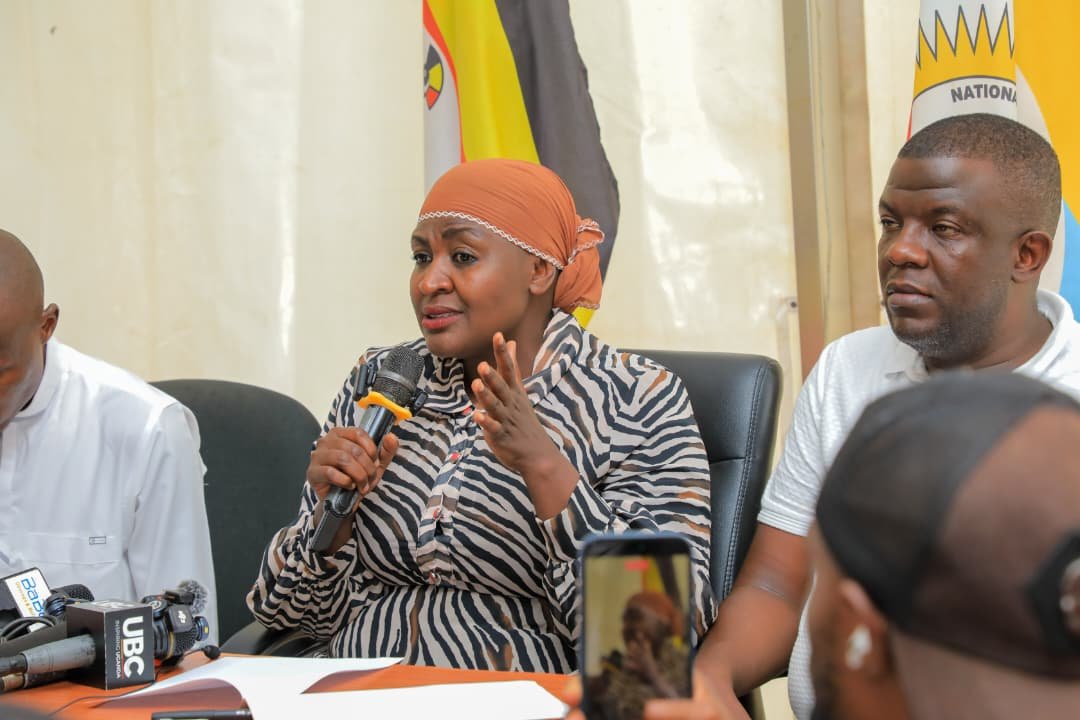
Among her demands, Namyalo asked Parliament to commission a forensic audit of the Shs1.71 trillion and require UEDCL to publish a district-by-district list of customers awaiting connections. She called for the utility to clear the outstanding backlog within 90 days, arguing that customers who had already paid should not continue waiting without clear information on when electricity would be supplied.
The ONC Boss also urged the government to prioritise domestic access to electricity rather than focusing on export earnings while some Ugandans remain unconnected or experience unreliable supply.
Namyalo further called for an end to what she described as political cadre deployment in the utility, arguing that technical professionals and engineers should be responsible for managing electricity distribution.
She alleged that former Umeme managers had returned to senior positions at UEDCL despite the government’s decision not to renew Umeme’s concession.

“The very Umeme managerial cadre we purported to expel through the front door has been smuggled back through the window to superintend UEDCL. Ugandans were not liberated; they were hoodwinked. I don’t care who will say what. I don’t care if you want, you can arrest me. But those are the facts that Ugandans need to hear,” Namyalo said.
She described the challenges as deliberate sabotage rather than mere administrative failure, claiming they risk undermining the socio-economic transformation agenda pursued by President Yoweri Museveni and the National Resistance Movement (NRM).
Namyalo also rejected suggestions that her remarks amounted to incitement, saying her office had a responsibility to monitor government policy implementation and raise concerns affecting citizens. She appealed to Museveni to intervene, warning that he risked receiving inaccurate performance reports, and called for an overhaul of the Ministry of Energy.
Electricity exports under scrutiny
Namyalo questioned why Uganda continues exporting electricity to neighbouring countries while some domestic consumers face connection delays and unreliable supply.
She said Uganda had a firm generation capacity of 1,550 megawatts against domestic demand, and argued that power exports should not take precedence over connecting citizens and supporting local enterprises.
She cited figures showing that Uganda exported approximately 254 million kilowatt-hours of electricity to Kenya over the January-November 2025 period, an increase of about 28 per cent from the same period a year earlier.
Kenya’s electricity import data, reported by Daily Monitor, put the volume at 254.7 million kilowatt-hours for those 11 months, up 28.04 per cent year-on-year. Electricity also became one of Uganda’s leading exports to Kenya by value.
Namyalo argued that exporting electricity while local businesses struggle with unreliable supply was inconsistent with the government’s industrialisation objectives.
“Factories in Nairobi hum with Ugandan electrons while a welder in Nansana, a salon operator in Mbale and a maize miller in Lira are condemned to perpetual blackout. This is not economic strategy; it is economic treachery against our own people. We are subsidising Kenyan factories with cheap NRM power while punishing Ugandan factories with UEDCL blackouts. The NRM built dams to industrialise Uganda, not Kenya,” she said.
She credited Museveni’s government for investments in the Karuma, Isimba and Bujagali dams but argued that generation capacity must translate into reliable access and affordable electricity for Ugandans.
The broader electricity sector has faced pressure from network constraints, rising demand and delays in infrastructure upgrades. UEDCL has attributed some of the service disruptions to years of inadequate investment and the need to upgrade inherited distribution infrastructure. The regulator has said improvements will take time as network repairs and longer-term projects are implemented.
If you would like your article/opinion to be published on Uganda’s most authoritative news platform, send your submission on: [email protected]. You can also follow DailyExpress on WhatsApp and on Twitter (X) for realtime updates.


