In Summary: Uganda’s three major stadiums being prepared for AFCON 2027 could become costly public liabilities unless the government develops viable commercial plans for their use after the tournament, African Collaborations Group CEO Paulo J. Cruz has warned. He is proposing integrated sports and entertainment districts around the facilities to diversify revenue and keep them active throughout the year.
Kampala, Uganda — Uganda has been urged to develop commercial plans for its three major stadiums ahead of the 2027 Africa Cup of Nations (AFCON), with an infrastructure development executive warning that the facilities could become a financial burden if their operations depend largely on football matches after the tournament.
Paulo J. Cruz, chief executive officer of African Collaborations Group (ACG), says the government has a limited window to plan how Mandela National Stadium in Namboole, Hoima City Stadium and Akii-Bua Stadium in Lira will be used and financed after the continental competition.
In an interview published by Daily Monitor, Cruz argued that stadium construction should be accompanied by plans to generate revenue throughout the year, rather than relying mainly on international fixtures and domestic league matches.
AFCON 2027, which Uganda will co-host with Kenya and Tanzania, is scheduled to run from June 21 to July 17, 2027. The tournament will bring international attention to Uganda’s sporting infrastructure, but Cruz says the longer-term challenge is ensuring the facilities remain economically sustainable after the competition ends.
The three stadiums are expected to provide a combined capacity of 85,000 seats. Namboole is being expanded to accommodate 45,000 spectators, while the new stadiums in Hoima and Lira are each planned to accommodate 20,000 people.
According to the expert, public investment in the three facilities exceeds $317 million. The company argues that the scale of this investment makes it necessary to establish clear operating and revenue-generation strategies before the tournament begins.
“The pattern across the continent is consistent: a government builds one or more stadiums for a tournament, the tournament ends, and the stadiums become a public liability,” Cruz said. He added that Uganda should use the remaining months before AFCON to develop a commercial strategy, warning that operating costs would continue long after the tournament’s final match.
The concern centres partly on the gap between stadium capacity and regular football attendance. The press release estimates that Uganda Premier League matches attract average crowds of between 3,000 and 5,000 spectators. At a 45,000-seat venue such as Namboole, that would leave most seats unoccupied during a typical league fixture.
However, attendance figures alone do not establish whether a stadium can operate sustainably. Revenue from other events, sponsorships, hospitality, venue hire and commercial partnerships, alongside maintenance and staffing costs, would also determine its long-term financial performance.
Cruz argues that Uganda should therefore consider developing integrated sports and entertainment districts around the stadiums, combining sporting facilities with hotels, retail outlets, restaurants, conference centres, fitness facilities, training academies, residential developments and commercial offices.
The proposed model would create several sources of income instead of depending primarily on ticket sales and occasional sporting events. Other suggested facilities include indoor arenas, aquatics centres, sports science facilities, schools, cinemas, exhibition spaces, public parks, transport infrastructure and media production facilities.
According to ACG, such developments should be supported by a masterplan that connects stadium operations with surrounding land use and private investment opportunities.
The company says its approach involves originating projects and undertaking pre-development work to prepare them for institutional and private investment. ACG maintains that this model can help attract investors without relying exclusively on government budgets, although the financial viability of any specific development would depend on its costs, projected demand, financing structure and revenue potential.
Uganda’s existing plans and the Nakivubo example
The proposal comes as Uganda prepares to implement its Fourth National Development Plan (NDP IV) and pursue its broader economic growth ambitions.

According to the expert, Uganda Vision 2040 identifies the country’s youthful population as an opportunity for developing sport as a business. NDP IV also recognises sport and AFCON-related investments among national priorities, while the Tenfold Growth Strategy seeks to use AFCON 2027 to support expansion in sporting facilities and hotel capacity.
The release further points to the Public-Private Partnerships Act, 2015, as part of the legal framework through which private investors can participate in public infrastructure development. The availability of a legal framework, however, does not by itself guarantee investor interest or ensure that a proposed project will be financially viable.
Uganda also has a local example frequently cited in discussions about private investment in sports infrastructure: the redevelopment of Nakivubo Stadium in Kampala.
The project, associated with businessman Hamis Kiggundu and commonly known as Ham’s Nakivubo Stadium, has been presented in the press release as an example of sport-led urban development and private capital investment.
Its wider commercial implications provide a point of reference for discussions about the future of Uganda’s new stadiums, although the performance of one development cannot automatically establish that similar projects elsewhere would succeed.
What happens to Namboole after AFCON?
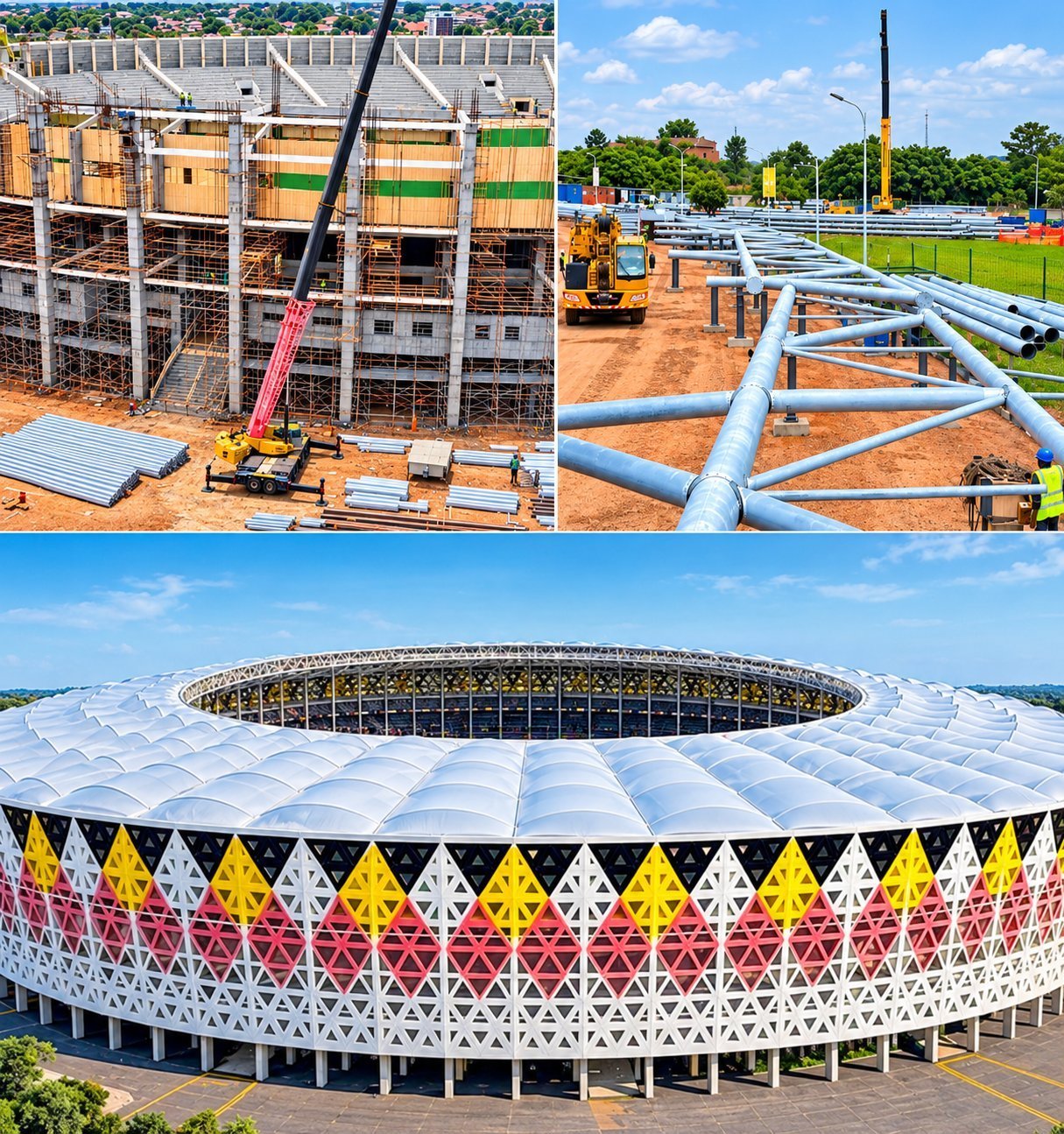
Namboole is likely to face particular scrutiny because of its planned 45,000-seat capacity and the continuing costs of maintaining a major stadium.
Cruz argues that, without a broader commercial strategy, the venue could rely on domestic league fixtures and occasional international matches, activities that may not generate sufficient income to cover its operating requirements.
His proposal is to integrate the stadium into a larger sports and entertainment district designed to attract visitors and businesses on both matchdays and ordinary days. He, however, does not provide a completed financial model for Namboole, Hoima, or Akii-Bua, nor does it identify approved commercial developments around all three venues. Its central argument is that such plans should be developed before the facilities begin operating after AFCON.
If you would like your article/opinion to be published on Uganda’s most authoritative news platform, send your submission on: [email protected]. You can also follow DailyExpress on WhatsApp and on Twitter (X) for realtime updates.