
In Summary: Permanent Secretary in the Ministry for the Presidency, Hajj Yunus Kakande has defended Uganda’s digital number plate system, insisting that it is operational and can support security agencies in identifying criminals. He says government is refining the project’s financial model, considering software upgrades and planning further discussions with Parliament and the Russian technology provider.
Kampala, Uganda — The Permanent Secretary in the Ministry for the Presidency, Hajji Yunus Kakande, has defended Uganda’s digital number plate system, dismissing reports that President Yoweri Museveni described the technology as faulty or said he had been misled into adopting the project.
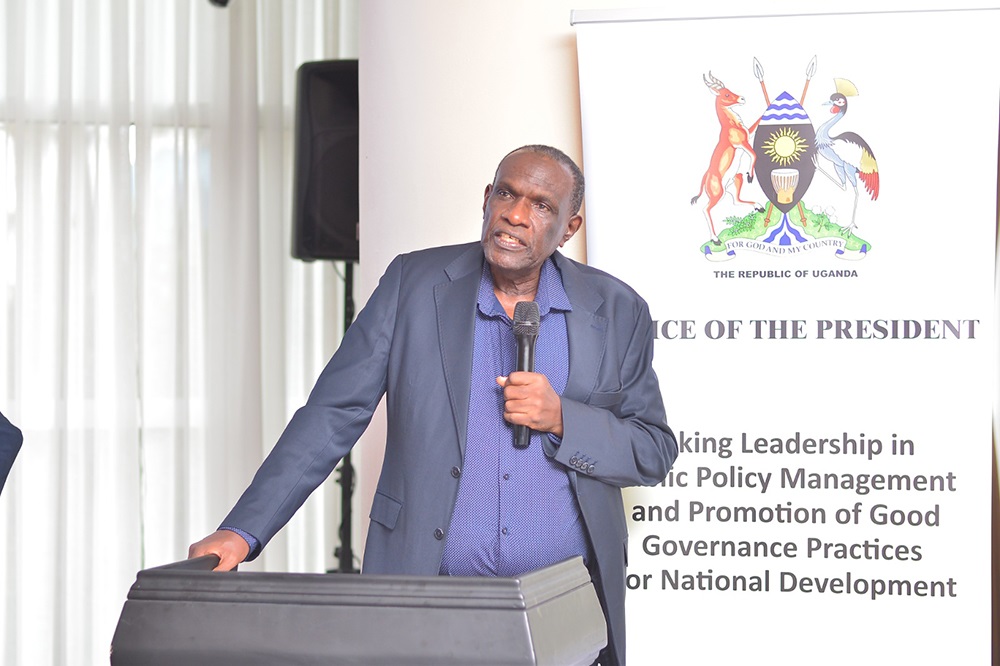
Kakande told journalists on Friday that the system was operational and capable of supporting security agencies in identifying vehicles and apprehending criminals, although government was still working on its financial arrangements and improvements to the technology.
He said there had been no declaration during the recent meeting between the President and Members of Parliament that the system was defective or had failed. “There was no such statement that the system is not working or that the system is bad. It is not there. I was in the meeting,” Kakande said.
He cited an explanation by Assistant Inspector General of Police Felix Baryamwisaki, the police director responsible for ICT, who reportedly told the meeting that the technology was functioning and could support vehicle identification and security operations across the country.
“We resolved that this machine, this system, is working so well. It can replace any vehicle anywhere in the country. That was explained by the Assistant Inspector General of Police, Mr Felix Baryamwisaki. So there is no way of saying that the system is not working. It is working,” he said.
However, Kakande acknowledged that government was still refining the project’s financial model to establish how revenue would be generated and shared between the state and the private technology provider. He said discussions were ongoing to determine the respective financial benefits and obligations of the parties before the next implementation steps could be taken.
“We are already trying to refine the financial model. If we start issuing the system, how is it going to work? What money will the provider get, and what will the government also get? Once we agree on that, we can move forward,” Kakande explained.
Security objective behind the project
Kakande said the digital number plate project was initially conceived as a security intervention rather than a commercial venture. He explained that a Russian technology developer had approached President Museveni and demonstrated software that could help security agencies identify and apprehend criminals.
“Actually, the President reported to the Members of Parliament that this gentleman is from Russia. He came and approached him and showed him the technology and software he had, which could be used to apprehend criminals. That is how it started,” Kakande said.
“The original objective was a security programme to catch criminals. The financial and economic considerations are now coming in, but they were not the primary objective. The primary objective was security, and the system is working well,” he added.
He said the commercial and financial considerations were now being addressed as government worked towards a sustainable arrangement for the technology.
Government, Parliament and Russian firm to hold talks
On parliamentary scrutiny of the project, Kakande said President Museveni recognised Parliament’s oversight responsibilities but had encouraged legislators to obtain accurate technical information before drawing conclusions about the system.
He said the President had no objection to the relevant parliamentary committee examining the project but wanted its members to engage directly with government officials and the technology provider, particularly because of the system’s security implications.
“The committee is doing its role as an oversight committee for infrastructure and other government programmes. The committee has no problem with that. However, the President advised them that if the project is for security, they should not just come out with reports that are not correct. They should sit with us so that we can talk, negotiate and agree on some of the issues,” Kakande said.

He added that the meeting had ended with a proposal to establish three teams bringing together representatives of the Russian technology company, government technical officials and Members of Parliament to discuss outstanding concerns.
“The resolution was that we should make three teams: the Russian company manager will come with the technical people in government and the parliamentarians, and we shall sit together and agree on some of the issues,” he said.
Kakande confirmed that the President had called for a joint meeting involving the stakeholders, which was expected to take place soon. “Yes, he has called for a meeting very soon. We shall meet with the Russians, the officers who are implementing this programme and the Members of Parliament who are carrying out the oversight role,” he said.
Government considers local production
Kakande also disclosed that government was considering establishing local manufacturing capacity for the digital number plate technology. The proposed factory would form part of efforts to develop domestic technical capacity, while software upgrades would address areas identified for improvement.
However, he did not provide a timeline for establishing the factory or identify the specific software components requiring upgrades.
Kakande maintained that the outstanding discussions should not be interpreted as an admission that the digital number plate system had failed. He insisted that the technology remained operational, with the current discussions focusing on its financial arrangements, further development and implementation.
If you would like your article/opinion to be published on Uganda’s most authoritative news platform, send your submission on: [email protected]. You can also follow DailyExpress on WhatsApp and on Twitter (X) for realtime updates.


