
In Summary: The Uganda Law Society (ULS), under President Isaac Ssemakadde, has issued Executive Order RNB No. 15 of 2026 directing its Secretariat to document and respond to alleged threats against lawyers Enen Ambrose and Olanya Isaac Ronald following a heated exchange in the Gulu Learned Friends WhatsApp group.
Kampala, Uganda — The Uganda Law Society (ULS) has directed its Secretariat to investigate and document alleged threats against two lawyers arising from a heated exchange in a professional WhatsApp group, warning that intimidation of advocates will be resisted, exposed and addressed through institutional and legal mechanisms.
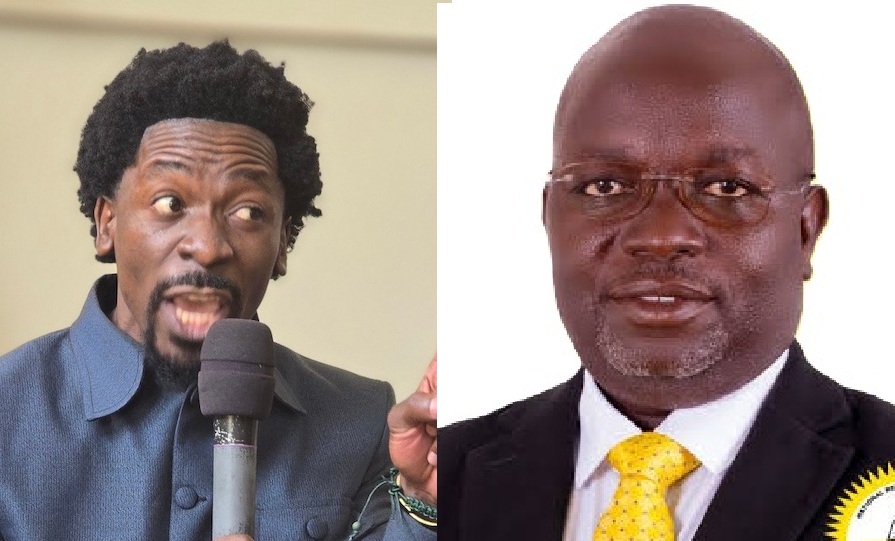
In Executive Order RNB No. 15 of 2026, issued on November 19, ULS President and Head of the Bar Isaac K. Ssemakadde and Acting Honorary Secretary Ssali Babu condemned statements attributed to Advocate Tonny Kitara and directed him to submit a written explanation within seven days of receiving the order.
The order, titled Protection of Advocates from Intimidation in the Gulu Learned Friends Forum and the Defence of the Independence of the Bar, identifies Advocates Enen Ambrose and Olanya Isaac Ronald as the lawyers allegedly targeted in communications exchanged in the Gulu Learned Friends WhatsApp group on November 17, 2026.
According to the released order, the Governing Council considers four statements attributed to Kitara to constitute threats of physical harm, surveillance, and intimidation. They include extracted statements such as: “We shall reach you before you even think of leaving your RV”; “Careless Beaks must be burned”; “Can I share with you your Google location Map as it is now??”; and “You are applying to join the list right?”
Ssemakadde said the statements, read in their full context, amounted to an attack on fellow advocates because of their participation in professional debate. “An attack on one advocate is an attack on the entire Bar,” hr declared.
However, the Society was careful to distinguish the demand for an explanation from a finding of professional misconduct, stating that Kitara must be afforded an opportunity to respond before any adverse finding or further action is taken.
“The invitation is not a finding of professional misconduct. Any further action shall proceed in accordance with the applicable law and due process. No adverse finding shall be made without affording the person concerned an opportunity to be heard,” the order states.
Under the order, the Governing Council has directed the Secretariat, working with the existing Section 3(c) Committee, to take four immediate measures to protect the affected lawyers and address the reported threats.
These include documenting the incidents, conducting prompt security assessments, ensuring appropriate referrals and providing institutional support to the lawyers.
The order further requires the preservation of electronic and documentary evidence relating to the alleged threats. “The Secretariat shall collaborate with the Section 3(c) Committee to strengthen confidential incident reporting; prompt security assessment and appropriate referrals; preservation of electronic and documentary evidence; and legal, welfare and other appropriate support for affected advocates,” it states.
The Secretariat has also been directed to report material developments to the Governing Council. Where reported conduct discloses possible criminal conduct or professional misconduct, the matter may be referred to the competent authority.
Beyond the specific WhatsApp exchange, the order raises broader concerns about what the Governing Council describes as internal and external threats to the independence of Uganda’s legal profession.
In the order, Ssemakadde identified professional rivalry, competition for clients or status, unresolved trauma, depression, misconceptions about law and professional culture, and intolerance rooted in religion, ethnicity, gender and politics as factors that can fuel hostility among lawyers.
He warned that such disagreements can escalate into intimidation and calls on advocates to exercise restraint rather than normalise threats against colleagues.
He also identified what he described as external threats, including military influence in civilian affairs, political mobilisation within the legal profession and alleged infiltration of the Bar by security and intelligence operatives.
In particular, the order names the Patriotic League of Uganda (PLU), its national chairman Gen Muhoozi Kainerugaba and PLU ideologue Andrew Mwenda in its discussion of alleged intimidation and extraconstitutional measures.
“The corrosive effect of military junta politics, the Patriotic League of Uganda’s active mobilisation and recruitment of senior lawyers and judicial officers into its ranks, the open boasting by PLU national chairperson Gen. Muhoozi Kainerugaba and PLU ideologue Andrew Mwenda of extraconstitutional measures (including abductions, ‘basements’, corporal punishment and the deployment of soldiers outside judicial process), and the failure of Muhoozi/PLU supporters to disavow such methods, create a climate in which intimidation of advocates is emboldened.”

The Council further alleges that security and intelligence agents may be operating within the legal profession, warning that any interference with advocates’ professional duties will be challenged.
“The Governing Council further records the very real threat of infiltration of the legal profession by security and intelligence services. Agents exist among us. They may be challenged in debate, and will be exposed when their conduct crosses into threats or improper interference,” the order states.
The latest directive builds on Executive Order RNB No. 10 of 2026, issued in June, through which the ULS established the Section 3(c) Committee and an International Solidarity Programme to protect advocates facing threats linked to their professional work.
The earlier framework was anchored in Section 3(c) of the Uganda Law Society Act, which mandates the Society to represent, protect and assist members of the legal profession regarding their conditions of practice. It created a dedicated structure to document alleged violations, coordinate emergency legal assistance and mobilise regional and international support for lawyers facing serious risks.
The committee was also empowered to pursue urgent legal interventions, including applications challenging alleged abuses of legislation, and to coordinate assistance for detained advocates and their clients.
Under the new order, the existing Section 3(c) Committee is expected to take a more direct role in responding to threats arising from professional disagreements, including confidential reporting, security assessments and evidence preservation.
The Council also reaffirms positions contained in earlier public statements and Executive Order RNB No. 10 of 2026, including its concerns about what it calls the militarisation of civilian institutions and interference with the independence of the legal profession.
ULS invokes international standards on lawyers’ independence
In justifying the latest order, Ssemakadde cited international standards requiring lawyers to discharge their professional duties without intimidation, harassment or improper interference. These include Principle 16 of the United Nations Basic Principles on the Role of Lawyers, which addresses protection of lawyers from intimidation, hindrance, harassment and improper interference.
He also invoked Principle 23, which recognises lawyers’ freedom of expression, association and participation in public discussions concerning the law, administration of justice and human rights.
If you would like your article/opinion to be published on Uganda’s most authoritative news platform, send your submission on: [email protected]. You can also follow DailyExpress on WhatsApp and on Twitter (X) for realtime updates.