

In Summary: Government is considering restricting doctors employed in public health facilities from practising in private hospitals as part of proposed reforms aimed at improving service delivery, strengthening public hospitals and reducing Uganda’s reliance on costly overseas medical treatment.
Kampala, Uganda — Government is considering a possible ban on doctors employed in public health facilities from working in private hospitals, in a proposed policy shift aimed at strengthening staffing and improving service delivery in the public healthcare system.
The proposal is part of a wider review of Uganda’s health infrastructure and human resource management, with authorities seeking to ensure that government facilities have sufficient medical personnel to handle more patients and provide specialised treatment locally.
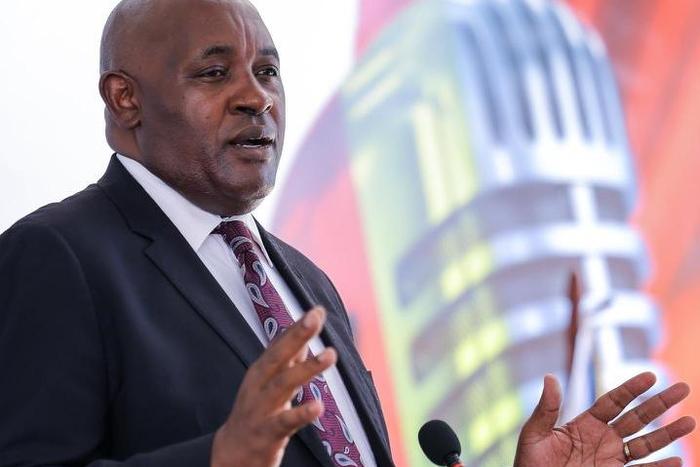
Health Minister Dr Chris Baryomunsi revealed the proposed reforms on Friday while speaking at Hotel Africana during the inaugural professorial lecture of Director General of Health Services Prof. Charles Olaro.
Baryomunsi said health officials had recently met President Yoweri Museveni to discuss changes needed to improve the country’s healthcare system, including the deployment and management of medical personnel.
He said the President had directed the Ministry of Health to prepare a Cabinet white paper outlining proposed reforms covering medical training, recruitment, deployment and staff welfare.
The proposed restriction on public-sector doctors working in private medical facilities is intended to strengthen the availability of doctors in government hospitals, although details of how the measure would be implemented have not yet been provided.
It remains unclear whether the proposed restriction would amount to a complete ban on private practice or introduce limitations governing when and where government-employed doctors can offer private medical services.
Hospitals lined up for restructuring
Beyond the proposed restriction on private practice, Government is considering a major restructuring of public health facilities to increase access to specialised medical services.
Under the proposed arrangement, national referral hospitals would be transformed into super-specialised facilities, while existing regional referral hospitals would be upgraded to national referral status.
Health Centre IVs would also be converted into community hospitals staffed by five doctors, while Health Centre IIIs would be upgraded to accommodate three doctors.
Baryomunsi said the broader objective was to restore public confidence in local healthcare facilities and reduce dependence on overseas medical referrals, which often come with significant costs for patients and government.
Lubowa Hospital construction at 70 per cent
Addressing concerns about the long-delayed Lubowa Specialised Hospital, Baryomunsi said construction had reached 70 per cent, with the facility expected to be ready by the end of the year.

He added that the process of identifying specialised medical personnel had already started through headhunting, while public advertisements for remaining vacancies were expected to follow.
The hospital is expected to expand Uganda’s capacity to provide specialised treatment locally, although its operational readiness will depend on completion of construction, recruitment of medical personnel and availability of equipment.
Olaro calls for health leadership academy
Baryomunsi made the remarks during the inaugural professorial lecture of Prof. Olaro, who was appointed Professor of Practice in Health Services Management by Clarke International University.
Delivering a lecture titled “Reimagining Health Services Management: Leadership for Resilient Health Systems in Africa,” Olaro emphasised the importance of strong leadership and institutional governance in improving healthcare delivery.
He argued that healthcare systems are complex networks whose performance depends not only on available resources but also on how effectively institutions coordinate and manage them.
Olaro called on Government to establish a dedicated health leadership academy to groom future managers and strengthen succession planning across the health sector. He said structured leadership development would help maintain institutional efficiency and prevent disruptions in service delivery during transitions involving senior health managers.
The proposed reforms come amid continued concerns about the capacity of Uganda’s public health facilities to provide specialised treatment and retain adequate medical personnel.
If you would like your article/opinion to be published on Uganda’s most authoritative news platform, send your submission on: [email protected]. You can also follow DailyExpress on WhatsApp and on Twitter (X) for realtime updates.


