

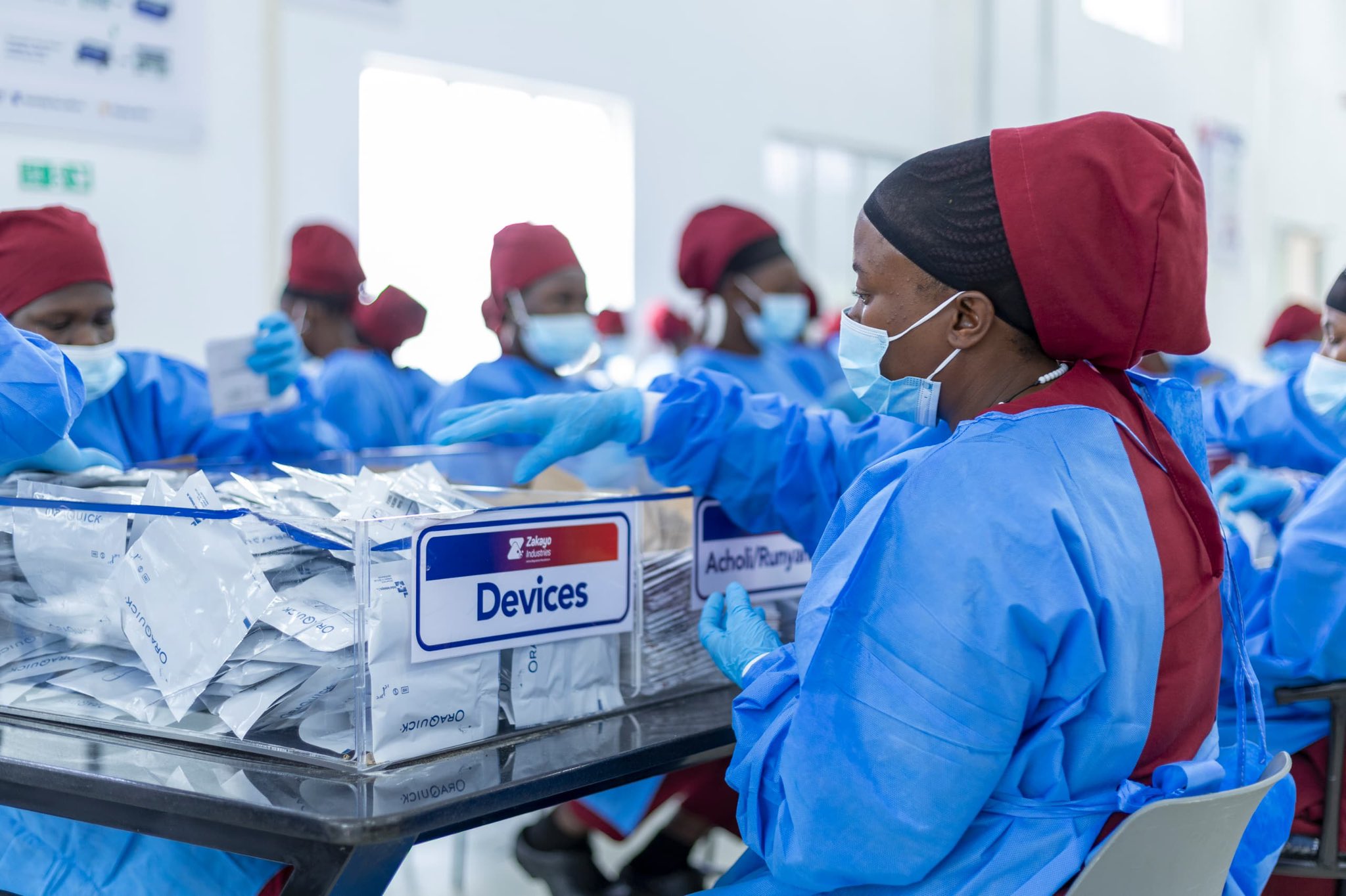
In Summary: Uganda has started assembling and packaging OraQuick HIV self-test kits at Zakayo Industries Limited in Mukono, targeting to reduce the retail price from Shs25,000–30,000 to Shs7,000. The company has also dispatched its first export consignment to Kenya as it expands production capacity.
Mukono, Uganda — Uganda has begun local production of HIV self-test kits in a development expected to lower testing costs, strengthen domestic manufacturing of medical diagnostics and reduce dependence on imported health commodities.
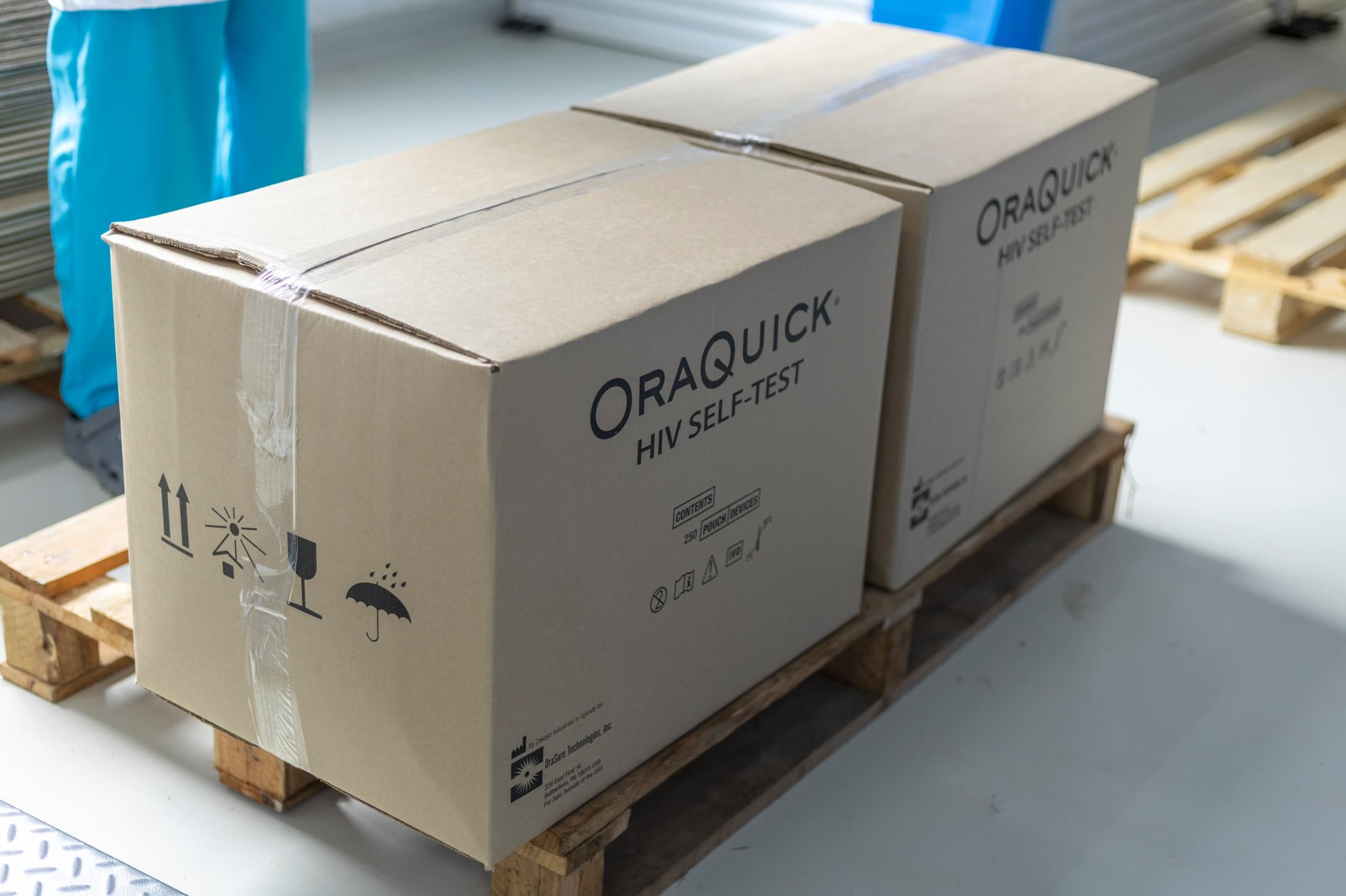
Zakayo Industries Limited commissioned its in-vitro diagnostic manufacturing plant in Ntenjeru, Mukono District, on Thursday, marking the start of local assembly and packaging of OraQuick HIV self-test kits in partnership with United States-based OraSure Technologies.
The company is targeting to reduce the retail price of the kits from the current Shs25,000–30,000 to about Shs7,000, potentially making self-testing more affordable for individuals seeking convenient and private access to HIV screening.
The commissioning also coincided with the dispatch of the company’s first export consignment to Kenya, signalling its ambition to serve regional markets.
Zakayo Industries Chief Executive Officer Ronald Zakayo Watanda said the investment was intended to position Uganda as a producer and exporter of essential medical products rather than relying predominantly on imported supplies.
“Twenty-five years ago, we imported everything. Tomorrow, we should be exporting. As a matter of fact, we exported today,” Watanda said, referring to the first consignment sent to Kenya.
He said local production would create employment opportunities, contribute to economic growth and strengthen Uganda’s capacity to supply neighbouring markets.
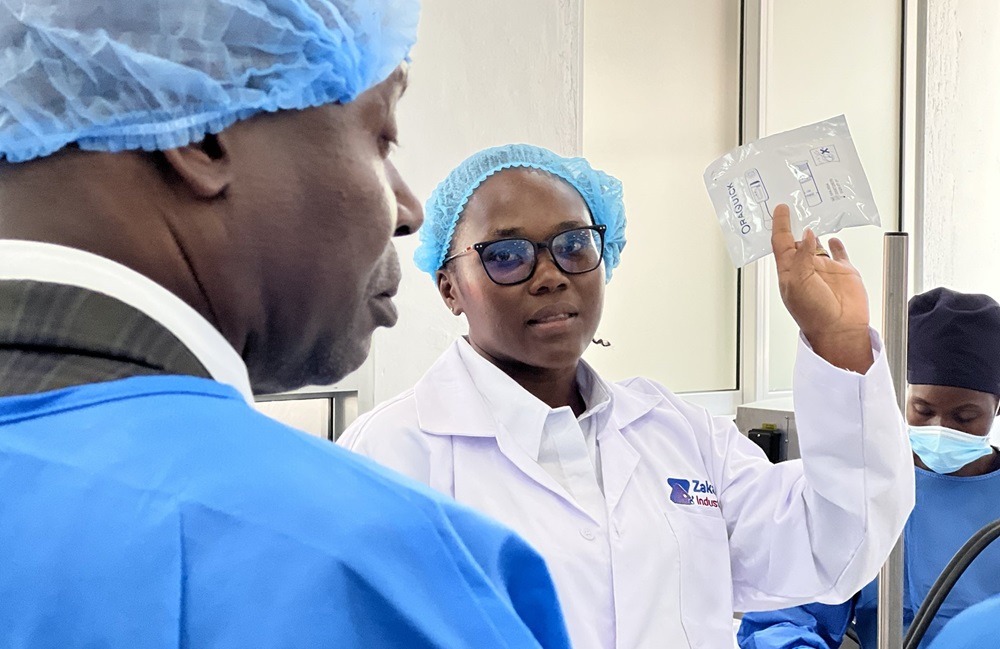
Plant Manager Shamim Nagayi said the facility began assembling approximately 10,000 kits per eight-hour shift in June but had since expanded production capacity to between 50,000 and 60,000 kits daily. She said the company hoped to bring the retail price down to Shs7,000 to make HIV self-testing more accessible.
However, Nagayi clarified that HIV self-test kits are already distributed free of charge through government public health facilities, meaning the proposed price reduction is particularly relevant to the retail market.
How the self-test works
The OraQuick HIV self-test allows individuals to screen themselves using an oral fluid sample collected from the gums, without drawing blood or requiring a health worker to administer the test.
The kit also provides a toll-free contact number through which users can obtain guidance on using the product and understanding their results.
However, a reactive self-test result does not independently establish an HIV diagnosis. Individuals who obtain a reactive result must undergo confirmatory testing at a health facility in line with Uganda’s national HIV testing guidelines.
Speaking at the commissioning, OraSure Technologies Senior Director for International Diagnostics John Ballester said the partnership would shorten supply chains that previously involved manufacturing raw materials in the United States, assembling the kits in Thailand and transporting finished products to African markets.
He said geopolitical tensions, increasing freight costs and other international disruptions had demonstrated the importance of bringing manufacturing closer to the markets being served.

Ballester said the partnership could also open opportunities for local production of other diagnostic products, including Ebola tests, while the company explores the development of tests for hepatitis and sickle cell disease.
Uganda’s HIV testing challenge
Director General of Health Services at the Ministry of Health, Dr Charles Olaro, said HIV self-testing could help reach people who face barriers to conventional testing, including stigma, privacy concerns and inconvenience.
He cited Uganda’s HIV prevalence at 5.9 per cent and estimated that between 150,000 and 200,000 Ugandans do not know their HIV status.
Self-testing provides an additional option for people who may otherwise delay or avoid accessing conventional testing services, although confirmatory testing and linkage to appropriate care remain essential following a reactive result.
The local manufacturing initiative comes as Uganda seeks to strengthen domestic production of essential health commodities and reduce vulnerability to international supply chain disruptions.
Zakayo Industries currently employs more than 120 workers, according to Nagayi, who said the company intends to progress from assembly and secondary packaging to primary packaging and full manufacturing by 2028.
The company said it had obtained ISO 9001 and ISO 13485 certifications as part of its quality management and medical device manufacturing processes.
If you would like your article/opinion to be published on Uganda’s most authoritative news platform, send your submission on: [email protected]. You can also follow DailyExpress on WhatsApp and on Twitter (X) for realtime updates.


