
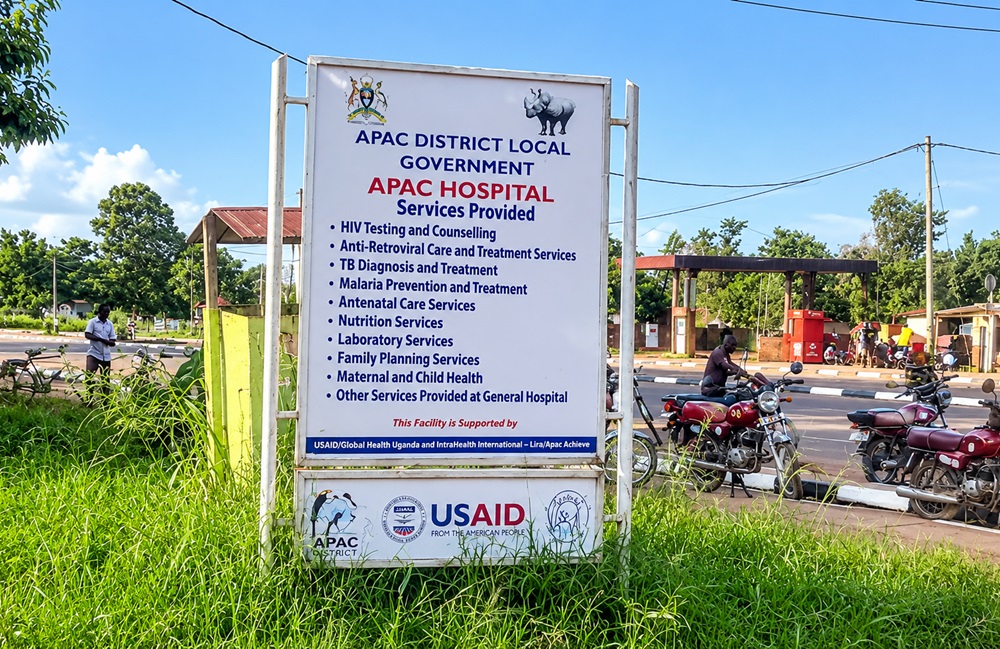
In Summary: Apac District could miss out on major health infrastructure investments, including plans to upgrade Apac General Hospital to a regional referral facility, unless a longstanding land ownership dispute is resolved and the hospital secures a valid land title.
Apac, Uganda — Apac District could lose out on planned health-sector investments worth approximately Shs92.8 billion if a longstanding land ownership dispute involving Apac General Hospital is not urgently resolved, district health officials have warned.
The dispute, which has raised concerns over the ownership, management and protection of public institutional land, is threatening infrastructure plans for the hospital and the district’s ambition to upgrade it to a Regional Referral Hospital.
The warning was issued by the Assistant District Health Officer in charge of Maternal and Child Health, Caroline Leji, during Apac District’s budget conference for the 2027/2028 financial year held at Mebos Lounge Hotel in Apac Town on Thursday.
Leji told stakeholders that government had earmarked funding for the construction of two storage buildings at Apac General Hospital, but the proposed works were being held back by the absence of a valid land title for the facility.
She warned that failure to secure the necessary land documentation could jeopardise the planned investment and delay other development projects intended to strengthen healthcare delivery in the district.
Regional referral hospital ambition at risk
Beyond the proposed storage facilities, the land dispute could affect Apac’s broader ambition to upgrade the general hospital to regional referral status.
According to Leji, the proposed upgrade is among the district’s priorities for the 2027/2028 financial year. Attaining regional referral status would potentially expand the hospital’s capacity to provide specialised medical services, strengthen its referral systems and reduce the need for patients to travel to other facilities for advanced treatment.
However, the lack of clear land ownership documentation could complicate plans for expanding the facility, which would require sufficient and legally secured land for additional medical departments, staff accommodation and supporting infrastructure.
The situation has raised concerns about the district’s preparedness to receive and implement major government-funded projects when basic institutional land documentation remains unresolved.
RDC questions occupation of hospital land
The dispute took a more confrontational turn when Resident District Commissioner Andrew Onyuk criticised individuals, including some former district officials, whom he accused of establishing private residences on land reportedly reserved for Apac General Hospital.
Onyuk questioned why construction activities were allegedly continuing on the contested land despite concerns over its ownership and the hospital’s need to secure its property.
He also raised concerns about claims that some occupants had acquired questionable land titles, although the validity of the documents and the circumstances under which they were issued have not yet been independently established.
The RDC pledged to pursue the matter to its logical conclusion, signalling possible administrative and legal action to establish how the disputed land was occupied and whether any irregular transactions occurred.
The allegations have placed renewed attention on the responsibility of successive district administrations and relevant land authorities to protect public institutional property.
A determination of the dispute will require examination of the hospital’s original land allocation documents, registered titles, cadastral surveys, historical transactions and the current boundaries of the institution’s property.
Any allegations of fraudulent acquisition, abuse of office or unlawful occupation will need to be established through official records and lawful investigations before individuals can be held responsible.
District leadership faces pressure
The dispute also presents a governance challenge for Apac’s political and administrative leadership, which is expected to ensure that public assets are protected and that infrastructure projects are not delayed by avoidable documentation problems.
District Speaker Oscar Ogwang Odule and Secretary for Education and Health Jaspher Odongo are among the local leaders expected to play a role in addressing the matter through council oversight and engagement with the relevant authorities.

The district leadership will need to establish the extent of the contested land, determine the legal status of the documents being presented by the different parties and identify the steps required to secure the hospital’s property.
The Ministry of Lands, Housing and Urban Development, the District Land Board and other relevant government agencies may be required to assist in verifying the ownership records and resolving any irregularities identified.
For residents who depend on Apac General Hospital, the consequences of the dispute could extend beyond disagreements over land ownership.
Delays in planned infrastructure development could affect the hospital’s ability to expand services, improve its operations and respond to the growing healthcare needs of the district and neighbouring communities.
The proposed storage facilities are among the planned infrastructure interventions, while the regional referral hospital ambition represents a broader effort to strengthen access to specialised healthcare.
If the reported Shs92.8 billion investment is delayed or lost because of unresolved land documentation, the impact could be felt by patients, expectant mothers, children, health workers and families who rely on the facility.
The situation highlights the importance of securing public institutional land before major infrastructure investments are implemented. Government-funded projects require institutions to meet land ownership, planning and other administrative requirements to avoid disputes that could frustrate implementation.
Apac District now faces pressure to work with the relevant land authorities to verify the hospital’s boundaries and ownership records, establish the circumstances surrounding the disputed occupation and secure the documentation required for the proposed developments.
The district will also need to establish precisely which projects make up the reported Shs92.8 billion investment, the status of their funding approvals and the specific land requirements attached to each project.
Until the ownership dispute is resolved, Apac General Hospital’s proposed expansion and the district’s ambition to attain regional referral status remain exposed to uncertainty.
If you would like your article/opinion to be published on Uganda’s most authoritative news platform, send your submission on: [email protected]. You can also follow DailyExpress on WhatsApp and on Twitter (X) for realtime updates.


