
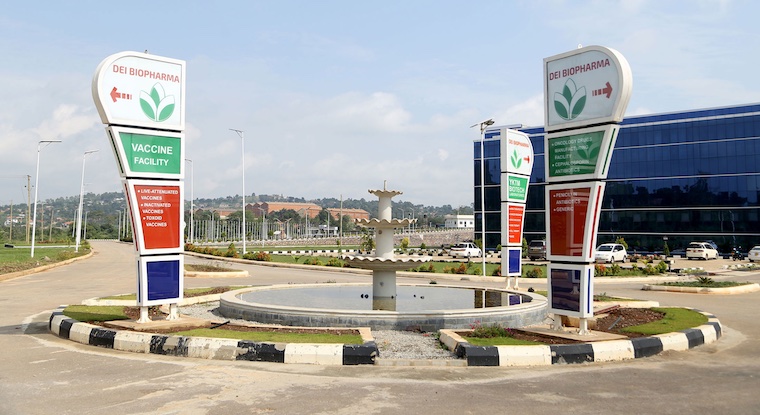
In Summary: Dr Mathias Magoola’s properties under the Dei business group have been advertised for sale over outstanding loan obligations, raising fresh questions about the financial position of an enterprise that has received Shs723.4 billion in government support.
Kampala, Uganda — Properties linked to businessman Dr Mathias Magoola and companies associated with his Dei business group have been advertised for sale by public auction or private treaty over outstanding loan obligations, adding fresh pressure to a pharmaceutical manufacturing project that has attracted Shs723.4 billion in government investment.
A notice published on November 5, 2026, by Jald (U) Ltd, a debt collection and auctioneering firm, lists industrial, commercial, residential and other properties registered in the names of Dei Industries International Limited, Dei Natural Products International Limited, Magoola and other associated proprietors.
The notice, issued on instructions of an unnamed financial institution, gives the affected company and its guarantors an opportunity to settle outstanding loan balances, interest, fees and other disbursements before the advertised sale.
The development has renewed scrutiny of the financial position of the wider Dei business interests, particularly Dei BioPharma, whose pharmaceutical manufacturing project has received substantial public financing but continues to face questions over its debts, operational capacity and the protection of government’s investment.
The auction notice does not disclose the lender’s identity, the total amount being demanded or the reserve prices of the properties. It also does not establish that all the listed assets are owned by Dei BioPharma Limited, since several are registered under separate companies and individuals.
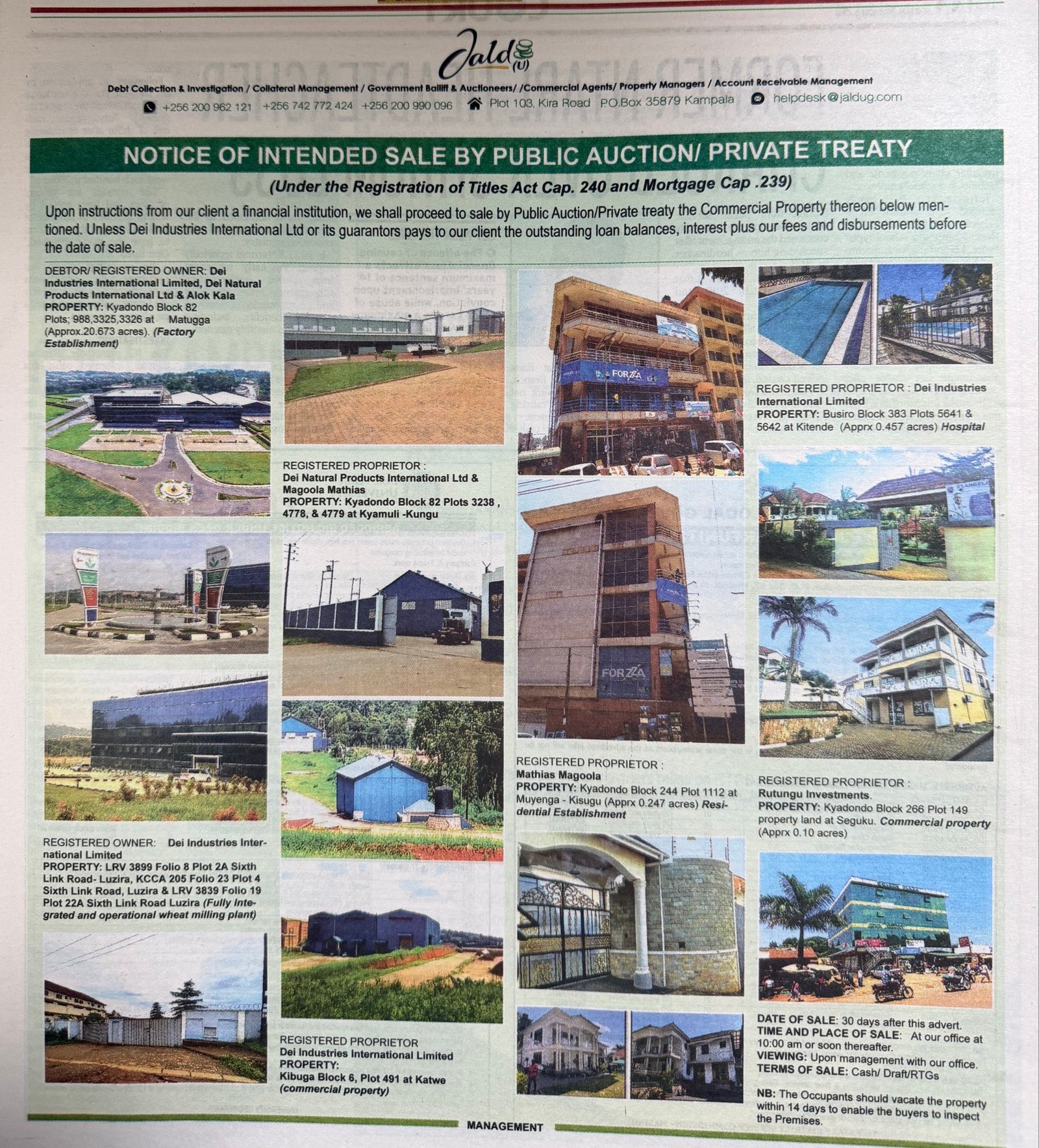
Properties in Matugga, Luzira, Kitende and other areas listed
Among the properties advertised is an industrial establishment measuring approximately 20.673 acres in Matugga, Wakiso District, registered under Kyadondo Block 82, Plots 988, 3325 and 3326.
The list also includes a fully integrated wheat milling plant along Sixth Link Road in Luzira, registered in the name of Dei Industries International Limited.
Other properties include plots in Kyamuli-Kungu registered in the names of Dei Natural Products International Limited and Magoola; a residential establishment measuring approximately 0.247 acres in Muyenga-Kisugu; and a property described as a hospital measuring approximately 0.457 acres in Kitende.
The advertisement further identifies commercial property in Seguku, registered in the name of Rutungu Investments, and another property in Katwe registered under Dei Industries International Limited.
The range of assets suggests that the recovery process extends beyond the pharmaceutical manufacturing facility to other business and property interests associated with the group.
According to the notice, the properties are to be sold by public auction or private treaty 30 days after publication, unless the outstanding obligations are settled before the sale. The auctioneer also directed occupants to vacate within 14 days to allow prospective buyers to inspect the premises.
The stated payment terms include cash, bank draft or Real-Time Gross Settlement (RTGS).
Shs723.4b government investment under scrutiny
The auction development comes against the background of government support totalling Shs723.4 billion for Dei BioPharma Limited, a privately operated pharmaceutical manufacturing enterprise associated with Magoola.
The Auditor General’s report for the financial year ended June 30, 2024, documented the government’s investment in three main tranches: Shs70 billion appropriated in the 2023/2024 financial year, a further Shs75 billion provided in December 2023 and Shs578.4 billion approved through a supplementary budget in the 2024/2025 financial year.
The Shs578.4 billion allocation was intended to support the company’s debt obligations and operational requirements as it developed its pharmaceutical manufacturing facility.
However, in his December 2024 report, Auditor General Edward Akol raised concerns about the documentation and safeguards surrounding the public investment.
He said his audit had not established the company’s net worth through a valuation report to determine whether government had received shares equivalent to the amount invested. He also reported that he had not been provided with the government’s shareholder agreement or share certificates at the time of the audit.
Akol recommended that the Ministry of Finance engage the Attorney General and the company to ensure the relevant investment agreements and share certificates were submitted to safeguard government’s interests and minimise possible legal risks.
The findings raised questions about how the State’s investment in a privately operated enterprise was structured and whether the necessary documentation had been completed.
Equity Bank loan dispute reaches Court of Appeal
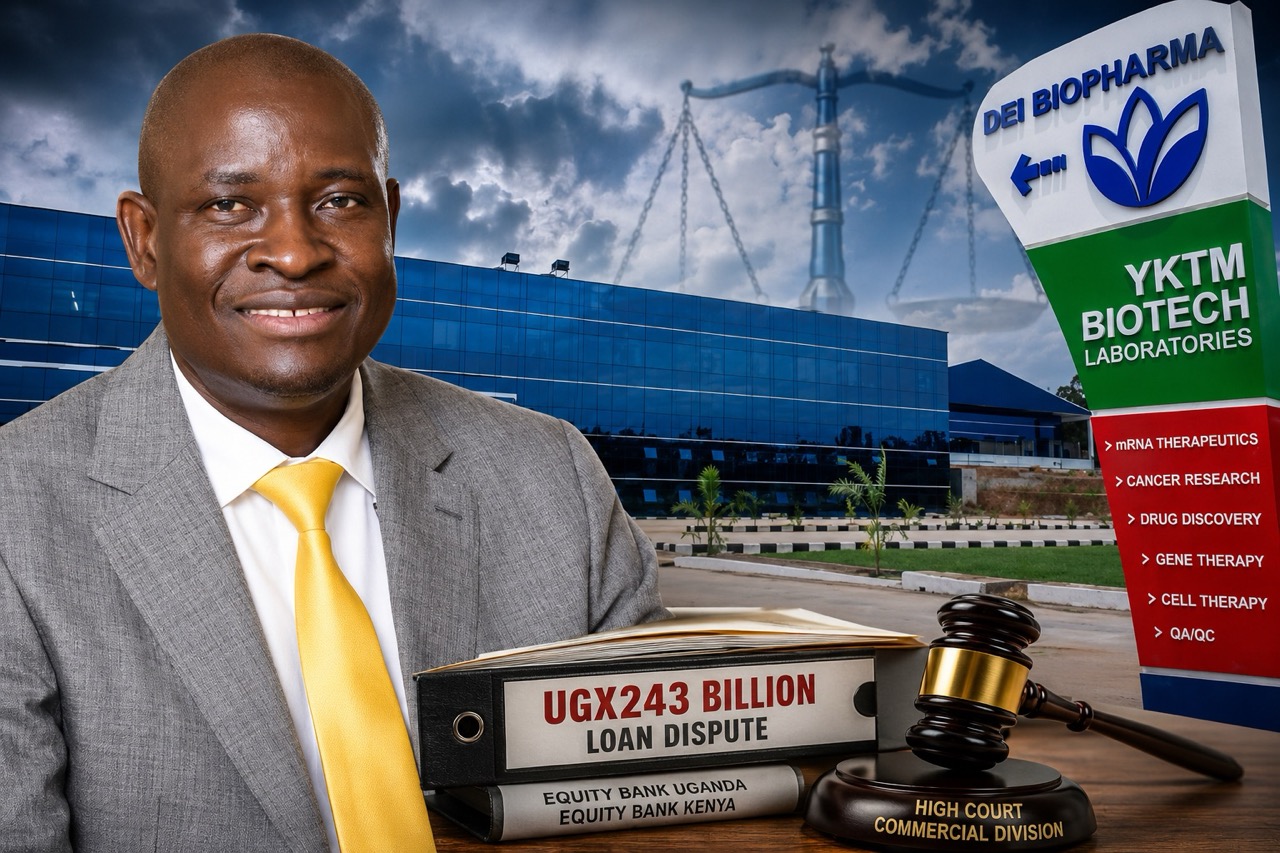
The financial questions surrounding the Dei business interests have also been the subject of a prolonged dispute involving Equity Bank Uganda and Equity Bank Kenya.
The dispute concerns credit facilities obtained by the companies between 2016 and 2021 to finance the establishment of the pharmaceutical manufacturing project and related business operations.
In the commercial litigation, the banks demanded Shs82.2 billion from Equity Bank Uganda and approximately US$43.23 million from Equity Bank Kenya. The companies disputed the amounts, arguing that the outstanding balances were inflated by interest and other charges, and sought an audit and reconciliation of the loan accounts.
An independent audit commissioned through a process involving the Institute of Certified Public Accountants of Uganda reportedly put the applicants’ indebtedness at US$39.91 million, equivalent to approximately Shs147.7 billion.
The companies challenged the audit process and the findings, meaning the figure remains part of a contested loan dispute rather than an undisputed final determination of the amount payable.
In September 2026, Court of Appeal Justice Florence Nakachwa stayed proceedings in High Court Civil Suit No. 929 of 2024 pending the hearing and final determination of the companies’ intended appeal.
The judge said the appeal raised questions about the audit process and whether the report accurately reflected the companies’ indebtedness. The stay halted proceedings in the main commercial suit while the intended appeal is pursued; it did not determine the final loan balance or extinguish the underlying obligations.
The November 5 auction advertisement therefore introduces a further development in the wider debt dispute, although the notice does not expressly identify the financial institution behind the recovery instructions.
Parliament questions returns from public investment
The accountability concerns intensified in October 2026 when Parliament examined the performance of Dei BioPharma and other government-supported science and technology projects.
On October 6, the Committee on Presidential Affairs called for stronger documentation of government’s shareholding, expected returns, project deliverables and measurable benefits from the Shs723.4 billion investment.
Presenting the committee’s findings, chairperson Martin Mapenduzi said government was understood to hold a 9.4 per cent stake in Dei BioPharma, but documentary proof of the shareholding had not been presented during the committee’s assessment.

The committee also found that the pharmaceutical facility was operating below its envisaged capacity. It reported that the company produced and distributed six generic medicines during the 2024/2025 financial year, while several specialised production lines remained under installation, validation and commissioning.
The committee recommended that government consider securing an additional US$434 million, approximately Shs1.74 trillion, to complete and fully operationalise the facility.
The proposal sparked further debate in Parliament on October 7, with Deputy Speaker Thomas Tayebwa questioning the basis for committing additional public funds before outstanding accountability and procedural concerns had been resolved.
The debate placed renewed attention on the need to establish what government owns, what returns it expects and how the initial investment has translated into operational capacity and benefits for Ugandans.
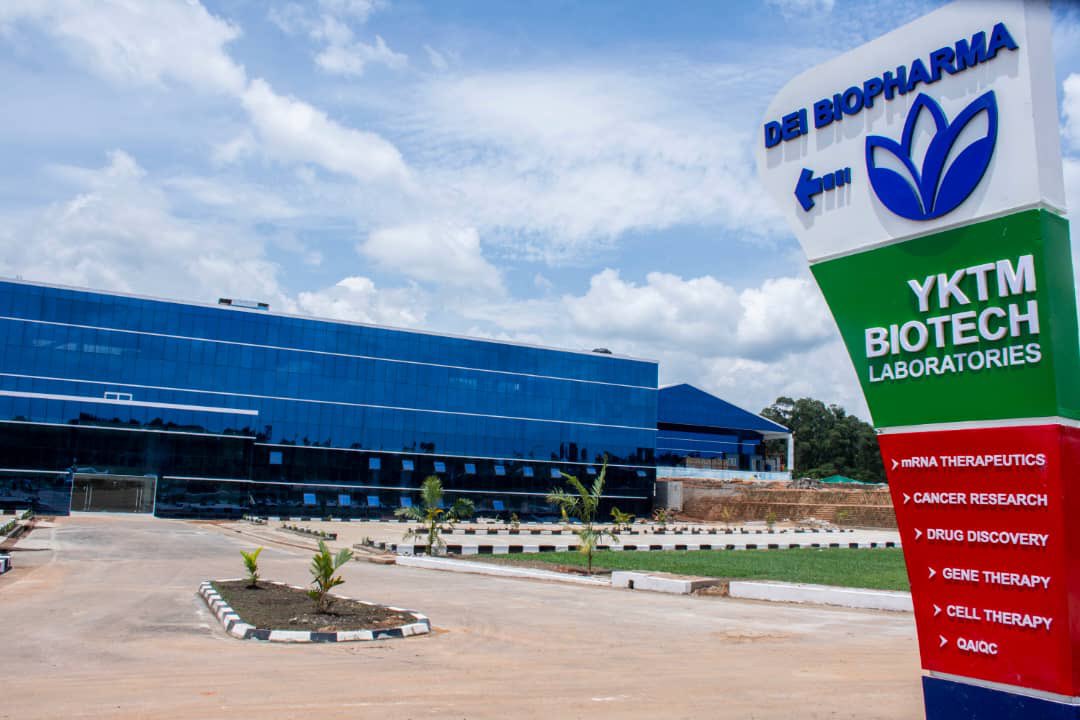
More funding sought as questions remain
The proposal for additional financing has brought the competing national interests surrounding the project into sharper focus.
Supporters of the investment argue that completing the facility could strengthen local pharmaceutical manufacturing, reduce dependence on imported medicines, create employment and improve Uganda’s capacity to respond to public health needs.
The Parliamentary Committee on Presidential Affairs also highlighted the need for reliable utilities, including electricity and water, to enable the facility to operate at its intended capacity.
However, the proposal for more public financing has been accompanied by demands for clearer documentation of the State’s shareholding, expected returns, project deliverables and accountability for funds already committed.
The latest auction notice adds another dimension to those questions because it exposes several properties associated with the wider business group to a creditor recovery process.
It remains important to distinguish the assets listed in the notice from the pharmaceutical facility itself. The advertisement identifies properties registered under different legal entities and individuals, and does not establish that every asset is part of Dei BioPharma’s ownership.
Workers’ salary concerns add to scrutiny
The group’s financial position has also attracted attention following media reports alleging that some Dei BioPharma employees went for months without receiving their salaries in 2026.
Mulengera News reported that workers had not received salaries from January and that employees staged industrial action over delayed payments. The report also cited an internal communication said to have been issued by the company’s human resources department.
The allegations raise additional questions about the company’s ability to meet operational obligations, although the claims require confirmation through payroll records and an official response from management.
The company should also clarify the current position on outstanding employee payments, statutory remittances and the status of its workforce.
Taxpayers await answers
The auction advertisement has renewed a fundamental public accountability question: what has the country received in return for the Shs723.4 billion committed to Dei BioPharma, and what safeguards protect the government’s stake in the enterprise?
The Auditor General’s findings, Parliament’s assessment, the contested bank debt and the latest property sale notice represent separate developments, but together they underline the need for transparent reporting on the company’s finances, ownership structure, liabilities and operational performance.
The pharmaceutical project has been presented as strategically important to Uganda’s ambition to manufacture more medicines locally. Its completion could offer economic and public health benefits, but those objectives must be matched by clear accountability for public resources.
Government, the company and the relevant financial institutions now face questions that go beyond the advertised properties: the status of the disputed loans, the ownership and encumbrance of the assets, the protection of public investment and the conditions under which any further financing should be considered.
For taxpayers, the central issue is not simply whether the advertised properties will eventually be sold. It is whether the public investment has been properly safeguarded and whether the pharmaceutical project can deliver the promised national benefits.
If you would like your article/opinion to be published on Uganda’s most authoritative news platform, send your submission on: [email protected]. You can also follow DailyExpress on WhatsApp and on Twitter (X) for realtime updates.