

In Summary: Eng Jonard Asiimwe Akiiki has challenged university students to transform research and innovative ideas into marketable products, businesses and employment opportunities, warning against an education system that produces graduates who only seek jobs instead of creating them.
Gulu, Uganda — Science and Technology Minister Eng Jonard Asiimwe Akiiki has challenged university students to use science, technology and innovation to transform their ideas into businesses and employment opportunities, urging them to become job creators rather than job seekers.
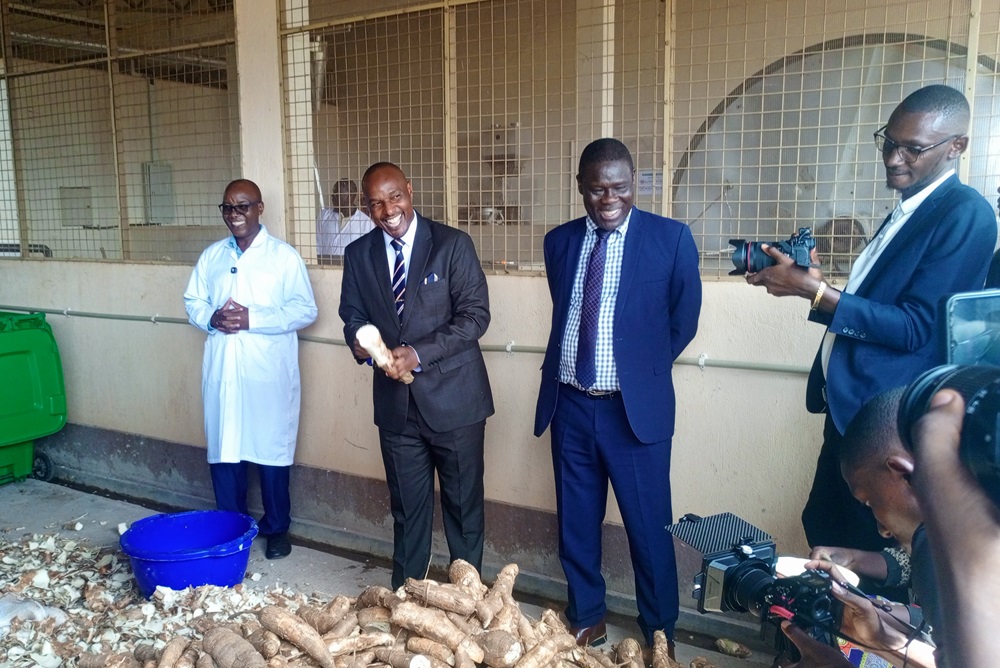
Asiimwe, who leads the Ministry of Science, Technology and Innovation in the Office of the President, made the call while engaging students and university leaders at Gulu University during a visit aimed at assessing research and innovation activities and exploring ways of linking academic work to industry.
The engagement is part of the ministry’s efforts to move scientific research beyond laboratories and classrooms into commercially viable products, enterprises and solutions that address community needs.
The minister said university research should deliver practical benefits for society, including improved livelihoods, business opportunities, and jobs. He challenged universities to recognise and nurture innovation among young people, including students in secondary schools who are already developing promising ideas.
“Some students in Senior Five and Senior Six are already doing wonders in science innovation, more than some university students. We are going to work with them because they can present good ideas that only need funding,” Asiimwe said.
He said the ministry was assessing research and innovation capabilities in different institutions, including general technology hubs and specialised fields such as nuclear and space science, to identify opportunities for connecting innovators with private-sector financing and government support.
Asiimwe pledged continued government support through training, funding and mentorship to help students develop innovations into viable businesses.
The visit also highlighted the need to strengthen practical science education and equip university students with skills that can support entrepreneurship and industrial development.
Gulu University Vice Chancellor Prof. George Ladaah Openjuru said science and technology could help address challenges in sectors such as agriculture and food security through mechanised farming tools, improved crop varieties and scientific soil management.
He called for a shift from education that is largely theoretical to training that equips graduates with practical skills to start businesses and employ others.
“We cannot continue producing graduates who only wait for jobs that are not there. We must train them to use science, innovation, and technology to create their own jobs, start businesses, and employ others. That is the only way our country will grow and our young people will become productive,” Openjuru said.
He appealed to the minister to support the upgrading of Gulu University’s laboratories, saying improved facilities would enable more students to participate in scientific research and innovation.
One of the students, Okello Plus, asked the ministry to advocate for the integration of science and innovation across university programmes and secondary school curricula, arguing that early exposure would help address unemployment.
“Many students, after finishing their degrees, can’t do anything because they lack skills in science innovation. That makes them struggle with life after university,” Okello said. He said introducing innovation at an earlier stage of education would enable students to graduate with practical skills to develop businesses, create jobs and address challenges in their communities.
Amuru County MP Gilbert Olanya called for a policy framework to support university students engaged in science and technology, saying such interventions could contribute to poverty reduction in the Acholi sub-region.
He warned that without structured support, the ambitions of promoting innovation among students could fail to translate into meaningful economic outcomes. “Even at degree level, a child cannot do anything because they lack practical skills that they were never taught. We must move away from theory-based learning to hands-on learning if we want our children to compete and survive,” Olanya said.

He added that practical education would help young people use locally available resources to develop innovations, establish businesses and improve household incomes rather than depend solely on formal employment.
Okello Geoffrey, a Master’s student in Information and Communication Technology at Gulu University, said institutions such as the Uganda Industrial Research Institute (UIRI) and the Uganda National Bureau of Standards (UNBS) play important roles in supporting innovation.
However, he raised concerns about funding gaps, shortages of modern equipment and reliance on external donor financing, which he said limit the capacity of laboratories and research centres.
“Our laboratories and research centres are struggling. They lack enough funding and modern equipment, and most of them depend on donors. This limits what our students and researchers can do,” Okello said.
He urged government and local institutions to invest more in domestic innovation and support students with the resources needed to develop their ideas. “There are many students with skills in innovation, but they are not being supported to achieve their careers. If we start supporting our own students, we shall unlock great talent that is currently being wasted.”
The ministry’s Science, Technology and Innovation Fund is one of the government mechanisms supporting the development and commercialisation of local innovations. According to the ministry’s official portfolio, more than 100 projects across Uganda have received support since 2021, with initiatives including electronics manufacturing, hardware incubation and the commercialisation of university research.
The ministry’s Commercialisation of Academic Research Initiative, for instance, supports university-led innovations through mentorship and financing, with the aim of moving research ideas towards market-ready products.
The university engagement is also aligned with Uganda’s Fourth National Development Plan (NDP IV), covering the 2025/26 to 2029/30 financial years, which identifies innovation, technology development, industrialisation and job creation among the country’s development priorities.
The government has positioned science, technology and innovation as important drivers of productivity, value addition and the transition towards a knowledge-based econom
If you would like your article/opinion to be published on Uganda’s most authoritative news platform, send your submission on: [email protected]. You can also follow DailyExpress on WhatsApp and on Twitter (X) for realtime updates.


