
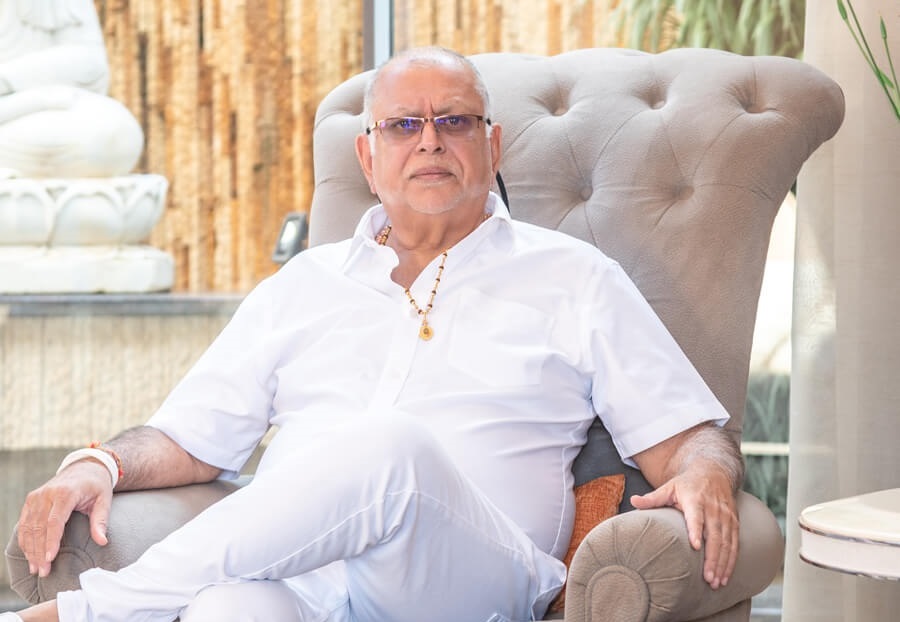
In Summary: The London trial over Crane Bank’s transfer to dfcu has brought foreign-linked investors, including Norway’s Norfund and the Netherlands-based Rabo Partnerships, into the centre of a dispute over the 2017 transaction. While Sudhir Ruparelia and other former shareholders are seeking about £200 million in damages, the Bank of Uganda is separately demanding recovery of Shs219.4 billion, a claim Sudhir disputes.
Kampala, Uganda — Nearly a decade after the Bank of Uganda seized Crane Bank and transferred selected assets and liabilities to dfcu Bank, businessman Sudhir Ruparelia’s long-running legal battle has entered a critical phase in London, placing the foreign-linked investors behind dfcu under renewed scrutiny.
The substantive trial of Crane Bank Limited and Others v dfcu Bank Limited and Others opened at the Commercial Court in London on October 5, 2026. The proceedings are expected to run for about 12 weeks, with the claimants seeking approximately £200 million in damages over the controversial 2017 transaction.
The claimants, led by Billionaire Sudhir Ruparelia, argue that the takeover and transfer of Crane Bank’s business were part of an unlawful scheme that deprived them of their investment at a gross undervalue. They are challenging the conduct of the transaction and the roles played by dfcu, its shareholders and other individuals and institutions.
The case has drawn attention to investors linked to the Netherlands and Norway, particularly Rabo Partnerships, a subsidiary of Dutch banking group Rabobank, and Norfinance, as well as other defendants connected to dfcu’s ownership and board.
Crane Bank, founded by Ruparelia in 1995, grew into one of Uganda’s largest indigenous commercial banks before the central bank placed it under statutory management on October 20, 2016, citing serious capital and liquidity concerns.
In January 2017, the Bank of Uganda transferred selected assets and liabilities of Crane Bank to dfcu under a Purchase of Assets and Assumption of Liabilities agreement. The transaction involved a stated Shs200 billion consideration payable to the central bank.
The former shareholders dispute the legality and fairness of the process. They argue that dfcu acquired the business without a proper independent valuation and that the central bank had approached the prospective buyer before the process was sufficiently established.
Among the allegations presented by the claimants is an internal email from late 2016 concerning $27.5 million, approximately Shs99 billion, linked to the disposal of a portfolio of Crane Bank loans. They contend that the communication indicated the money would be transferred to the central bank without being properly recorded, and characterise the proposed arrangement as evidence of bribery.
The claimants have also referred to the US conviction of Hong Kong intermediary Patrick Ho for bribing officials in Uganda in connection with a Chinese conglomerate’s business interests. They argue that the circumstances surrounding that episode are relevant to the wider questions about how the Crane Bank transaction was handled.
These remain allegations to be tested against the evidence before the London court. The defendants have rejected the claims and maintain that the Bank of Uganda acted lawfully in resolving a financially distressed institution and protecting depositors.
dfcu has argued that Crane Bank was seriously undercapitalised and that the transaction followed due diligence and valuation work. The bank has also maintained that the disputed $27.5 million arrangement was connected to legitimate repayment of emergency support rather than bribery.
The valuation and forensic work have also featured in the defendants’ account of the transaction, with court-related material distinguishing between the work undertaken by KPMG and the reports prepared by PwC.
Norfund, which is linked to the Norwegian investment interests in the case, has rejected the allegations. Other defendants, including former Rabobank executives Albert Jonkergouw and Willem Cramer, who served on dfcu’s board, have also been drawn into the proceedings.
The London case follows years of legal and parliamentary scrutiny in Uganda. In 2019, Parliament’s Committee on Commissions, Statutory Authorities and State Enterprises, COSASE, chaired by Abdu Katuntu, raised concerns about aspects of the central bank’s handling of Crane Bank’s resolution.
The committee questioned the timing of the inventory and audit processes, noting that dfcu had been invited to bid before the inventory report was completed. It also raised concerns about the absence of a prior valuation of the bank’s assets and liabilities before the transfer agreement was concluded.

The dispute has acquired fresh significance in Kampala following a separate confrontation between Ruparelia and the Bank of Uganda over Shs219.4 billion in outstanding liquidity support.
On November 10, 2026, Bank of Uganda Governor Michael Atingi-Ego told COSASE that the central bank still considered the amount recoverable from Crane Bank and its former shareholders.
Ruparelia rejected the demand, arguing that once the central bank took control of Crane Bank on October 20, 2016, suspended the board and appointed a statutory manager, the former shareholders no longer controlled the institution and should not be held personally liable for obligations incurred under the central bank’s management.
He has invoked the principle of limited liability in challenging the demand.
Atingi-Ego warned MPs that discussing the disputed liquidity support could affect the ongoing London proceedings because the central bank’s intervention and subsequent actions form part of the wider foreign case. He urged the committee to defer substantive questioning on sensitive matters or consider handling them in a closed session.
For Ruparelia and the other claimants, the London trial offers an opportunity to have their allegations examined in a substantive court hearing. The defendants, however, maintain that the acquisition was lawful and that the claims against them are without merit.
The proceedings involve major international legal teams, with Greenberg Traurig representing the claimants and Freshfields representing dfcu. Other defendants have separate legal representation.
The outcome could have significant implications for the parties involved and for the scrutiny of Uganda’s bank-resolution processes, particularly where foreign investors participate in the acquisition of distressed financial institutions.
If you would like your article/opinion to be published on Uganda’s most authoritative news platform, send your submission on: [email protected]. You can also follow DailyExpress on WhatsApp and on Twitter (X) for realtime updates.