
In Summary: The 375.4-kilometre Tororo–Gulu railway rehabilitation has reached 93 per cent completion, with contractor China Road and Bridge Corporation targeting January 2027 to finish the remaining works. Residents in Oyam, Apac, Lira and Gulu are anticipating improved access to markets, lower transportation costs and new business opportunities, although regular passenger services will depend on technical assessments and safety inspections.
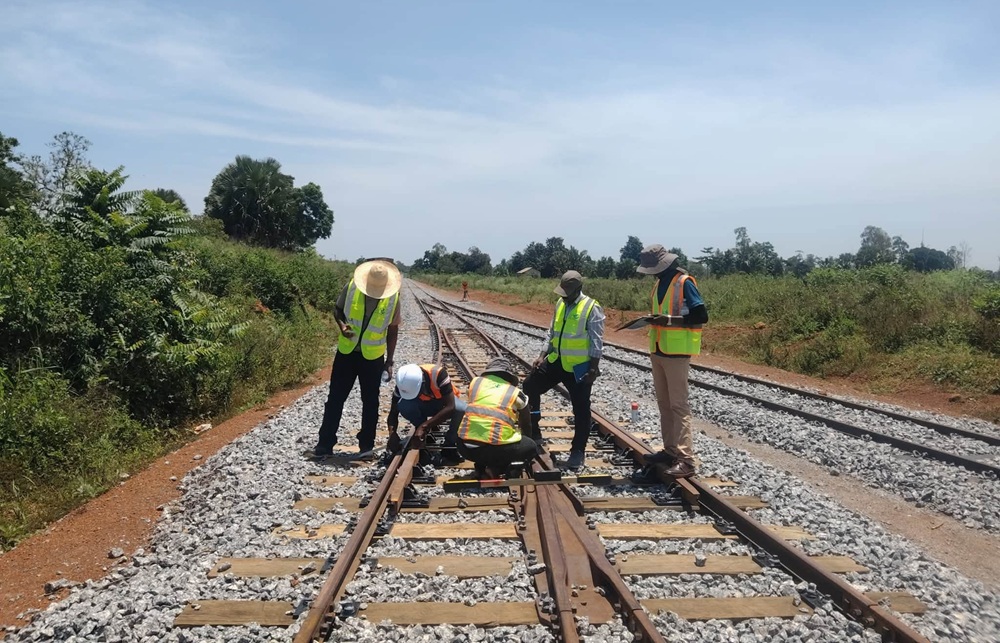
Oyam, Uganda — Northern Uganda is edging closer to a railway revival after rehabilitation works on the 375.4-kilometre Tororo–Gulu metre-gauge railway reached 93 per cent completion, raising expectations of restored train services by 2027.
China Road and Bridge Corporation (CRBC), the contractor undertaking the works, has committed to completing the remaining construction activities by January 2027, potentially ending years of limited railway connectivity for communities along the corridor.
The project, being implemented by Uganda Railways Corporation (URC), is expected to reconnect Eastern Uganda, Lango and Acholi to the national railway network, providing an alternative means of transporting passengers, agricultural produce and commercial goods.
The rehabilitation is expected to strengthen trade links between the regions, improve access to markets and reduce transportation costs when regular train services resume following construction and the required safety inspections.
For residents in Oyam, Apac, Lira and Gulu districts, the approaching completion represents more than the restoration of railway tracks. It has raised expectations of affordable transportation, improved market access, employment opportunities and renewed commercial activity.
Mzee Luzino Okello, a resident of Loro-Agulurude in Oyam District, said the return of railway services would be an important development for communities that have long depended on road transportation.
“The railway is important to ordinary people because transportation costs affect almost everything we do. If the trains return and services are affordable, our farmers and traders could have better opportunities to transport their goods to bigger markets,” he said.
Okello added that communities along the railway corridor would need to embrace and protect the infrastructure to ensure it serves future generations.
Railway expected to transform regional trade
The railway line is expected to serve 15 stations across Eastern Uganda, Lango and Acholi, passing through areas including Tororo, Mbale, Bukedea, Kumi, Soroti, Alebtong, Lira, Oyam, Omoro and Gulu.
Its restoration is expected to strengthen commercial connections between rural production centres and major trading destinations.
Agriculture remains a major economic activity across Lango and Acholi, with farmers producing maize, beans, rice, sunflower, cassava and other commodities. However, transporting bulky produce to distant markets can be expensive, particularly for smallholder farmers.
A functioning railway could provide an alternative for moving larger volumes of agricultural produce, potentially reducing logistical costs and improving market access.
Keneday Adyang, from Alidi Trading Centre in Ngai Sub-county, Oyam District, said the return of the railway could stimulate business activities and improve the movement of goods.
“For people operating businesses in trading centres, transportation is a major consideration. We hope the railway will provide an affordable option for moving merchandise and agricultural produce. It could also attract more businesses to communities along the railway,” he said.
The anticipated benefits could extend to produce dealers, wholesalers, retailers, transport operators and other businesses operating around railway stations.
However, the extent of the economic gains will depend on the frequency of train services, freight charges, accessibility of stations and the availability of reliable connections to surrounding communities.
Apac residents anticipate new economic opportunities
The railway rehabilitation has also generated expectations in Apac District, where residents hope improved connectivity will strengthen commercial activities and create employment opportunities.
Samuel Alele, a resident of Aminteng in Apac Municipality, said the railway’s restoration could help open up the region to wider economic opportunities.
“Having railway services again would be a major opportunity for our region. It could make it easier for people to travel and for traders to move goods. We hope the benefits will reach ordinary residents and not remain concentrated in the major towns,” he said.
Oluma Daneil, of Te-Ibu Cell in Akere Division, Apac Municipality, said the project should be viewed as an investment in the region’s long-term economic development.
“The railway should not only be seen as a transportation project. It has the potential to create employment, support businesses and improve the livelihoods of people living along the route. We want to see local communities benefiting when operations begin,” he said.
Their expectations reflect a broader aspiration among residents that the railway should translate into practical economic benefits, particularly for communities that produce agricultural commodities but face challenges accessing lucrative markets.
Some sections already operational
Project implementation has reached important milestones, with the Tororo–Kumi section already completed and being used by Hima Cement.
Works on the Kumi–Lira section are nearing completion, while track laying and other infrastructure activities are continuing between Alito and Gulu.

The contractor’s January 2027 completion commitment marks an important step towards restoring the railway corridor.
However, completion of construction will not automatically mean immediate resumption of regular passenger services. The railway will first require the necessary technical assessments and safety inspections before regular operations can commence.
URC’s responsibility will extend beyond restoring the tracks to ensuring that the railway operates safely and reliably while meeting the transportation needs of passengers and businesses.
Employment and investment prospects
Beyond transportation, the rehabilitation could stimulate economic activity through direct and indirect employment.
Railway operations are expected to require personnel in engineering, maintenance, station management, security, administration and other technical fields.
Businesses around railway stations could also benefit from increased passenger and commercial traffic.
The restoration of freight services could encourage investment in warehouses, produce collection centres, agro-processing facilities and other logistics infrastructure, particularly in agricultural production areas.
For districts such as Oyam, Apac, Lira and Gulu, improved railway connectivity could help strengthen their position as agricultural and commercial centres.
However, local leaders and communities will need to ensure that the opportunities created by the project are accessible to residents, including young people and small-scale entrepreneurs.
Safety concerns as railway revival approaches
As construction approaches completion, residents along the railway corridor have been urged to protect the infrastructure and observe railway safety guidelines.
Communities have been cautioned against unsafe railway crossings, vandalism and activities that could endanger railway users or damage infrastructure.
The return of train services will require a change in public behaviour, particularly in communities where railway tracks have not experienced regular train movements for an extended period.
Residents will need to use designated crossing points and avoid walking or playing on railway tracks.
Protecting the railway infrastructure will be essential in ensuring the sustainability of the investment and preventing avoidable accidents.
If you would like your article/opinion to be published on Uganda’s most authoritative news platform, send your submission on: [email protected]. You can also follow DailyExpress on WhatsApp and on Twitter (X) for realtime updates.


