
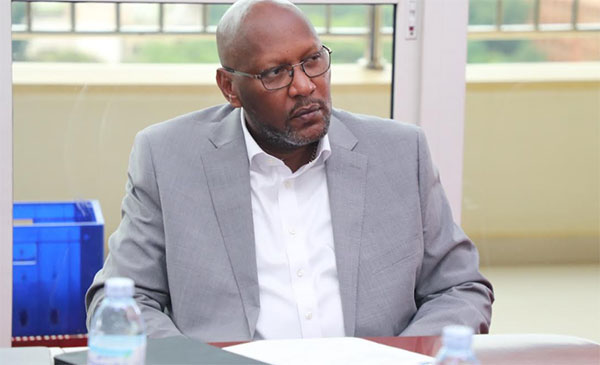
In Summary: Tooro Kingdom Prime Minister Omuhikirwa Calvin Armstrong Rwomiire Akiiki has resigned, citing growing divisions and the need for reconciliation. His departure follows weeks of reported tension with the new royal administration, including disputes over appointments, the role of his office and an accountability review.
Tooro, Uganda — Tooro Kingdom Prime Minister, Omuhikirwa Calvin Armstrong Rwomiire Akiiki, on Saturday resigned from his position, saying his decision is intended to give the Kingdom an opportunity to heal, reconcile, and move forward amid growing internal divisions.
Rwomiire announced his resignation in a statement he posted on his official X handle on November 21, after formally submitting his letter to His Majesty the Omukama, describing the decision as difficult and deeply personal.
“While personal considerations have played a part, my overriding concern is the need to allow our Kingdom to heal, reconcile and move forward,” he said, adding, “Tooro has become increasingly polarised, and I am deeply concerned that the divisions within our Kingdom are diverting attention from our shared responsibility to serve the people.”
Rwomiire said unity, reconciliation and the wider interests of the Kingdom should take precedence over individual ambitions and positions, including his own. He added that he had separately written to the Omukama, outlining the circumstances and considerations behind his resignation.
Palace tensions before resignation
Rwomiire’s exit comes less than two months after Omukama Edward Rukiidi Nyabongo I retained him as interim Prime Minister for a six-month transitional period in early October.
The arrangement followed the death of Omukama Oyo Nyimba Kabamba Iguru Rukiidi IV, who died in the United States on August 27, 2026, aged 34, after a 31-year reign. Nyabongo was subsequently crowned on September 29, following a succession process in which the royal Babiito clan played a central role.
The succession itself had been contentious. Reports emerged that the late king’s mother, Best Kemigisha, and sister Komuntale opposed the selection of Nyabongo, claiming that Oyo had left behind a previously undisclosed son and a will naming the child as heir. The Babiito clan leadership said it was unaware of such a child and had followed the customary succession process.
Rwomiire, who had served as Prime Minister under Oyo, was retained to provide administrative continuity during the transition. However, the new reign soon brought disagreements over the structure and authority of the Kingdom administration.
On October 27, Nyabongo directed Rwomiire, his Cabinet, and Kingdom departments to submit accountability reports covering their work during the previous reign by November 12.
The Omukama said the reports would be reviewed by the Kingdom’s Supreme Council before recommendations were submitted to him. He also indicated that Rwomiire’s interim appointment was intended to manage the transition rather than establish a new administration.
Nyabongo further raised concerns about appointments made during the interim period, saying some had been made in error. The Supreme Council was expected to review the reports and reconvene on November 27 to consider the way forward.
The 42-page report and allegations of interference
Before announcing his resignation, Rwomiire had submitted a 42-page report to the new monarch on November 12, detailing the work of his administration and the challenges it faced between February 2025 and November 2026.
According to reports by local media, the document raised serious concerns about relations between the Prime Minister’s office and sections of the Kingdom leadership.
Rwomiire reportedly described a breakdown of trust, lack of consultation, unexplained reversals of appointments and what he considered attempts by unnamed individuals to undermine his office through alleged witch-hunting, blackmail, sabotage and insubordination.
He also reportedly complained that his office had been sidelined during important Kingdom events, including the burial of the late Omukama Oyo, Nyabongo’s coronation and a sitting of the Orukurato, the Kingdom’s supreme legislative council.
The report is said to have questioned the treatment of the previous administration, warning against allowing the institution of Obukama to become an arena in which the legacy of one reign is diminished to validate another.

In another account of the report, UG Standard reported that Rwomiire said the Kingdom Cabinet had operated without an operational budget since February 2025, leaving ministers to meet expenses such as transport, accommodation, meetings and project supervision from their personal resources.
These claims form part of Rwomiire’s account of the administrative difficulties and had not been independently established in the reporting reviewed.
From deputy premier to the top job
Rwomiire rose to the premiership in February 2025 after serving as Deputy Prime Minister responsible for Planning and Investment. He was appointed by the late Omukama Oyo, replacing Steven Kiyinji, whose tenure had faced opposition from sections of the Batooro community.
Following Oyo’s death and Nyabongo’s coronation, Rwomiire was retained in an interim capacity as the Kingdom sought to maintain continuity while reviewing its administration and programmes.
His resignation now comes six days before the scheduled November 27 meeting of the Supreme Council, which was expected to consider the accountability reports and advise the Omukama on the way forward.
In his resignation statement, the outgoing premier thanked members of the Kingdom’s Cabinet and wider administration for their dedication and support during his tenure. He also paid tribute to the late Omukama Oyo, who entrusted him with the responsibility, and the reigning Omukama Edward Rukiidi Nyabongo I, under whose reign he continued serving.
“Serving Tooro under two Kings has been an extraordinary honour that I will forever cherish,” he said, thanking the people of Tooro for their trust and encouragement, as well as his family for their prayers, patience and support.
Rwomiire asserted that he was leaving office proud of what had been accomplished and hopeful about the Kingdom’s future, insisting that his resignation should not be interpreted as abandoning Tooro.
“My resignation is not an abandonment of Tooro, but a difficult personal decision made in the hope that unity, reconciliation and institutional stability will prevail,” he said.
He concluded by emphasising the need to prioritise the Kingdom’s long-term interests above individual positions. “Positions are temporary, but our Kingdom and our collective responsibility to its future must endure. “Tooro must come first. Always.”
If you would like your article/opinion to be published on Uganda’s most authoritative news platform, send your submission on: [email protected]. You can also follow DailyExpress on WhatsApp and on Twitter (X) for realtime updates.