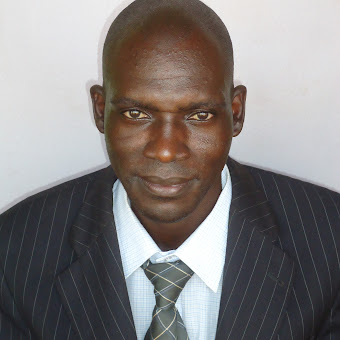

In Summary: Odyero Bob, a surveyor attached to Apac District Local Government, is accused of using forged academic documents to secure public employment and collecting government salaries for 10 years, resulting in an alleged loss of Shs257,842,210. He is expected to appear before the Anti-Corruption Court on November 24, 2026, as questions emerge over how the alleged irregularities went undetected for a decade.
Apac, Uganda — The Inspectorate of Government (IGG) has arrested a surveyor attached to Apac District Local Government over allegations that he forged academic documents to secure public employment, resulting in an alleged financial loss of Shs257,842,210 to the Government.
Odyero Bob, who has been serving as a surveyor at the district, is accused of obtaining public employment using forged academic credentials and subsequently receiving government salaries over a period of 10 years.
Apac District Chief Administrative Officer, Mr Olaboro Emmy Ejuku, confirmed the arrest when contacted by Daily Express at his office on Monday evening.

However, Ejuku appeared cautious about discussing the circumstances surrounding the arrest, saying the operation had been directed by higher authorities. “It was a directive from above, and the matter is beyond my jurisdiction,” he said.
According to preliminary findings, the suspected fraud involved the use of falsified academic qualifications to obtain and retain a public service position, allowing Bob to draw salaries at the expense of taxpayers.
Bob is expected to appear before the Anti-Corruption Court on November 24, 2026, to answer to the allegations.
The case has raised questions about the verification of academic qualifications during public service recruitment and the effectiveness of internal accountability mechanisms within local governments.
The arrest also raises questions about the district administration’s role in the recruitment and subsequent supervision of the suspect, particularly how the alleged academic irregularities could have remained undetected for a decade.
The development has attracted attention from accountability advocates in Apac, particularly the Apac Anti-Corruption Coalition (TAACC), which promotes transparency, integrity and responsible management of public resources.
The coalition’s Executive Director, Opwonya Tom Superman, said the allegations should be treated as a matter of serious public interest.
“Public resources belong to the people, and every person entrusted with a public office has a responsibility to protect those resources. Where allegations of forgery and abuse of public funds arise, the relevant authorities must investigate thoroughly and ensure that accountability takes its course,” he said.
Opwonya also raised questions about the systems that could have allowed the alleged irregularities to persist for 10 years without detection.

“An arrest alone should not be the end of the accountability process. We must also examine the systems that allowed the alleged irregularities to occur. How were the academic documents verified during recruitment? Were there periodic checks? And what internal controls were in place to protect public funds?” he added.
The alleged financial loss of Shs257,842,210 is significant, particularly given the competing demands for public funding in local governments, including service delivery, infrastructure development and other essential programmes.
Public service recruitment requires applicants to present genuine academic and professional qualifications that meet the requirements of advertised positions.
Where qualifications are allegedly falsified, the consequences extend beyond the individual involved, potentially affecting institutional credibility, public confidence and the proper utilisation of government resources.
The case also puts the spotlight on recruitment and staff verification procedures, with questions about whether existing safeguards are sufficiently robust to detect fraudulent qualifications before public funds are committed to salaries.
“If the allegations are established, this should be a lesson to all public institutions that recruitment must be based on genuine qualifications, merit and integrity. There should be no room for individuals to obtain public positions through misrepresentation,” Opwonya said.
He further urged public institutions to strengthen document verification and ensure that public officers entrusted with recruitment responsibilities uphold the highest standards of accountability.
If you would like your article/opinion to be published on Uganda’s most authoritative news platform, send your submission on: [email protected]. You can also follow DailyExpress on WhatsApp and on Twitter (X) for realtime updates.