

In Summary: Finance Minister Henry Musasizi has challenged URSB to measure its performance beyond the number of businesses registered, focusing instead on enterprise survival, growth, access to capital and job creation. He also revealed that the bureau facilitated the formalisation of 17,990 entities through 187 mobile business registration clinics between FY2023/24 and FY2025/26.
Kampala, Uganda — Finance Minister Henry Musasizi has challenged the Uganda Registration Services Bureau (URSB) to make business formalisation more attractive by linking registration to tangible economic benefits, including access to finance, public procurement, commercial partnerships and wider markets.
Speaking on Tuesday as Chief Guest at the inaugural URSB Conference 2026 at the Uganda Business Facilitation Centre in Kampala, Musasizi said formalisation should enable enterprises to access financing, technology and broader market opportunities.
“Businesses are more likely to formalise when the economic benefits outweigh the costs. Our approach must, therefore, make formalisation an attractive economic proposition rather than merely a regulatory obligation,” he said.

He emphasised that government should support enterprises to grow instead of burdening them with excessive compliance requirements.
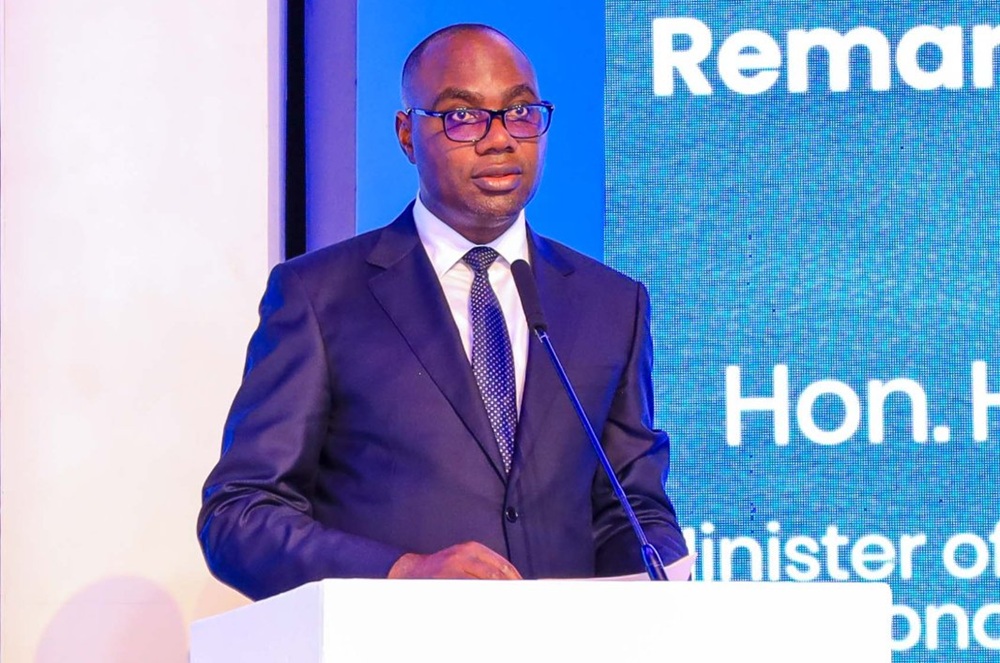
The Minister identified high costs of capital, electricity and transport, alongside informality and inadequate irrigation facilities, as some of the constraints affecting business growth.
He outlined five strategic priorities for improving business facilitation: institutional integration, reducing the cost of doing business, incentivising formalisation, leveraging business registration data and measuring economic outcomes.
On institutional integration, Musasizi called on URSB, the Uganda Revenue Authority, Uganda Investment Authority, local governments and other regulatory agencies to establish interoperable systems to eliminate duplication and reduce the burden on businesses that repeatedly submit the same information to different government institutions.
“We want a one-stop centre for all business registration services in the country,” he said.
Musasizi also challenged URSB to measure its success beyond the number of registered businesses, urging the bureau to focus on enterprise survival, growth, access to capital, employment creation and contribution to the economy.
He commended the bureau for digitising its services and deploying 187 mobile business registration clinics, which facilitated the formalisation of 17,990 entities between the 2023/2024 and 2025/2026 financial years.
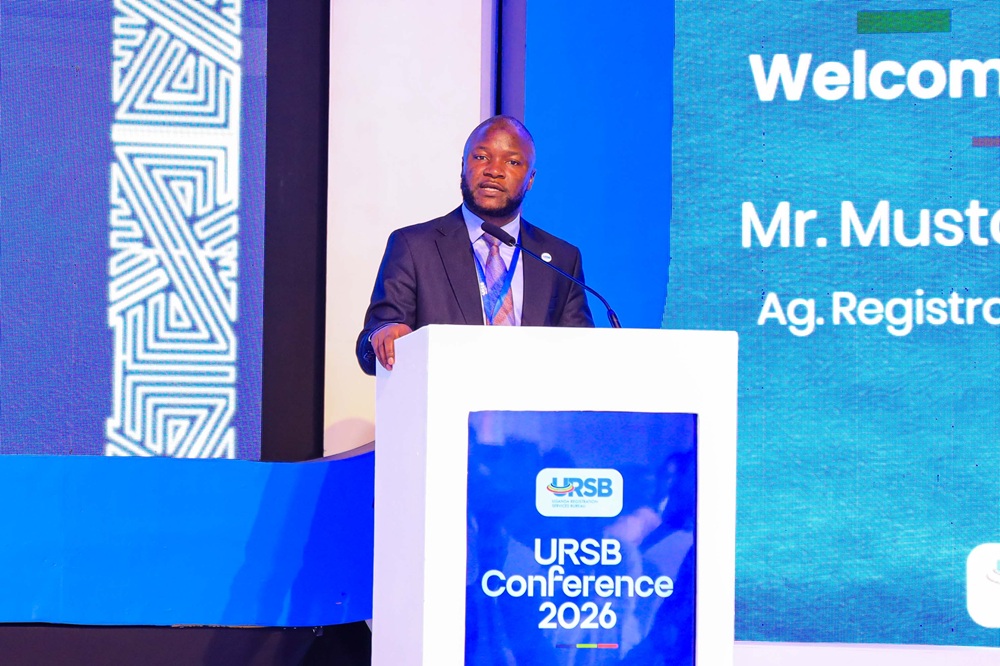
The Acting Registrar General, Mustapher Ntale, said URSB had undergone significant transformation from a manual registry to a digital institution, improving efficiency and service delivery.

“Since 2016, we have embarked on a digital journey, and all our services can be accessed online. The automation of our services has promoted efficiency and improved our turnaround time,” Ntale said.
The Minister of Justice and Constitutional Affairs, Norbert Mao, described URSB as a strategic pillar of Uganda’s economic infrastructure, citing its role in supporting enterprises, protecting intellectual property and maintaining electronic business records.
“URSB is therefore not just a registry. It is a strategic pillar of Uganda’s economic infrastructure,” Mao said.
The Minister encouraged young Ugandans to embrace entrepreneurship, noting that businesses create employment and improve household welfare through salaries that support families, pay school fees and meet healthcare needs.
Mao also commended the collaboration between URSB, government institutions and development partners in strengthening Uganda’s business environment.
If you would like your article/opinion to be published on Uganda’s most authoritative news platform, send your submission on: [email protected]. You can also follow DailyExpress on WhatsApp and on Twitter (X) for realtime updates.