
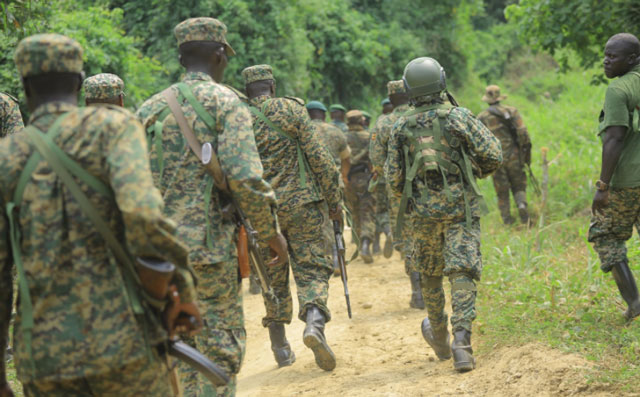
In Summary: The UPDF will begin withdrawing from Lubero town within two weeks and hand over security to FARDC, according to a November 27 statement. The move follows a series of public signals by CDF Gen Muhoozi Kainerugaba about a possible withdrawal from eastern DR Congo, including a March 2026 announcement that Uganda was ready to leave positions from Lubero to Mahagi.
Kampala, Uganda — The Uganda People’s Defence Forces (UPDF) will begin withdrawing from Lubero town in eastern Democratic Republic of Congo within the next two weeks, handing over security responsibilities to the Congolese armed forces, FARDC, after nearly two years of deployment in the area.
The planned withdrawal, announced in a press statement issued on Friday, November 27, 2026, marks a significant development in Uganda’s military presence in North Kivu, where its troops have been operating against remnants of the Allied Democratic Forces (ADF).
The UPDF said it deployed to Lubero in January 2025 to pursue ADF fighters who had moved into the area to escape pressure from joint military operations in North Kivu and Ituri provinces.

“The UPDF withdrawal from the town located in the North Kivu province will start in the next two weeks,” the statement signed by Colonel Chris Magezi, Acting Director of Defence Public Information, said.
The army said security in Lubero town would be handed over to FARDC, but did not disclose the number of troops expected to leave, the exact date of the handover or whether the withdrawal would affect other UPDF positions in eastern DR Congo.
The announcement comes amid a wider debate over the future of Uganda’s military deployment in the neighbouring country, following earlier statements by Chief of Defence Forces Gen Muhoozi Kainerugaba indicating readiness to withdraw troops from several areas.
Muhoozi’s earlier withdrawal announcement
On March 25, 2026, Gen Muhoozi announced on X that Uganda was ready to withdraw its forces from positions stretching from Lubero to Mahagi, in coordination with the DR Congo government. “We announce that we are ready to withdraw from all our positions from Lubero to Mahagi in Eastern. In coordination with the DRC government,” he wrote.
He added that Uganda wanted peace with DR Congo, but said there were issues to resolve in Ituri Province.
In another post reported at the time, Muhoozi said UPDF troops would leave Lubero within days if the military governor of Ituri, Lt Gen Johnny Luboya Nkashama, was not changed.
The remarks were followed by further public commentary in which Muhoozi appeared to signal a continued Ugandan military presence.
In comments reported by The EastAfrican in April 2026, he sought to reassure residents of Lubero that Uganda would not abandon them. “I want to re-assure the people of Lubero. We shall not abandon them. UPDF shall remain in its positions. The next thing we shall discuss with our brothers in DR Congo is our advance to Kisangani to deal with the terrorist Baluku,” Muhoozi was quoted as saying.
The November 27 UPDF statement now confirms a withdrawal from Lubero town, but does not announce a full withdrawal from all Ugandan positions between Lubero and Mahagi, as referenced in the CDF’s earlier remarks.
Muhoozi’s X account was reported to have become inaccessible in late November 2026 after a separate series of controversial posts. The March and subsequent DRC-related comments were reported by media outlets at the time.
Uganda’s military operations in DR Congo
Uganda’s current military deployment in eastern DR Congo is rooted in Operation Shujja, a joint offensive launched by the UPDF and FARDC on November 30, 2021, to target the ADF.
The operation followed a series of deadly attacks in Uganda in 2021, including suicide bombings in Kampala that authorities linked to the ADF.
The opening phase involved air and artillery strikes against ADF positions in North Kivu and Ituri, followed by ground operations by Ugandan troops working alongside Congolese forces.
The joint operation was intended to dismantle ADF camps, disrupt its supply and communication networks, restrict its movement and prevent the group from using eastern DR Congo as a base for attacks against Uganda.
A Status of Forces Agreement signed by the two countries in January 2022 established arrangements governing the conduct and activities of troops deployed under the operation.
Over the years, Operation Shujaa has included military operations, intelligence-led strikes, the pursuit of ADF commanders, rescue of abductees and efforts to secure key roads and communities.
The UPDF has reported the destruction of ADF camps, recovery of weapons and ammunition, capture or killing of fighters, and rescue of civilians held by the group. In December 2024, the army said joint operations had weakened ADF positions and helped restore activity in some areas previously affected by insecurity.
The operation has also involved infrastructure and civilian support, including rehabilitation of road networks and medical assistance in areas where troops are deployed.
Why the operation expanded into Lubero
The ADF’s movement into Lubero was part of a wider shift in the group’s operations as it came under pressure in its earlier strongholds around Beni in North Kivu and Irumu in Ituri.
A United Nations Group of Experts report covering 2024 documented how ADF cells moved into new areas, including Lubero territory, as military pressure increased. One group under the command of Abu Waqas, also known as Abwakasi, moved into the Bapere sector and surrounding forest areas, seeking to establish new bases and avoid joint operations.
The UPDF and FARDC subsequently expanded their operations into the area. The UPDF deployment in Lubero town began in January 2025, according to the army’s latest statement.

The expansion took place as the wider security situation in eastern DR Congo deteriorated following the advance of the M23 rebel movement in North Kivu. The United Nations reported that Uganda deployed additional troops in the region in early 2025, including forces along the Lubero-Butembo axis. Uganda said its mission was focused on fighting the ADF and protecting strategic infrastructure, including the Kasindi-Beni-Butembo road.
The UPDF has maintained that its deployment in Lubero was part of efforts to pursue ADF remnants and protect security in the region.
However, the expanded deployment also drew scrutiny. A 2025 UN report said the Congolese government had raised concerns about some additional Ugandan deployments, including whether they had been formally authorised and whether all activities fell within the joint operation framework. These concerns were disputed in the broader context of Uganda’s stated security objectives in eastern DR Congo.
ADF violence despite military pressure
The ADF’s movement into Lubero has been accompanied by deadly attacks on civilians.
In November 2025, the United Nations said ADF attacks across Lubero territory between November 13 and 19 had killed at least 89 people, including at least 20 women and an undetermined number of children.
At least 17 civilians were killed inside a health centre in Byambwe, while other attacks involved abductions, looting of medical supplies and destruction of homes.
The violence underscored the challenge facing Congolese authorities as Ugandan troops prepare to leave Lubero town.
A report by the Congo Research Group and Ebuteli, published in January 2026, said the ADF had adapted to military pressure by relocating into new territories and intensifying attacks on civilians in areas where it lacked established networks. The report also raised questions about the limits of Operation Shujja in preventing the group from spreading into new areas.
In its latest assessment, the United Nations reported that ADF cells continued to operate in Lubero and other territories, while the group’s attacks and movements increasingly affected areas further west in Ituri and neighbouring provinces.
What next for Operation Shujja
The UPDF’s planned departure from Lubero town does not amount to an announcement that Uganda is ending Operation Shujja.
UPDF’s November 27 statement specifically referred to the withdrawal from Lubero town and the transfer of security to FARDC. The statement did not identify a withdrawal timetable for other Ugandan deployments in North Kivu or Ituri.
The operation remains a joint military campaign against the ADF, with Ugandan and Congolese forces continuing to pursue the group in areas where it has established or relocated its bases.
In February 2026, the UPDF reported joint operations targeting an ADF camp west of the River Epulu, where troops recovered weapons, improvised explosive devices and bomb-making materials, and rescued 12 captives near Ofayee in the Ndimo area.
The army has also said that ADF has been pushed farther from Uganda’s border, although it acknowledges that the group has not been completely eliminated.
If you would like your article/opinion to be published on Uganda’s most authoritative news platform, send your submission on: [email protected]. You can also follow DailyExpress on WhatsApp and on Twitter (X) for realtime updates.