
Kampala, Uganda: The High Court has sentenced Christopher Okello Onyum to death for the murder of four toddlers at Ggaba Early Childhood Development Centre, closing one of Uganda’s most emotionally charged and closely followed trials in recent years.
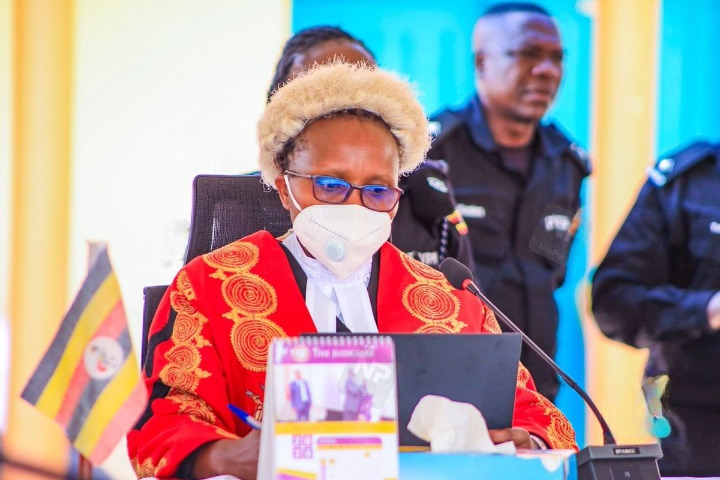
In a packed courtroom session on Thursday, April 30, Justice Alice Komuhangi Khaukha ruled that the crime fell under the “rarest of the rare” category, warranting the maximum penalty under Uganda’s sentencing framework.
“The convict meticulously planned and executed this offence… attacked defenceless children who depended on adults for their protection and survival, and slaughtered them in broad daylight without regard for human life,” Justice Komuhangi ruled.
The court acknowledged that under Uganda’s Sentencing Guidelines Practice Directions (2013), murder ordinarily carries a starting sentence of 35 years.
However, Justice Komuhangi emphasised that courts may impose harsher penalties where aggravating factors outweigh mitigation, and in this case, the circumstances overwhelmingly justified the ultimate sentence.
She observed that the victims were extremely young and vulnerable, and that the attack was deliberate, calculated, and executed in a place expected to be safe for children.
The judge further noted that Okello showed no remorse throughout the trial, including failing to apologise to grieving families who were present in court. “I expected him to show remorse… to apologise to the families… but he did not,” she said.

The prosecution had urged court to impose the death penalty, arguing that the murders were marked by extreme brutality and premeditation. Justice Komuhangi agreed, adding that claims of possible ritual motives were plausible based on evidence presented during the trial, including psychiatric testimony.
In mitigation, Okello declined to address the court. His lawyer instead cited his troubled upbringing and dysfunctional family background, but the judge dismissed these arguments as insufficient to outweigh the gravity of the crime.
“I have considered that the convict comes from a broken family, but that is not a reason to slaughter innocent children,” she ruled.
She added that the sentence should serve as a strong deterrent to others who may contemplate similar acts, particularly those driven by ritual beliefs or extreme violence. “This sentence should send a strong message that such acts will be met with the full force of the law.”
A Case Like No Other
What began as a brutal crime on April 2, 2026, quickly evolved into one of the most extraordinary criminal trials Uganda has witnessed, defined by intense public emotion, experimental justice, and dramatic courtroom developments.
The case centred on the killing of four toddlers aged between one and two-and-a-half years at a daycare in Ggaba, allegedly carried out within minutes using a kitchen knife. The suspect, Christopher Okello Onyum, was arrested at the scene, triggering national outrage.
Following the incident, President Museveni reportedly directed the Judiciary to deploy a mobile court system, allowing proceedings to take place within the community where the crime occurred. This resulted in the establishment of a temporary courtroom at Ggaba Community Church grounds near Lake Victoria, where tents were erected to accommodate judicial officers, lawyers, journalists, and hundreds of residents.
What was initially expected to be a week-long trial extended to nearly three weeks after Okello pleaded not guilty, compelling the prosecution to present a full case supported by 18 witnesses.

The proceedings were marked by a series of dramatic incidents that captured national attention. At one point, a prison van lost control while reversing near the venue and injured journalist Ronald Mukhwana, heightening tension around the trial.
Days later, a sudden storm tore through the lakeside court setup, ripping apart tents and forcing an abrupt suspension of proceedings as the presiding judge was evacuated.
Religion also became an unusual but defining feature of the trial, with each session beginning with prayers led by a local pastor. This practice, though uncommon in criminal proceedings, reflected the emotional gravity of the case and the community’s collective grief.
Throughout the trial, Okello’s demeanour drew attention. He was at times seen laughing behind a face mask, behaviour his defence later cited as possible evidence of mental instability. However, the court ultimately rejected the insanity defence, ruling that his conduct demonstrated awareness and intent.
The trial further exposed the delicate balance between public anger and judicial fairness. Despite widespread outrage, the court maintained procedural discipline, ensuring the accused was treated with dignity and accorded his constitutional rights.
Justice Komuhangi consistently addressed the accused respectfully at the start of proceedings, a gesture that drew mixed reactions but underscored the principle of presumption of innocence.
Outside the court, emotions ran high following the verdict, with members of the Ggaba community breaking into song and dance, saying justice had finally been served for the slain children.
The case has reignited national debate on child protection, the limits of criminal defence based on mental health, and the effectiveness of mobile courts in delivering justice. It has also raised broader questions about how Uganda balances swift justice with due process in cases that provoke deep public anger.
Okello has 14 days to appeal both his conviction and sentence.
If you would like your article/opinion to be published on Uganda’s most authoritative news platform, send your submission on: [email protected]. You can also follow DailyExpress on WhatsApp and on Twitter (X) for realtime updates.