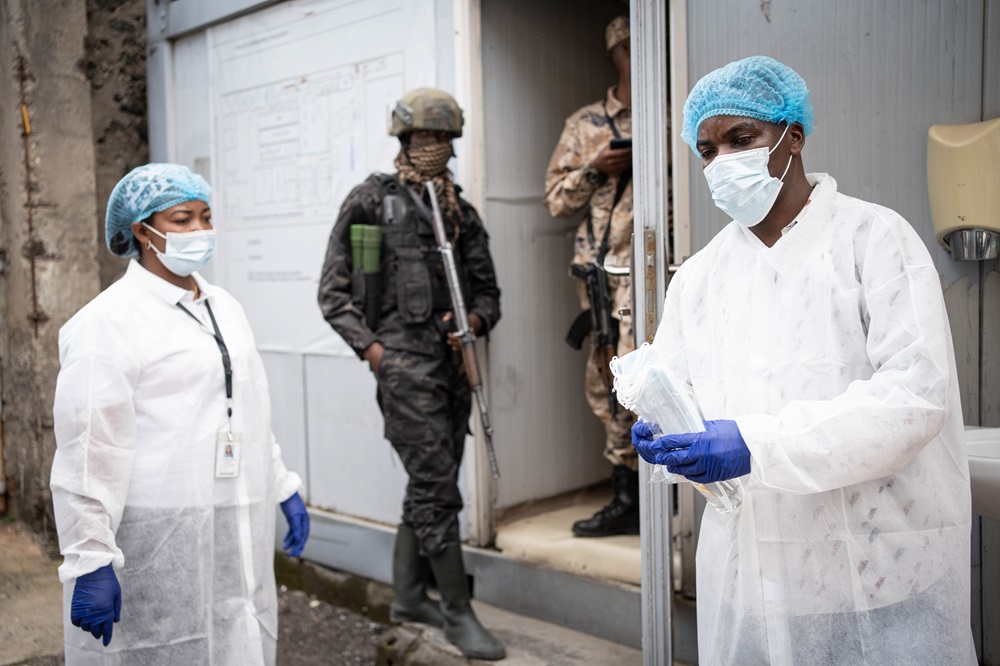
Oxford, United Kingdom: Scientists at the University of Oxford are developing a new Ebola vaccine targeting the deadly Bundibugyo strain amid growing fears over a rapidly spreading outbreak in the Democratic Republic of the Congo (DRC).
Researchers from the Oxford Vaccine Group (OVG) said Friday that scientists developing the vaccine are using the same technology platform that was successfully used in the creation of the Oxford-AstraZeneca Covid-19 vaccine.
The development comes as the World Health Organisation (WHO) raises alarm over the latest Ebola outbreak in eastern Congo, where health officials say the virus is spreading rapidly.
According to WHO Director-General Dr Tedros Adhanom Ghebreyesus, the UN health agency has classified the risk level within the DRC as “very high.”
The outbreak has so far resulted in 82 confirmed cases, nearly 750 suspected infections, seven confirmed deaths and at least 177 suspected deaths, according to figures released by the WHO.
The Bundibugyo strain of Ebola currently circulating in Congo is considered one of the rarest forms of the deadly virus and, importantly, has no approved or proven vaccine yet.

Health experts say the strain kills between 30 and 50 percent of infected patients.
The virus has only previously caused two known outbreaks globally, first in Uganda in 2007 and later in the Democratic Republic of the Congo in 2012.
Uganda’s 2007 Bundibugyo outbreak was first detected in Bundibugyo District in western Uganda and later became the basis for scientific classification of the virus strain.
Professor Teresa Lambe, the Calleva Head of Vaccine Immunology at the Oxford Vaccine Group, said researchers are hoping the current outbreak can be controlled before mass vaccination becomes necessary.
“My hope is that this outbreak can be brought under control quickly and that vaccines are ultimately not needed,” Prof Lambe said.
“Nevertheless, our team and partners will continue working to ensure that potential vaccine options are available if they are needed,” she added.
She noted that the rapid vaccine development response has been made possible through years of prior vaccine research and global scientific collaboration.

“The ability to move rapidly in situations like this has been built on many years of vaccine research and close collaboration with our global partners,” Lambe explained.
The Oxford Vaccine Group previously played a role in testing Ebola vaccines during the devastating 2013–2016 West Africa Ebola outbreak, which eventually contributed to the approval of another Ebola vaccine by the European Medicines Agency in 2020.
Although the WHO says the international risk currently remains low, health authorities continue monitoring the outbreak closely due to fears of cross-border transmission within East and Central Africa.
The latest developments come just days after Uganda heightened its Ebola preparedness measures, including postponing this year’s Martyrs Day celebrations at Namugongo over fears of possible transmission from pilgrims arriving from eastern Congo.
President Museveni recently announced the postponement after consultations with health experts and religious leaders, citing the need to protect public health amid the outbreak.
Uganda previously battled several Ebola outbreaks, including outbreaks involving both the Sudan and Bundibugyo strains, making the country one of the most experienced in Ebola response systems across Africa.
Scientists say successful development of a vaccine specifically targeting the Bundibugyo strain would mark a major breakthrough in global preparedness against future Ebola epidemics.
If you would like your article/opinion to be published on Uganda’s most authoritative news platform, send your submission on: [email protected]. You can also follow DailyExpress on WhatsApp and on Twitter (X) for realtime updates.