
Kampala, Uganda: The Government has issued a stern warning to employers, traffickers and individuals exploiting children, declaring that those found benefiting from child labour will face the full force of the law as Uganda joins the rest of the world to commemorate World Day Against Child Labour.
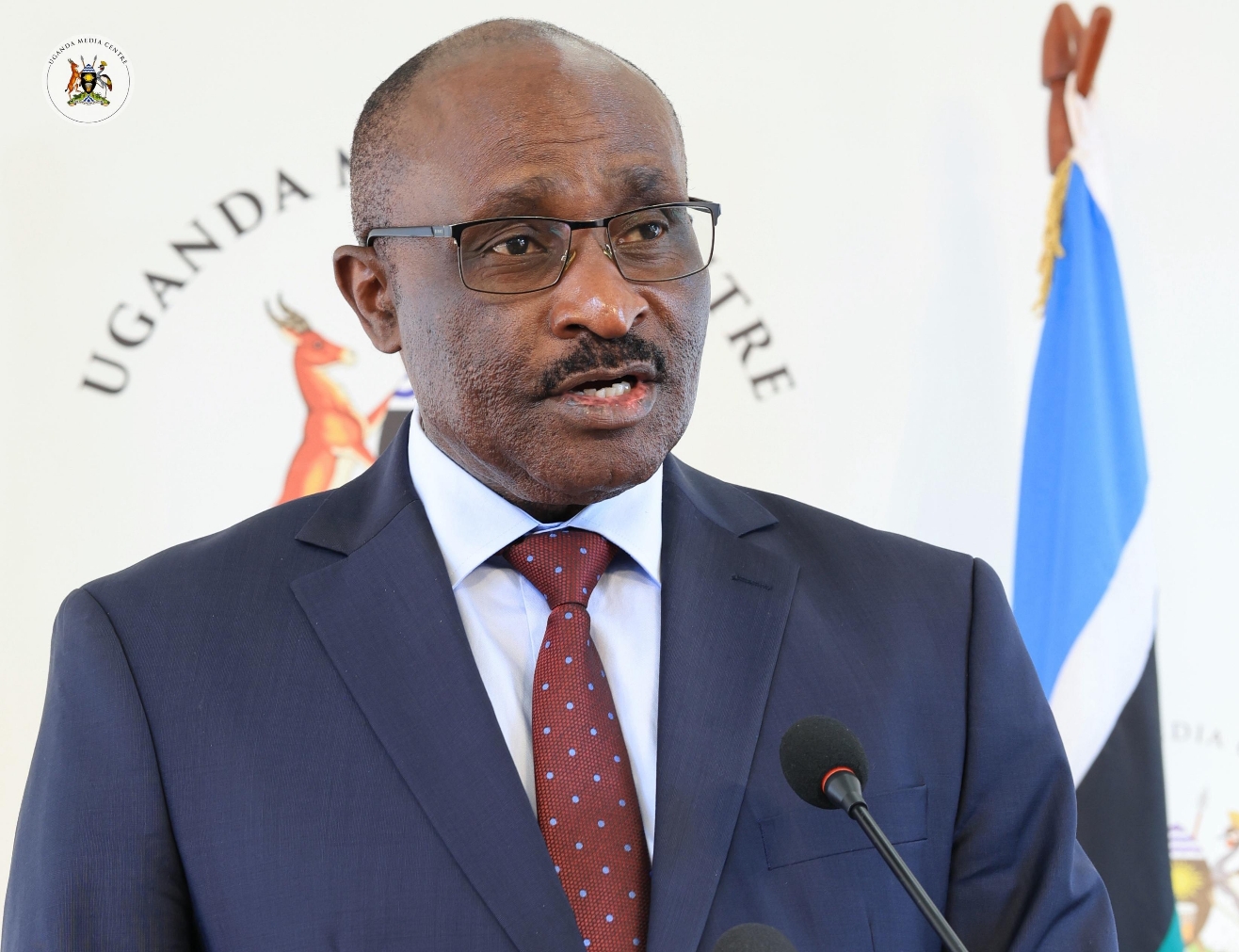
Speaking ahead of the national celebrations scheduled for Friday in Mayuge District, State Minister for Labour, Employment and Industrial Relations, Hon. Simon Mulongo, said child labour remains one of Uganda’s most pressing social and development challenges despite ongoing government interventions.
This year’s commemoration will be held under the theme: “Accelerating Action to End Child Labour: Dignity and Full Potential of Every Child.” The national event will take place at Bugadde Primary School in Bugadde Town Council, Mayuge District.
Mulongo described child labour as work that deprives children of their childhood, education, health, safety and dignity, warning that it undermines the country’s future human capital and economic transformation agenda.
According to the minister, child labour continues to manifest across several sectors, including agriculture, domestic work, fishing, mining, street vending, informal trade, transport-related activities and market work, where children remain vulnerable to exploitation.
Uganda’s Child Labour Challenge
The minister cited global data from the International Labour Organization (ILO) and UNICEF showing that approximately 160 million children worldwide were engaged in child labour at the start of 2020, with nearly half involved in hazardous work that threatened their health, safety and development.

He noted that child labour remains deeply linked to poverty, inequality, household vulnerability, limited access to quality education and weak enforcement mechanisms.
“Government recognizes that child labour is not merely a labour issue. It is a development issue, a justice issue, a protection issue and a national transformation issue,” Mulongo said
The minister warned employers, intermediaries, guardians and business operators who recruit, transport, harbour or profit from child exploitation that government will intensify enforcement efforts.
“Government therefore warns all employers, intermediaries, guardians, business operators and individuals who employ, recruit, harbour, transport or benefit from the exploitation of children that such conduct is unacceptable and will be addressed within the law,” he said.
Mulongo expressed particular concern over the increasing number of vulnerable children on the streets of Kampala and other urban centres, saying authorities are investigating individuals and networks believed to be profiting from child exploitation.
He questioned who transports, accommodates, deploys and benefits from children forced into street begging, vending and other forms of exploitation.
The minister said government will strengthen collaboration between local governments, security agencies, probation officers, religious and cultural leaders, development partners and communities to identify and dismantle such networks.
Mulongo highlighted several measures government has undertaken to combat child labour, including strengthening labour inspection systems, child protection structures and inter-agency coordination mechanisms. Labour inspectors have also been trained to identify and report cases of child labour in workplaces.

He further pointed to poverty reduction initiatives such as the Parish Development Model (PDM), Emyooga, the GROW Project, the Jua-Kali Programme and the National Apprenticeship Programme as critical interventions aimed at addressing the economic pressures that often push children into labour.
“When parents and guardians have reliable incomes, children are more likely to remain in school, access basic needs and grow in a safe and supportive environment,” he said.
Protecting Children, Not Punishing Them
The minister stressed that children found in exploitative situations should be treated as victims rather than offenders.
He said affected children require rescue, rehabilitation, family tracing, reintegration, education and psychosocial support, alongside livelihood assistance for vulnerable families where necessary.
As Uganda commemorates World Day Against Child Labour 2026, Mulongo called on employers, local governments, civil society organisations, religious leaders, cultural institutions, parents, guardians and the media to join efforts aimed at eliminating child labour in all its forms.
“Together, we can build a Uganda where every child is free from exploitation, has access to education and opportunity, and is empowered to realise their full potential,” he said.
If you would like your article/opinion to be published on Uganda’s most authoritative news platform, send your submission on: [email protected]. You can also follow DailyExpress on WhatsApp and on Twitter (X) for realtime updates.