
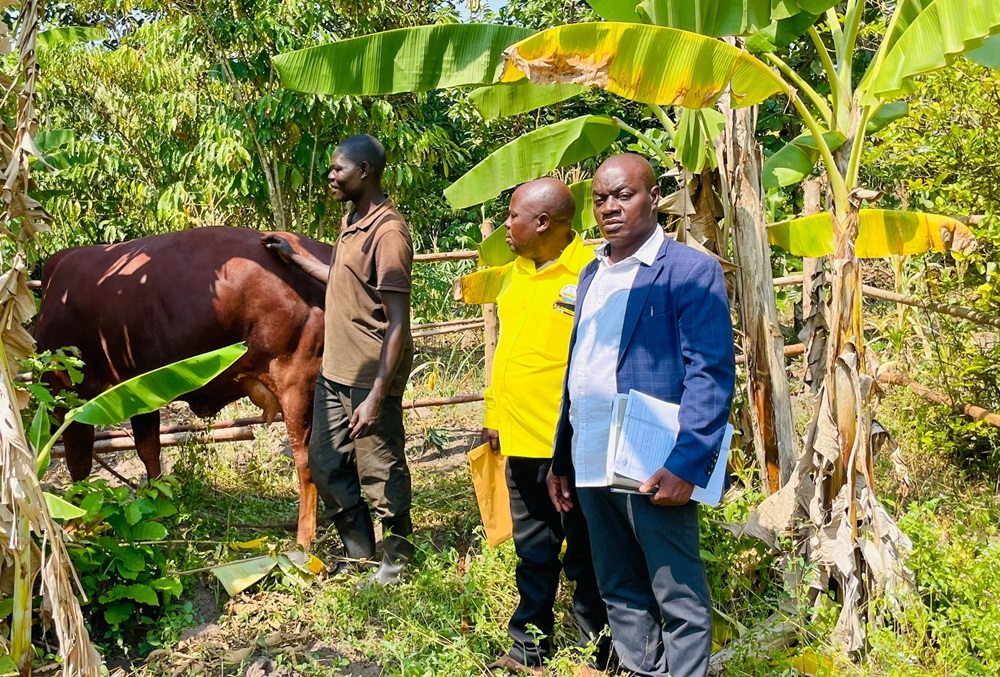
Luweero, Uganda: In the quiet farming villages of Buyondo and Kirambula in Zirobwe Sub-county, Luweero, the impact of the Parish Development Model (PDM) is no longer measured by statistics or government reports. It is reflected in dairy cows producing milk every morning, coffee gardens beginning to bear fruit, thriving poultry projects, and families that now earn a steady income from enterprises they once only dreamed of owning.
For many residents, the Shs1 million government grant was more than financial support. It became the starting point of a journey from subsistence farming towards sustainable household wealth.
These stories emerged during a monitoring exercise conducted by the Office of the National Chairman (ONC), where Luweero Regional Coordinator Wasswa Abdulkarim Tamale visited beneficiaries to assess how the funds have been invested and the changes they have brought to people’s lives.
A Bull That Changed Everything
When Bonny Munoobi received his PDM funds in 2023, he resisted the temptation to spend the money on immediate family needs.
Instead, he invested in a bull.
As the animal increased in value, Munoobi sold it and purchased a dairy cow, a decision he says transformed his household.
Today, the cow supplies milk for home consumption while generating daily income through sales to the local community. The livestock also provides manure for his gardens, reducing production costs and improving crop yields.

“I thank the government for introducing the Parish Development Model because it has changed our lives. I no longer spend money buying manure for my plantations because I use what I get from my animals, and the income from milk sales has strengthened my family’s financial position,” Munoobi says.
For his family, the programme has become much more than financial assistance. It has created a reliable source of income while improving food security at home.
Finding Opportunity in Coffee
A few kilometres away, Florence Mutonyi tells a story of adaptation. She initially invested her PDM funds in poultry farming but later shifted to coffee after identifying stronger market opportunities.
Today, her one-acre coffee plantation has begun producing, while cassava and maize provide additional income and reduce the risks associated with relying on a single enterprise.
The diversified investment has enabled her to pay school fees, meet household expenses and steadily improve her family’s standard of living.
For Mutonyi, commercial farming is no longer an ambition; it has become a practical reality.
Building a Poultry Enterprise
In neighbouring Kirambula Village, Charles Okiru has taken a different path. He first invested in maize and cassava production before reinvesting his profits into poultry farming. That decision has grown into a thriving enterprise of about 500 broiler chickens, alongside his crop gardens.
“The programme has brought happiness to my family because our daily and monthly income has greatly improved. I encourage fellow community members to embrace PDM and invest wisely because it can truly change lives,” Okiru says.

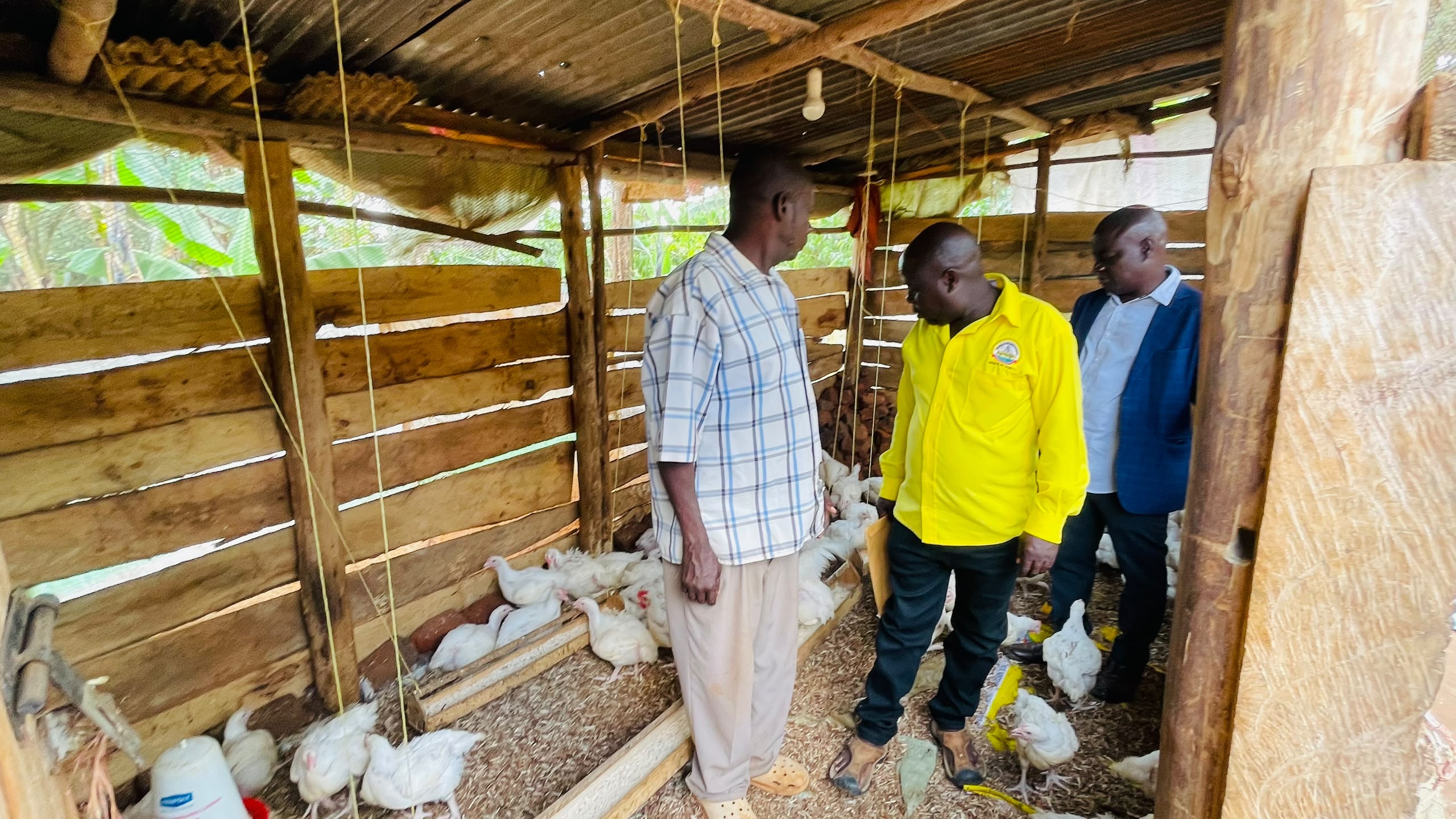
His story illustrates the principle behind the Parish Development Model: using initial capital to establish an enterprise before reinvesting profits to expand it.
Growing Beyond One Investment
For Grace Akwi, the government grant became seed capital for long-term growth. After receiving Shs1 million in 2022, she invested in farming and later used the profits to expand into local poultry rearing and other agricultural ventures.
She credits the programme for giving households the flexibility to choose enterprises suited to their local conditions while creating opportunities to improve incomes through commercial agriculture.
Akwi believes more Ugandans should embrace the programme, arguing that disciplined investment offers a realistic pathway out of poverty.
Luweero Regional ONC Coordinator Wasswa Abdulkarim Tamale, whose team has been assessing how beneficiaries are utilising government funds, says the monitoring is not only about ensuring accountability but also about identifying practical examples that can inspire other beneficiaries to invest wisely and grow sustainable businesses.
He encouraged recipients to continue reinvesting profits, diversify their enterprises where possible and demonstrate that proper utilisation of government support can generate lasting economic transformation.
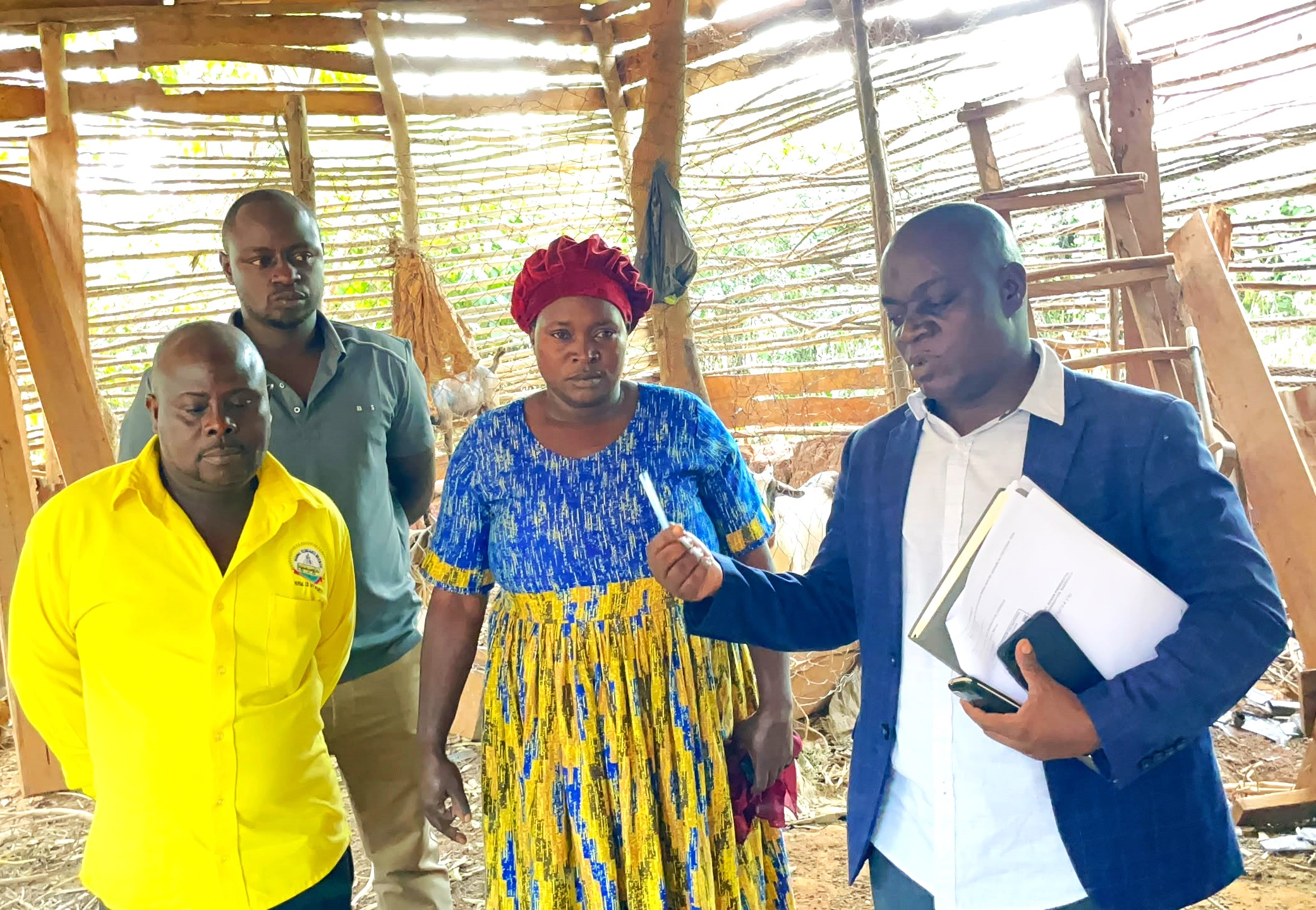
Across Buyondo and Kirambula, the stories differ in detail but share a common theme: productive investment, patience and reinvestment.
A dairy cow replacing a bull, coffee replacing poultry, crops financing broiler projects, and profits creating new opportunities all reflect the gradual transition from subsistence farming towards participation in Uganda’s money economy.
While the long-term success of the Parish Development Model will ultimately be measured across thousands of communities, the experiences emerging from these villages suggest that where beneficiaries invest strategically and remain committed to productive enterprises, the programme has the potential to improve household incomes, strengthen food security and create lasting rural prosperity.
If you would like your article/opinion to be published on Uganda’s most authoritative news platform, send your submission on: [email protected]. You can also follow DailyExpress on WhatsApp and on Twitter (X) for realtime updates.