

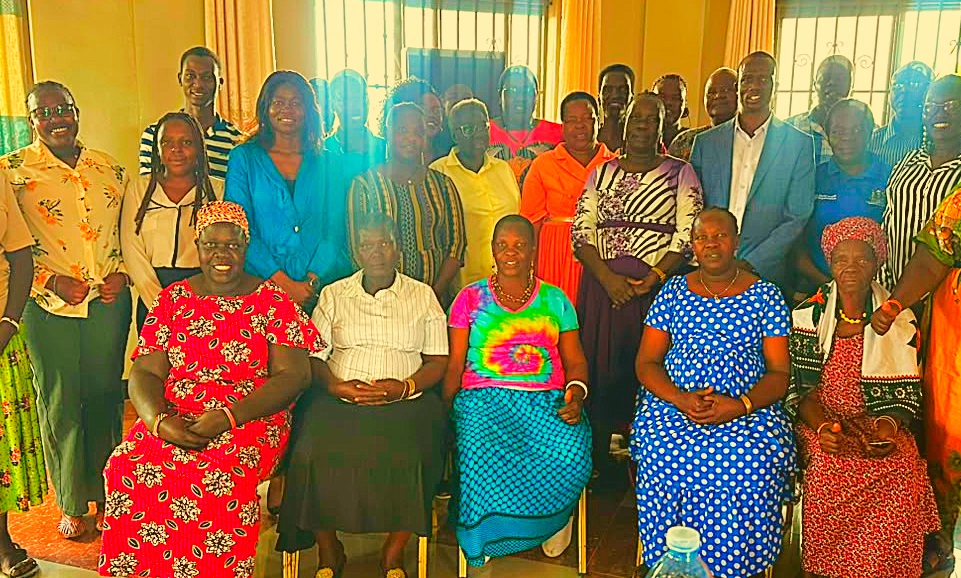
Kotido, Uganda: Kotido District leaders have pledged to address persistent challenges affecting healthcare delivery after a Community-Led Monitoring (CLM) exercise spearheaded by Nakere Rural Women Activists (NARWOA) highlighted gaps in staffing, infrastructure, sanitation, patient confidentiality and service quality across health facilities in the district.
The commitments were made during the Kotido District Community-Led Monitoring Feedback Meeting held at Ateker Hotel, where district leaders, health managers, development partners and community representatives reviewed findings gathered through focus group discussions conducted in health facilities under the Global Fund-supported Resilient and Sustainable Systems for Health (RSSH) Project, implemented in partnership with The AIDS Support Organization (TASO) and Doctors with Africa CUAMM.
The Community-Led Monitoring initiative assessed the accessibility, availability, acceptability, equity and quality of healthcare services while providing community members with an opportunity to openly share their experiences and recommend practical solutions for improving service delivery.
Opening the meeting, NARWOA Executive Director Jessica Ruth Atta said the forum was designed to strengthen dialogue between communities and duty bearers while jointly identifying solutions to challenges affecting healthcare.
“This is our space. Let us be free and discuss openly. Let us come up with tangible resolutions that will improve health services for our people,” she said.
Atta explained that Community-Led Monitoring is intended to strengthen accountability through community-generated evidence rather than criticize health workers.
She said the approach empowers communities to participate in improving health systems while complementing government efforts to deliver quality healthcare.
Government welcomes community participation
Assistant Resident District Commissioner Peter Abarahams Lokwii welcomed the initiative, describing Community-Led Monitoring as an important complement to existing government oversight mechanisms because it gives ordinary citizens a direct voice in evaluating public health services.
He urged residents to embrace preventive healthcare by maintaining proper hygiene, seeking treatment early and making greater use of lower-level health facilities instead of overcrowding Kotido General Hospital.
“So many people go to the General Hospital while forgetting the lower health facilities closer to them. Communities should also pay attention to primary healthcare, personal hygiene and regularly monitor their own health status,” Lokwii said.

He revealed that his office had received complaints from residents who claimed they had been turned away from some health facilities because of poor personal hygiene.
Lokwii also appealed to health workers to communicate more respectfully with patients. “Patients want to understand their illnesses. Health workers should explain medical issues in a simple and respectful manner. Community-Led Monitoring is adding value to the work of traditional monitoring systems, and the feedback should be received positively.”
Kotido Chief Administrative Officer Fredrick Nyanga commended NARWOA for extending monitoring to facilities that district officials are often unable to reach because of financial constraints.
“We appreciate NARWOA because you reached more than ten health facilities, yet even as a district we sometimes manage to monitor only about six,” Nyanga said.
He acknowledged several concerns raised during the monitoring exercise, including the deteriorating general ward at Kotido General Hospital, poor infrastructure at Panyangara Health Centre III, inadequate patient privacy, understaffing at facilities such as Kamor Health Centre and the need for improved nutritional support for people receiving Antiretroviral Therapy (ART).
Nyanga pledged continued lobbying for additional health workers, particularly at lower-level facilities, while advocating for increased government wage allocations to improve staffing levels.
He also revealed that funding has already been secured to renovate the maternity ward at Kotido General Hospital and construct a modern outpatient department that will accommodate key health service units.
“By September, we expect the challenge of inadequate space to have been addressed through the ongoing construction works,” he said.
On the issue of medicine availability, Nyanga explained that stock shortages are often linked to high consumption rates and National Medical Stores delivery schedules rather than mismanagement.
He added that electronic medicine management systems have strengthened accountability in medicine distribution.
The CAO further appealed for continued investment in road infrastructure, noting that poor roads continue to limit access to healthcare services for many remote communities.
“We shall take these recommendations seriously, share them through the CAO’s office and engage partners where additional support is required.”
Kotido District Health Officer Dr. Severino Achar said the district has made remarkable progress in strengthening healthcare over the past decade. “When I first came to Kotido ten years ago, sanitation was one of our biggest challenges. We deliberately recruited health assistants to improve sanitation and public health,” he said.

According to Dr. Achar, Kotido’s health workforce has grown from 124 health workers to 314, while Kotido General Hospital alone now employs 125 staff.
He said specialist services have also expanded to include orthopaedic, dental and mental healthcare supported by senior nursing personnel and six medical officers.
The district is currently implementing several infrastructure projects, including construction of a modern outpatient department, expansion of the maternity ward, establishment of a neonatal unit and maternal theatre, construction of a mortuary, installation of a larger incinerator and placenta pit, as well as plans for a larger general ward.
Dr. Achar further disclosed plans to upgrade Kacheri Health Centre III to Health Centre IV, including the establishment of a nutrition unit to manage severe malnutrition among children, although insecurity in the area continues to delay implementation.
He also announced that President Yoweri Kaguta Museveni has pledged to upgrade five Health Centre IIs within Kotido District.
Responding to concerns about medicine theft, Dr. Achar defended health workers, saying electronic medicine tracking systems now monitor every medicine supplied to health facilities. “My staff do not steal medicines because every medicine is tracked through our electronic system,” he said.
He, however, acknowledged concerns regarding poor attitudes among some health workers and assured participants that disciplinary measures are being taken where necessary.
Partners call for sustained collaboration
Representing Doctors with Africa CUAMM, Mary Kodet thanked the district leadership for embracing Community-Led Monitoring and strengthening collaboration between communities, health facilities and development partners.
She encouraged stakeholders to continue working together to mobilize additional resources for healthcare improvements.
“We appreciate the support we have received in linking us to communities. Together we can mobilize more resources and continue improving health services.”
Dr. Achar assured participants that the district would implement the recommendations emerging from the monitoring exercise. “We are taking your feedback positively. Where mistakes happen, please consider human error, but continue giving us feedback. Soon we shall install suggestion boxes in our health facilities so that communities can continue sharing concerns.”
He emphasized that improving healthcare requires continued collaboration between communities, health workers, district leaders and development partners. “We are committed. We shall not let you down. Together, we shall make health services better for everyone.”
Stakeholders concluded that Community-Led Monitoring has become an important accountability mechanism that strengthens dialogue between communities and health providers while ensuring health services become more responsive to the needs of local populations.
If you would like your article/opinion to be published on Uganda’s most authoritative news platform, send your submission on: [email protected]. You can also follow DailyExpress on WhatsApp and on Twitter (X) for realtime updates.


