

Kibuku, Uganda: Five years after the death of Bishop John Chrysostom Wayabire, the Bugwere Cultural Institution remains without a government-gazetted Ikumbania, with religious, political and cultural leaders warning that prolonged leadership wrangles are denying the community official recognition and slowing cultural development.
The calls were made last week during the 9th Lugwere Bible Day celebrations held at Kibuku Church of Uganda Primary School, where leaders appealed for unity and adherence to the Bugwere Cultural Institution Constitution to end the long-running succession dispute.
Senior Presidential Advisor on Vaccines and Therapeutics, Prof. Vinandi Nantulya, warned that Bugwere faces deeper challenges beyond the unresolved cultural leadership question, saying increasing clan fragmentation threatens the community’s long-term identity.
“Bugwere is becoming disorganised and there will be repercussions. Clans have been divided into many sub-clans, and every day new ones are being created instead of preserving the original ones,” Prof. Nantulya said.
The Kibuku-born academic noted that Bugwere now has more than 150 clans despite a population of about 800,000 people, contrasting it with Buganda, which has about 52 clans serving a much larger population.
According to Prof. Nantulya, the continuous creation of new clans risks eroding cultural identity and could lead to people unknowingly marrying within the same ancestral lineage.
“A clan should be identified by its totem. If people share the same totem, they belong to the same clan. We should stop creating new clans and instead reunite them under their original identities,” he said.
IRCU: Leadership dispute now lies within Bugwere
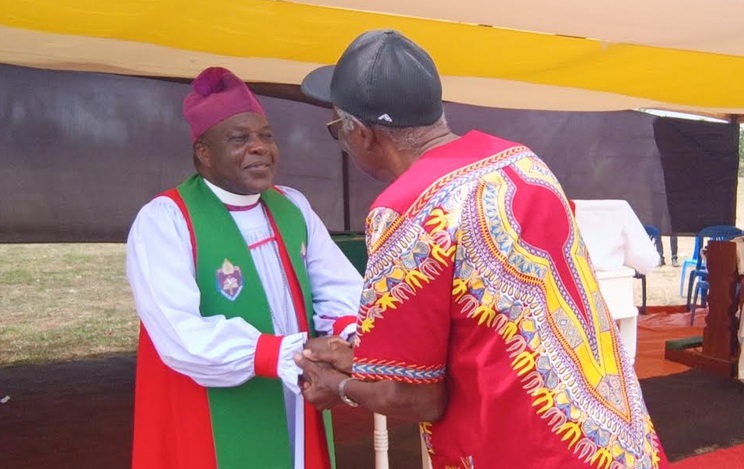
The Bishop of Bukedi Diocese, Rt. Rev. Samuel George Bogere Egessa, who also serves as Vice Chairperson of the Inter-Religious Council of Uganda (IRCU) committee guiding the election of a substantive Ikumbania, said mediation efforts have largely progressed but internal disagreements continue to delay a resolution.

“If I were to rate our progress, we are now over 80 per cent. The problem is no longer in Kampala. The problem is in Bugwere,” Bishop Egessa said.
He revealed that six individuals currently claim the office of Ikumbania, each operating parallel leadership structures complete with cabinets and ministers.
“They all claim to have been elected and they all attend public functions as cultural leaders. That has created confusion among our people,” he said.
Bishop Egessa explained that the IRCU committee had encouraged the rival groups to agree on a single candidate since the office of Ikumbania is elective rather than hereditary.
However, repeated disagreements and court cases have stalled the process.
The bishop warned that the absence of a gazetted cultural leader is preventing Bugwere from benefiting from government support available to recognised cultural institutions.
“There is an official vehicle meant for the Ikumbania, and recognised cultural institutions receive government operational support. Bugwere cannot benefit because there is no gazetted Ikumbania. It is the community that is losing,” he said.
He added that the committee is awaiting further guidance from the Ministry of Gender, Labour and Social Development before concluding the process, expressing optimism that the successful candidate would be gazetted immediately after elections.
Leaders urge constitutional process
Iki-Iki County MP Abdu Swaibu Kampanya appealed to the Bagwere community to resolve the impasse through dialogue. “As Bagwere, we have divided ourselves. It is high time we came together and agreed on resolutions that unite us,” Kampanya said.

He cited neighbouring Bugisu as an example where cultural disagreements were resolved through consensus, enabling the institution to continue functioning effectively.
“If we had agreed immediately after the death of the late Ikumbania in 2021, Bugwere would by now have a gazetted cultural leader enjoying all the privileges and entitlements accorded to other recognised cultural institutions,” he added.
Kampanya urged elders to take the lead in resolving the dispute, noting that Uganda’s Constitution recognises cultural institutions as important custodians of the country’s heritage.
Meanwhile, Waira Moses Mudathiru, a stakeholder in the Bugwere Cultural Institution from Budaka District, called for strict adherence to the institution’s constitution during the succession process.
“When the late Ikumbania died, he left an administration headed by the Prime Minister and the Chairperson of the Cultural Council. The constitution provides the procedure that should be followed before anyone becomes a legitimate candidate for the office of Ikumbania,” Mudathiru said.
He argued that not everyone who later expressed interest in the throne should automatically qualify as a legitimate claimant, insisting the constitutional process should determine eligibility.
Five years of uncertainty
Since Bishop John Chrysostom Wayabire died in 2021, the Bugwere Cultural Institution has remained without a government-recognised Ikumbania.
Those who have publicly laid claim to the office include Kintu Balaamu Mubala Samuku Pangholi, Joshua Wilberforce Musimami, Francis Kanku, Erick Kasolo, Muhamad Nzogi Ngobi, and Geoffrey Wayabire, a son of the late Ikumbania.
Despite years of mediation led by the Inter-Religious Council of Uganda, the succession dispute remains unresolved, leaving Bugwere without official recognition and the operational support enjoyed by Uganda’s gazetted cultural institutions.
As the 9th Lugwere Bible Day celebrations concluded, leaders delivered a common message that Bugwere’s future depends on unity, respect for its cultural constitution and a peaceful resolution of the long-standing leadership impasse.
If you would like your article/opinion to be published on Uganda’s most authoritative news platform, send your submission on: [email protected]. You can also follow DailyExpress on WhatsApp and on Twitter (X) for realtime updates.


