
In Summary: Uganda Wildlife Authority has launched the inaugural Mountain Gorilla Festival, a four-day event scheduled for November 19–22 in Kisoro, bringing together conservation, tourism, sport and community development. The festival will feature the Virunga Gorilla Marathon as organisers seek to strengthen public participation in gorilla protection and expand tourism opportunities in the Kigezi region.
Kisoro, Uganda — The Uganda Wildlife Authority (UWA) has launched the inaugural Mountain Gorilla Festival, a four-day celebration of Uganda’s mountain gorillas aimed at strengthening conservation, promoting tourism and improving the livelihoods of communities surrounding the country’s gorilla habitats.
The festival will run from November 19 to 22, 2026, in Kisoro under the theme “Protecting Gorillas, Empowering Communities” and the tagline “Run. Explore. Conserve.” It will feature the Virunga Gorilla Marathon, scheduled for November 21, alongside community activities, exhibitions and conservation awareness campaigns.
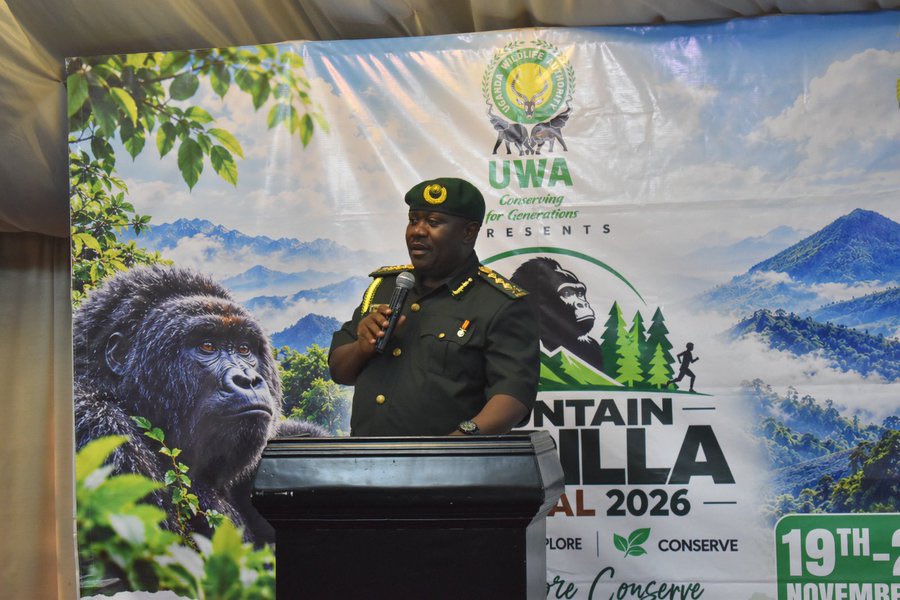
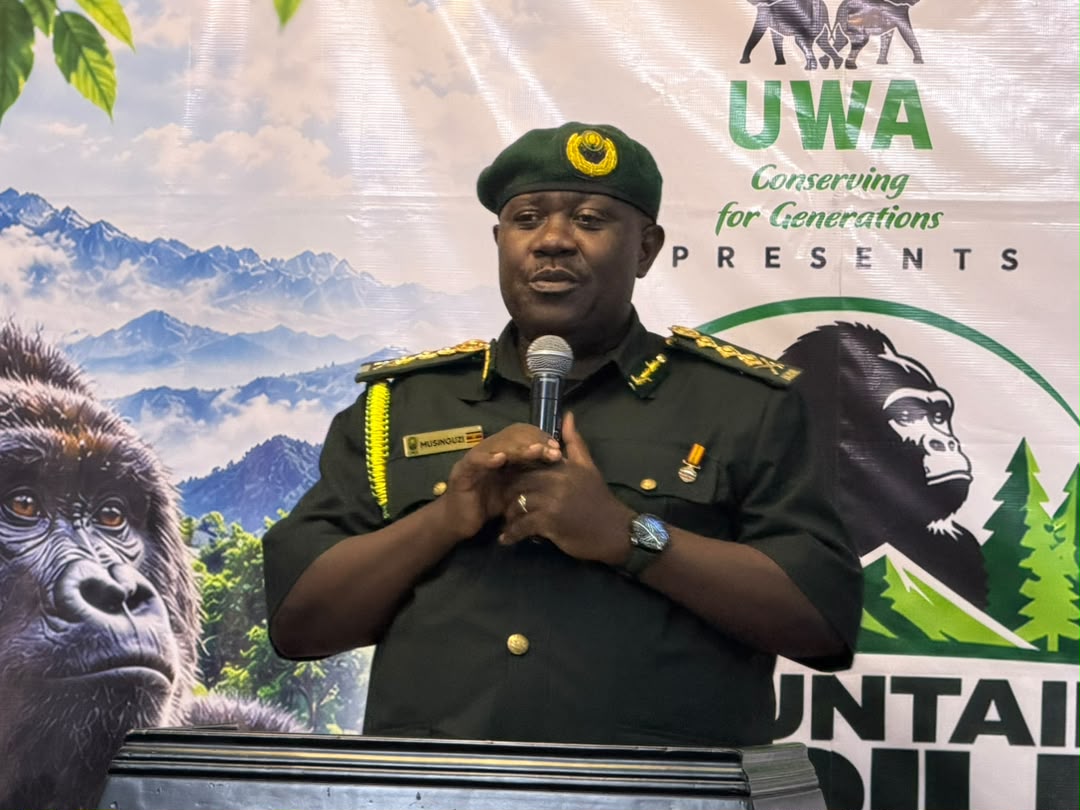
Speaking at the media launch at Sheraton Kampala Hotel on Monday evening, UWA Executive Director Dr James Musinguzi said the festival was designed to demonstrate that protecting endangered wildlife must go hand in hand with improving the welfare of communities living around Bwindi Impenetrable and Mgahinga Gorilla national parks.
He said the initiative was intended to bring conservation, tourism, sport and community development together, with residents positioned as central partners in protecting the animals and their habitats.
“When we protect the gorilla, we actually protect more than a species. We protect an ecosystem, we sustain livelihoods and we preserve our natural heritage and secure opportunities for the generations to come. And when communities benefit from conservation, they become the strongest and most enduring guardians for these species,” Dr Musinguzi said.
He called on Ugandans and international visitors to participate in the Virunga Gorilla Marathon, saying sport could help mobilise wider public support for wildlife protection while encouraging healthy lifestyles.
“Let us come together through sport and collective participation to champion gorilla conservation and promote healthy lifestyle through running the Virunga Gorilla Marathon. You can run it, you can cycle it, you can walk it, you can crawl it. Please, come,” he said.
The festival will open with a conference involving local communities and will feature football matches, craft exhibitions and a programme to enrol gorilla guardians.
Those enrolled as guardians will receive regular updates on the births, feeding patterns and health of individual gorillas monitored by rangers, helping strengthen public awareness and participation in conservation.
Dr Musinguzi also said Uganda was home to more than half of the world’s mountain gorillas and that results from a recent census would be announced soon.
Conservation gains and community livelihoods
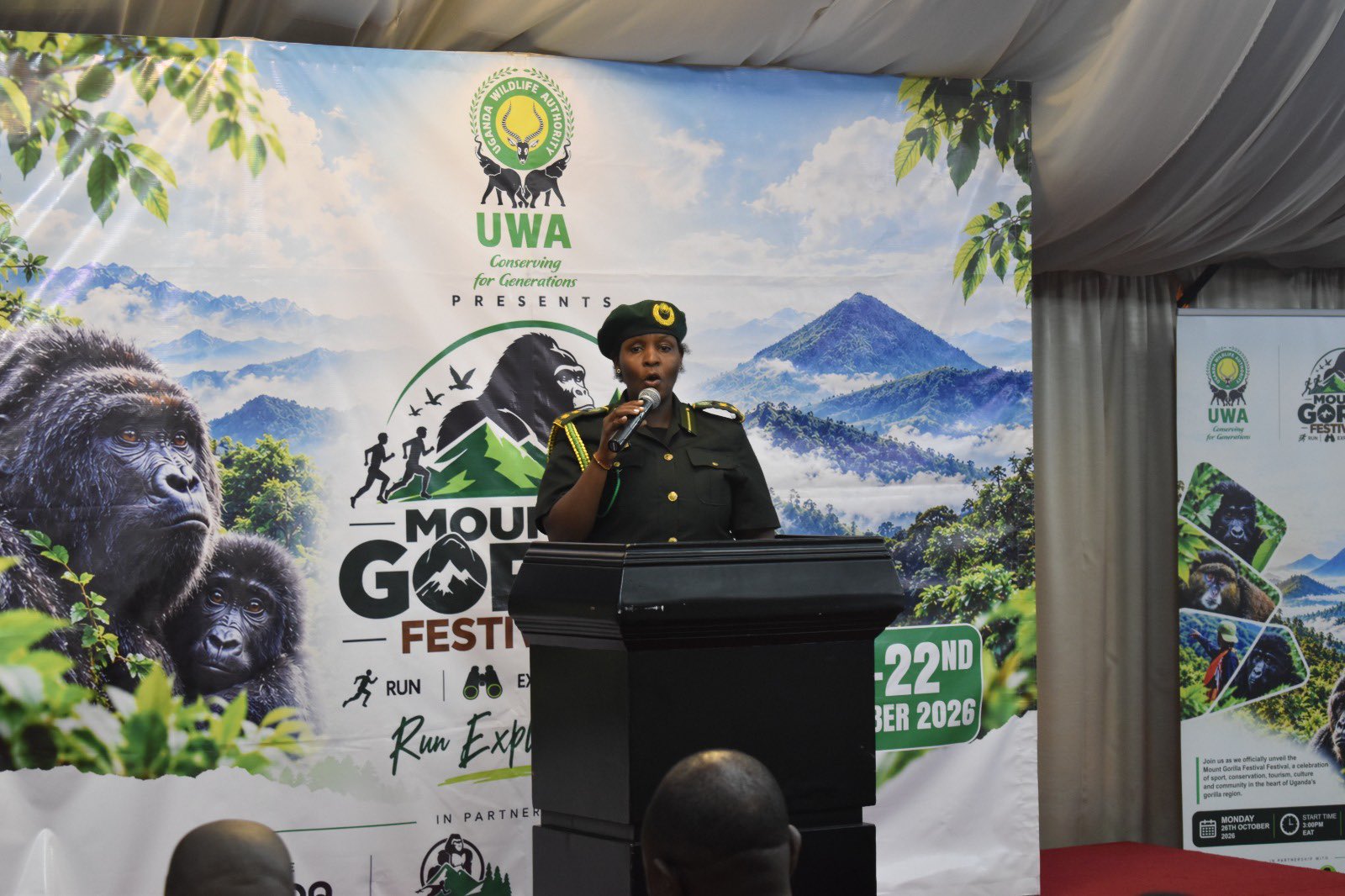
UWA Commissioner for Tourism and Business Development Dorcus Rukundo said the festival was intended to celebrate the progress made in mountain gorilla conservation and the benefits generated for surrounding communities.
“We started the journey of conservation of the gorillas way back and we have seen growth in the numbers of the gorillas. So this festival is majorly to celebrate the gorillas that we have conserved over the years that have benefited the communities that we are surely proud of,” Rukundo said.
She said the festival would become an annual event rotating among gorilla districts in the Kigezi region, with Kisoro hosting the inaugural edition, followed by Kabale and other areas, including Kanungu and Kihihi.
“This is a festival where we expect 2,000 people in the Kigezi region, and this year it is going to be done in Kisoro. We are hoping that every year we’ll be doing this festival, and we shall be rotating it within the Kigezi region. So this year it will be in Kisoro, next year it will be in Kabale, and the other year it will be in Kanungu or Kihihi, around the gorillas,” she said.
The planned rotation is intended to spread tourism visibility and related economic opportunities across the region, rather than concentrating the benefits in a single destination.
Mountain gorilla conservation has become an important component of Uganda’s tourism industry, with Bwindi Impenetrable National Park and Mgahinga Gorilla National Park attracting visitors interested in gorilla trekking and other nature-based experiences.
According to UWA, Uganda’s mountain gorillas live in these two protected areas, which form part of the wider Virunga conservation landscape shared with neighbouring countries. The authority has previously reported that the 2018 census recorded 459 mountain gorillas in Bwindi, while the 2015 census of the wider Virunga Massif recorded 604. A newer census was conducted in 2025, with the latest population estimate awaiting completion of analysis.
The festival comes as conservation authorities continue to emphasise the importance of protecting gorilla habitats while ensuring that people living near protected areas benefit from tourism and related activities.

Marathon targets tourism and economic opportunities
Ivan Kahangire, founder, director and lead organiser of the Virunga Gorilla Marathon, said the race was conceived to attract more visitors to Kisoro, where he grew up.
He traced the idea to 2023, when he guided 65 members of hiking group Mountain Slayers Uganda through a challenge involving climbing three mountains in three days. Sixty-three participants completed the challenge, he said.
“I told them about Lake Mutanda, about Mgahinga, and they were in awe. And I felt so good about it. I asked myself, how do I bring 10,000 people to Kisoro? And that’s where the idea of the marathon was born, Virunga Gorilla Marathon,” Kahangire said.
The marathon is listed with the International Trail Running Association, connecting it to the international trail-running community. Organisers hope to use that network to attract runners and visitors who can spend money on accommodation, transport, food, guiding services and other tourism activities in Kisoro.
Kahangire said attracting just one per cent of the association’s stated membership of 350,000 could bring 3,500 visitors to Uganda, each spending at least US$1,000 during their stay.
“Any one of them coming from Asia, from North America, from Europe, will not come to Uganda and spend less than $1,000, not less than $1,000. If we just take that as a benchmark, $1,000 times 3,500, that is $3.5 million dropped in our economy in one week, at bare minimum,” he said.
The US$3.5 million figure is an illustrative projection based on the organiser’s visitor and spending assumptions, rather than confirmed bookings or guaranteed revenue.
The marathon is built around four pillars: economic development in Kisoro, tourism promotion, talent and education, and an annual cause. This year’s environmental initiative involves tree planting in partnership with Stanbic Bank.
The 2026 race programme includes distances ranging from a 6-kilometre run to a 112-kilometre ultra-trail, offering options for different levels of fitness and experience. The official marathon programme lists November 21 as race day in Kisoro.
UWA spokesperson Bashir Hangi said the festival was expected to grow beyond Kisoro and Uganda to become an international event. “The Mountain Gorilla Festival will continue to grow from strength to strength. I am confident that the time will come when it becomes an international festival, transcending the boundaries of Kisoro and Uganda to become a celebrated African festival,” Hangi said.
If you would like your article/opinion to be published on Uganda’s most authoritative news platform, send your submission on: [email protected]. You can also follow DailyExpress on WhatsApp and on Twitter (X) for realtime updates.