

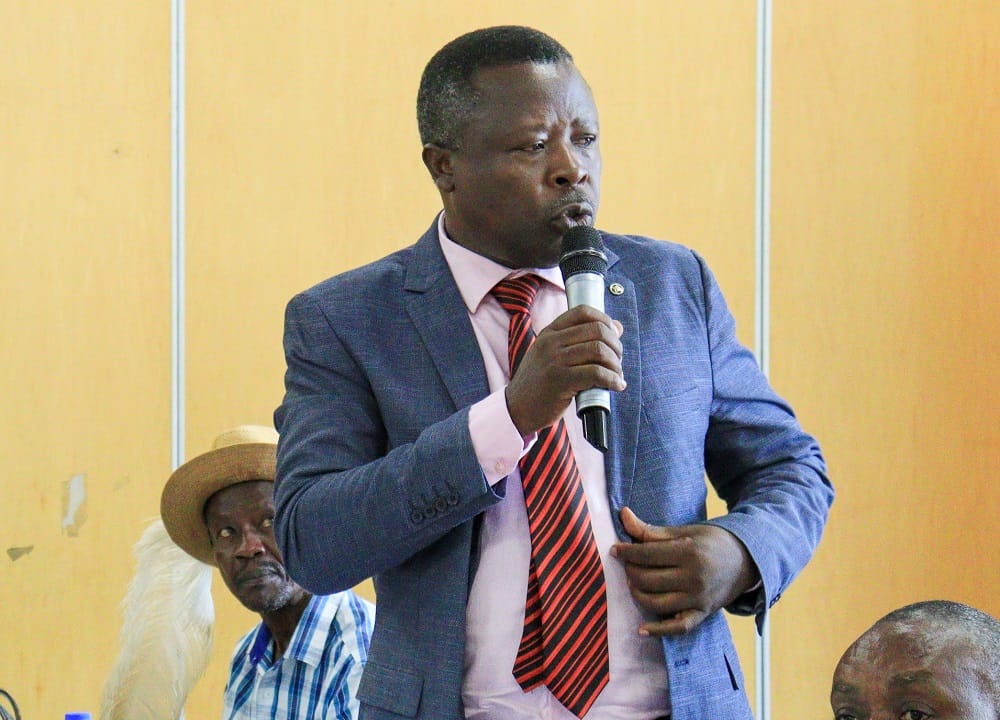
In Summary: Academic reviewer and Bamasaba cultural institution spokesperson Steven Masiga argues that outstanding Master’s and PhD research can create professional opportunities, citing the academic journeys of Ugandan scientist Dr Paul Mwambu and Kenyan President William Ruto as examples of the value of research, publication and scholarly contribution.
Kampala, Uganda — Ugandan academic reviewer and Bamasaba cultural institution spokesperson Steven Masiga has called on universities to place greater emphasis on the publication of Master’s and PhD research, arguing that high-quality academic work can create professional opportunities and distinguish graduates in competitive employment markets.
Masiga, an interdisciplinary scholar whose areas of interest include law, education and administration, says postgraduate students should treat research publication as an essential part of their academic journey rather than viewing a thesis as merely a requirement for graduation.
He cited the academic work of Dr Paul Mwambu, a Commissioner in the Ministry of Agriculture and Prime Minister of the Bamasaba cultural institution, and Kenya’s President William Ruto as examples of how postgraduate research can demonstrate scholarly ability and contribute to wider professional development.
According to Masiga, both Mwambu and Ruto pursued scientific studies during a similar period but at different universities, and their academic interests brought them into contact at conferences across universities in Eastern Africa.
He described their postgraduate research as having significant academic value, arguing that their work illustrates the importance of developing research questions, testing hypotheses and producing knowledge that can inform future investigations.
Mwambu studied Zoology and Botany at Makerere University and has accumulated several academic qualifications. His Master’s research examined farmer participation in the implementation of the National Agricultural Advisory Services (NAADS) programme in Uganda.
The study, titled An Assessment of Farmer Involvement in NAADS Implementation in Sub-Saharan Africa: The Case of Uganda, examined the role of programme beneficiaries in government and development partner-funded interventions designed to address poverty and improve livelihoods.
Masiga said the research was significant because it investigated the involvement of farmers in the implementation of development programmes, bringing together questions of agricultural science, public policy and community participation.
He further argued that Mwambu’s research demonstrated the importance of collecting, analysing and synthesising complex information to generate knowledge that can be useful to other researchers and policymakers.
Masiga also claimed that Mwambu’s Master’s thesis received exceptional recognition and attracted citations from postgraduate and undergraduate researchers. He described it as having been rated by the World Bank as one of the outstanding academic studies in its field.
However, the specific World Bank assessment and the extent of the thesis’s academic citations require documentary verification.
Masiga also attributed Mwambu’s subsequent professional opportunities to the strength of his academic work, saying he was recruited for World Bank assignments in several African countries after serving in government.
He claimed that following the completion of his contractual engagements, Mwambu received Shs1 billion from the World Bank as an appreciation payment, separate from his regular contractual remuneration.
The alleged payment and the circumstances surrounding it could not be independently established from the information provided and should be supported by documentary evidence or direct confirmation before publication.
On the Kenyan side, Masiga cited President William Ruto’s scientific research, saying his postgraduate studies examined the relationship between human activities and land use.
Ruto pursued a Master of Science degree and later a PhD in Plant Ecology at the University of Nairobi. His doctoral research examined the influence of human activities on land use, with particular reference to Saiwa Swamp in Trans Nzoia County, Kenya.
Masiga said the two scholars’ research demonstrates the importance of formulating clear research questions and testing hypotheses to narrow investigations and generate meaningful findings.

He explained that research hypotheses help scholars establish assumptions that can be tested through evidence, while research questions provide direction and boundaries for academic investigations.
Beyond the individual examples, Masiga urged Ugandan universities to strengthen their postgraduate research and publication systems, arguing that students should be encouraged to make their findings accessible to the wider academic and professional community.
“As a scholar and reviewer of theses, I believe a student who has not published should not be allowed to graduate, because you have not communicated to the outside world, you have not communicated to employers about your potential as a serious scholar,” Masiga argued.
He also cautioned prospective postgraduate students against enrolling at institutions that do not provide adequate support for research publication.
Masiga holds a Bachelor of Arts in Education and a Master’s degree in Administration from Makerere University, as well as Bachelor of Laws and Master of Laws qualifications. He is also a PhD candidate.
His argument places renewed emphasis on the relationship between postgraduate research, academic visibility and professional development, particularly at a time when universities are increasingly expected to produce graduates capable of contributing to research, innovation and national development.
A postgraduate thesis is primarily an original research contribution submitted to meet the requirements of an academic qualification. Publication in peer-reviewed journals can increase the visibility of that research, allow other scholars to scrutinise its findings and create opportunities for academic collaboration.
However, publication does not automatically guarantee employment. Professional opportunities depend on several factors, including the quality and relevance of research, the candidate’s experience, institutional reputation, professional networks and labour market demand.
Universities also differ in their graduation requirements. Some require publication or evidence of manuscript submission for particular postgraduate programmes, while others require successful examination and approval of the dissertation or thesis without mandatory journal publication.
If you would like your article/opinion to be published on Uganda’s most authoritative news platform, send your submission on: [email protected]. You can also follow DailyExpress on WhatsApp and on Twitter (X) for realtime updates.


