

In Summar: Finance Minister Henry Musasizi has cautioned workers against excessive mid-term access to retirement savings, warning that premature withdrawals could leave members with inadequate income in old age. Uganda’s retirement benefits sector has grown to nearly Shs40 trillion, with savings equivalent to 14.7% of GDP, but Musasizi says growth must translate into secure retirement incomes and sustainable benefits.
Kampala, Uganda — Finance Minister Henry Musasizi has cautioned workers against excessive mid-term access to retirement savings, warning that premature withdrawals could undermine pension schemes and leave members with inadequate income in old age.
Musasizi said retirement savings are intended to provide financial security after employment and should therefore be managed with a long-term perspective, even as the sector explores ways of making savings more accessible to members.
He made the remarks on Wednesday, November 25, while officiating at the launch of the 13th Annual Retirement Benefits Sector Report 2026 at Serena Hotel in Kampala.

The minister acknowledged workers’ desire to access their savings while they are still young enough to enjoy the benefits, rather than waiting until old age when they may have limited opportunities to do so.
Musasizi also called for wider participation in the retirement benefits industry through liberalisation, urging workers not to fear the reforms. “Let’s open the industry so that we are able to rise more broadly than what we are seeing now,” he said.
He cited the National Social Security Fund (NSSF), which declared an interest rate of 22.5% for the 2024/25 financial year, saying the Fund had demonstrated its capacity to deliver competitive returns to members.
Uganda’s retirement benefits sector has grown from less than Shs4 trillion before the 2011 reforms to nearly Shs40 trillion, registering average annual growth of 15% over the last decade.
Retirement savings now account for 14.7% of Uganda’s Gross Domestic Product (GDP), compared to 8.4% in 2011, while the sector has recorded average investment returns of 21.5%.
Musasizi said the next priority should be ensuring that growth in pension assets translates into better returns and secure retirement incomes for members.
“Growth alone should not be the measure of success of the retirement benefits sector,” he said, urging schemes to preserve members’ savings, manage investment risks and ensure that returns credited to members are supported by income actually earned.
He emphasised that “members’ interests must come first” in all investment decisions, adding that schemes must maintain adequate liquidity to meet benefit payments when they fall due.

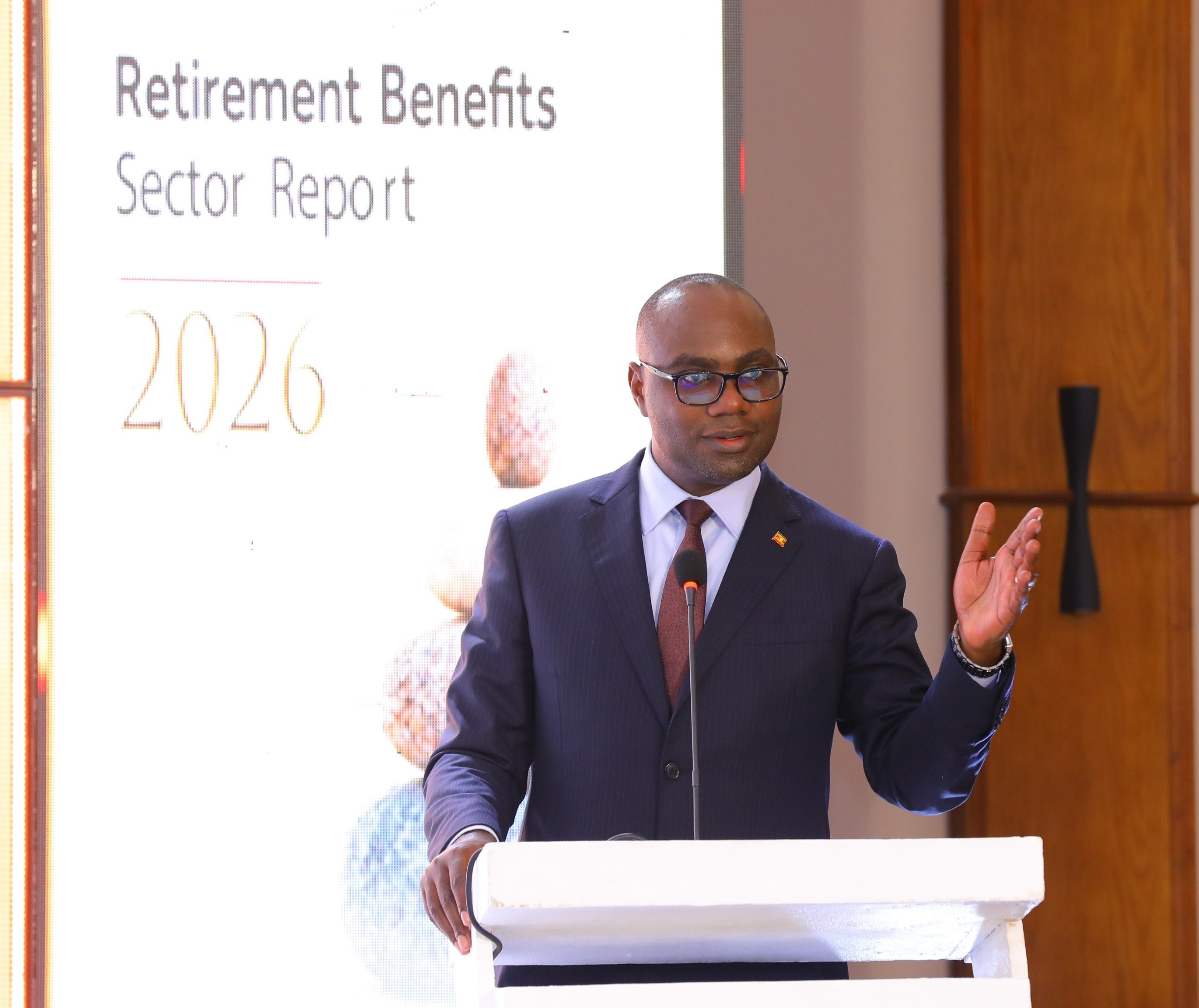
Martin Anthony Nsubuga, Chief Executive Officer of the Uganda Retirement Benefits Regulatory Authority (URBRA), said sustaining the sector’s growth would require reforms that attract new members and unlock suitable investment opportunities.
Nsubuga called for Government-supported, bankable investment products capable of delivering consistent returns and predictable long-term cash flows to support members’ retirement benefits.
Moses Zziwa, a URBRA Board Member representing Board Chairman Henry Balwanyi, said the proposed Government-enabled savings scheme would make saving more accessible through small, regular contributions, affordable accounts and flexible payment options.
Government targets to increase domestic savings to 40% of GDP by 2040, with retirement benefits schemes expected to play a critical role in mobilising long-term financing for national development.
The retirement benefits sector has expanded significantly since the reforms introduced in 2011, according to the figures presented at the report launch. The sector’s challenge, as outlined by Musasizi, is to balance members’ demand for access to savings with the need to preserve sufficient funds for retirement.
If you would like your article/opinion to be published on Uganda’s most authoritative news platform, send your submission on: [email protected]. You can also follow DailyExpress on WhatsApp and on Twitter (X) for realtime updates.