
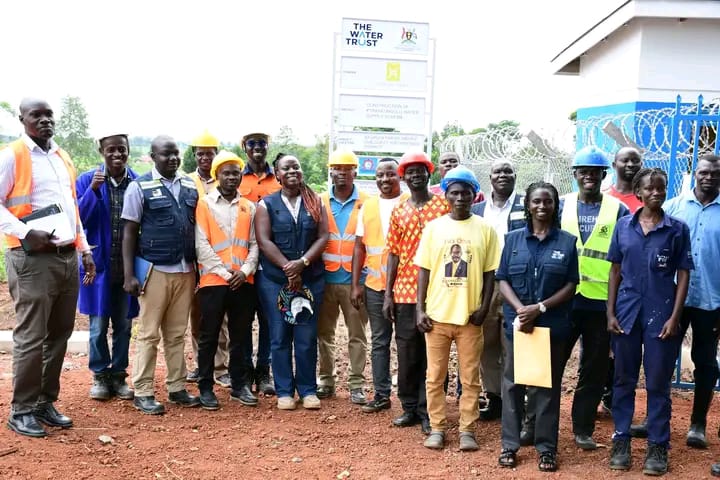
In Summary: The project features 40 solar panels, modern pumping equipment and water treatment infrastructure, with leaders emphasising the need for proper maintenance, sanitation and community participation to sustain the supply.
Kiryandongo, Uganda — Kiryandongo District has turned to solar-powered water technology to address longstanding water shortages in six villages after years of unsuccessful attempts to drill boreholes through the area’s rocky terrain.
The district, working with development partner The Water Trust, has invested Shs649 million in a solar-powered piped water system designed to improve access to clean and safe water for communities that have struggled to find reliable sources.
For years, the area’s hard rock formations made borehole drilling difficult, with several attempts failing and leaving residents to travel long distances in search of water. However, the discovery of a substantial water source capable of serving several neighbouring villages provided an opportunity to develop a wider water supply system.
Kiryandongo District Water Officer Samuel Muhumuza said the discovery changed the district’s approach to addressing the water challenge, as the source could support more than one village.
With support from The Water Trust, the district was able to undertake the project, combining local government technical supervision with the partner’s financial and technical contribution.
At the centre of the system is a solar-powered pumping station fitted with 40 solar panels and modern pumping equipment to facilitate the extraction and distribution of water. The facility also features security installations, including CCTV cameras, alarms and security lights, intended to protect the infrastructure against theft and vandalism.
Enock Obwon, the WASH Manager (Technical) at The Water Trust, said the system had been designed to pump, treat and distribute safe water to beneficiary households.
The project has brought together the district authorities, development partners, contractors and local communities, with each playing a role in implementation and protection of the infrastructure.
While the district is providing technical guidance and supervision, The Water Trust is contributing funding and expertise, contractors are undertaking construction works, and residents are expected to participate in implementation and safeguard the facility.

However, project leaders say improved water access must be accompanied by better sanitation and hygiene practices to achieve lasting public health benefits.
Phiona Aber, Programme Director at The Water Trust, emphasised the importance of extending hygiene education to households and schools, noting that access to safe water alone would not eliminate diseases associated with poor sanitation and hygiene.
Ociba Michael, the Assistant District Health Officer in charge of Environmental Health, said assessments should be conducted before and after the project to establish its impact on communities.
He emphasised the need to monitor whether the intervention reduces the distances residents travel to collect water and whether improved access translates into better health outcomes.
Kiryandongo District currently has an estimated water coverage of 75 per cent, with most residents able to access water within a distance of 1.5 kilometres.
If you would like your article/opinion to be published on Uganda’s most authoritative news platform, send your submission on: [email protected]. You can also follow DailyExpress on WhatsApp and on Twitter (X) for realtime updates.