
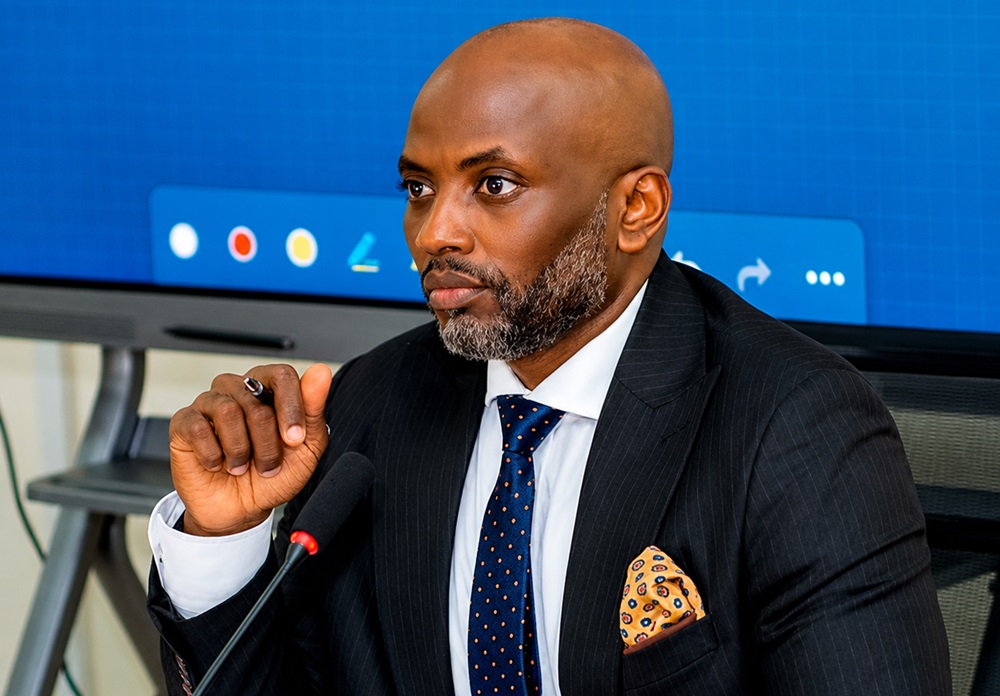
In Summary: Victoria University Vice Chancellor Prof. Lawrence Muganga has challenged Uganda’s continued reliance on an education model inherited from Britain, arguing that the country must rethink how it identifies and develops young people’s abilities beyond academic grades. His remarks follow a proposal by entrepreneur Simon Squibb to transform British job centres into “dream centres” offering young people guidance, resources and opportunities to pursue their ambitions.
Kampala, Uganda — Victoria University Vice Chancellor Prof. Lawrence Muganga has questioned why Uganda continues to rely heavily on an education model inherited from Britain, arguing that the country should reconsider an approach that places significant emphasis on conventional academic performance at the expense of other talents.
Muganga was reacting to a conversation between British Prime Minister Andy Burnham and entrepreneur Simon Squibb, who proposed transforming job centres into spaces where young people can access guidance, resources and support to pursue their ambitions.
The discussion centred on how institutions can better support young people whose abilities and potential may not be recognised by conventional education and employment systems.
Squibb shared his personal experience of leaving school at the age of 15 after being labelled a D student and told he would not succeed. “I was 15 years old when I left the school system. I didn’t know the skills that I actually had in me because I was being told I was a D student; I was never going to make it,” Squibb told Burnham.
He argued that conventional academic assessments often leave young people feeling less valuable when they do not excel in traditional subjects, despite having abilities in areas such as music, drama and sport.
After spending seven years developing an alternative approach to youth support, Squibb proposed transforming job centres into what he called “dream centres”, where young people could receive free knowledge, guidance, resources and assistance in pursuing their ambitions.
He had previously outlined the proposal in an interview with Entrepreneur UK, criticising existing job centres as bureaucratic spaces that often do little to inspire people.
Burnham welcomed the idea, acknowledging that job centres are often places people fear visiting. He described the proposed transformation as the biggest shift in the way a British government had thought about young people in 50 years or more.
The discussion focused on youth support and the proposed transformation of job centres, rather than an announced overhaul of Britain’s school curriculum. The UK government has separately been pursuing wider reforms to youth support, including bringing employment, education, health and other services together.
Reacting to the conversation via X, formerly Twitter, Muganga turned the debate towards Uganda, questioning why the country should continue following an education model introduced by Britain when the former colonial power is also reconsidering how its institutions support young people.
“If the UK Prime Minister is admitting that their own education system is broken, then what does that say about our fate, having inherited the very education system they introduced and left us with?” Muganga wrote.
“If the system is no longer serving the people who created it, what makes us think it is serving us any better?” he asked.
Prof Muganga has repeatedly criticised Uganda’s emphasis on academic grades and national examinations, arguing that the education system should identify and nurture individual abilities rather than judge learners primarily through examination performance.
In February 2026, he described the country’s education system as a marketplace in which grades had become the main product, questioning whether schools were producing innovators or simply preparing learners to pass examinations.

He has also questioned the practice of labelling children failures following national examinations, asking who had the authority to declare a 13-year-old a failure after the release of Primary Leaving Examination results.
More than 77,000 candidates who sat the 2025 PLE were reported to have failed to attain the minimum score for Division Four.
Muganga’s criticism of Uganda’s examination-driven education system has also featured in national education policy discussions.
In 2024, he presented his views to the Education Policy Review Commission, recommending continuous assessment of learners’ skills and competencies instead of relying heavily on annual national examinations. However, his position has not been limited to criticism of the existing assessment system.
In October 2024, he welcomed changes to the Uganda Certificate of Education assessment methodology introduced by the Uganda National Examinations Board (UNEB), particularly the increased emphasis on problem-solving, critical thinking and applying knowledge to real-life situations.
At Victoria University, where he serves as Vice Chancellor, the institution also offers Higher Education Certificate programmes designed to provide alternative pathways into undergraduate education for students who do not meet standard university entry requirements.
Muganga’s latest remarks return to a question he has consistently raised about whether Uganda’s education system is developing the abilities of its young people or placing too much emphasis on conventional academic performance.
He urged the country to reconsider an education approach simply because it is familiar and has been followed for generations. “We need to wake up, and fast. We cannot keep following an education system simply because it is what we have always known.”
If you would like your article/opinion to be published on Uganda’s most authoritative news platform, send your submission on: [email protected]. You can also follow DailyExpress on WhatsApp and on Twitter (X) for realtime updates.