
Apac, Uganda: The Land and Equity Movement in Uganda (LEMU) has struck a mega partnership with cultural leaders in Apac District to launch a bold initiative aimed at reviving indigenous identity, reclaiming ancestral land, and preserving traditional food systems under the transformative theme “Our Land, Our Future.”
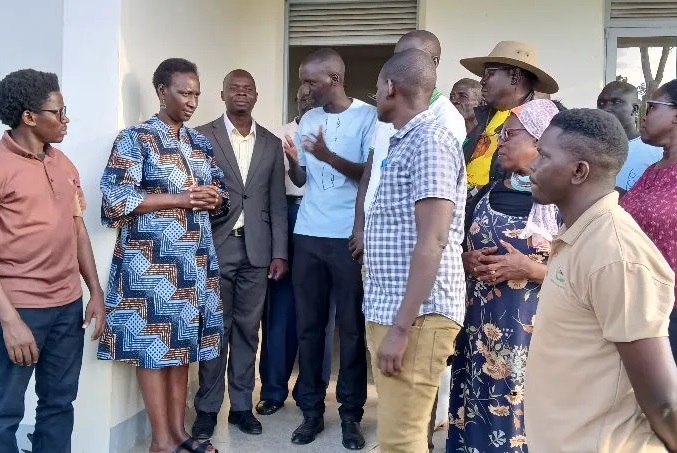
During a stakeholders’ meeting at Apac District Council Hall on Wednesday, October 08, LEMU Executive Director Dr. Theresa Auma said the campaign, also branded “Keep Your Land, Keep Your Seed,” seeks to protect Uganda’s cultural soul from extinction by promoting community land rights, indigenous knowledge, and traditional agriculture.
Dr. Auma expressed optimism following the allocation of a new LEMU office at Chegere Sub-county headquarters, saying it will serve as a central hub for coordinating land rights advocacy and cultural restoration across Apac.
“We are not just fighting for soil. We are fighting for identity. The crops that once defined us — millet, simsim, and groundnuts — are disappearing. And when the land goes, the culture goes too,” Dr. Auma emphasized.
The launch brought together elders, clan heads, and cultural leaders from Maruzi North County, who voiced growing alarm over the erosion of indigenous values and the commercialization of customary land.

Mr. Patrick Odur, Cultural Leader of Atek Okweromac in charge of Apac Municipality, warned that many youths no longer appreciate the sacred meaning of land. “The younger generation thinks land is just property to sell. But land is sacred — it holds our graves, our gods, our history,” he said.
Similarly, Mr. Peter Ocen Bako, Cultural Leader of Arak Ongoda in charge of Apac Municipality and Maruzi County, decried the disappearance of traditional foods.
“What happened to millet porridge and simsim paste? These foods fed warriors and elders. Today, we are feeding our children on imported wheat and sugar — and we wonder why our bodies and values are weak,” he lamented.
Mr. Emmanuel Ocen, Clan Leader of Palamyek, urged communities to protect ancestral land for future generations. “If we do not act now, our children will inherit nothing but dust and confusion,” he said.
Land Grabs, Ignorance, and Legal Gaps
LEMU’s campaign also confronts the rising threat of land grabs by commercial actors exploiting ignorance and poor documentation among rural communities. The organization noted that vulnerable groups — particularly widows, orphans, and the uneducated — are the most at risk.

“Land is being taken because people do not understand their rights. They lack proper documentation and legal awareness. That’s why this campaign must go hand in hand with legal empowerment,” Dr. Auma said.
Mr. Wacio Dickens Olak, former Minister of Lands in the defunct Lango Cultural Foundation and Cultural Leader of Adyegi Clan, issued a stark warning: “If we do not preserve our land and crops, we are waiting to be recolonized — not by foreigners this time, but by our own ignorance.”
Under the “Our Land, Our Future” campaign, LEMU is working with cultural institutions to promote a return to indigenous farming, document customary land ownership, and integrate traditional foods into school feeding programs.
Dr. Auma revealed that traditional crops such as millet, simsim, and sorghum have declined by 60% in local cultivation over the past two decades, while western diets dominate school meals — undermining both nutrition and cultural continuity.
With over 80% of land in northern Uganda held under customary tenure but rarely documented, LEMU’s campaign is urging clan structures to formalize ownership under customary law and ensure intergenerational land security. “If we keep our land, we keep our future,” Dr. Auma reaffirmed.
If you would like your article/opinion to be published on Uganda’s most authoritative news platform, send your submission on: [email protected]. You can also follow DailyExpress on WhatsApp and on Twitter (X) for realtime updates.


