
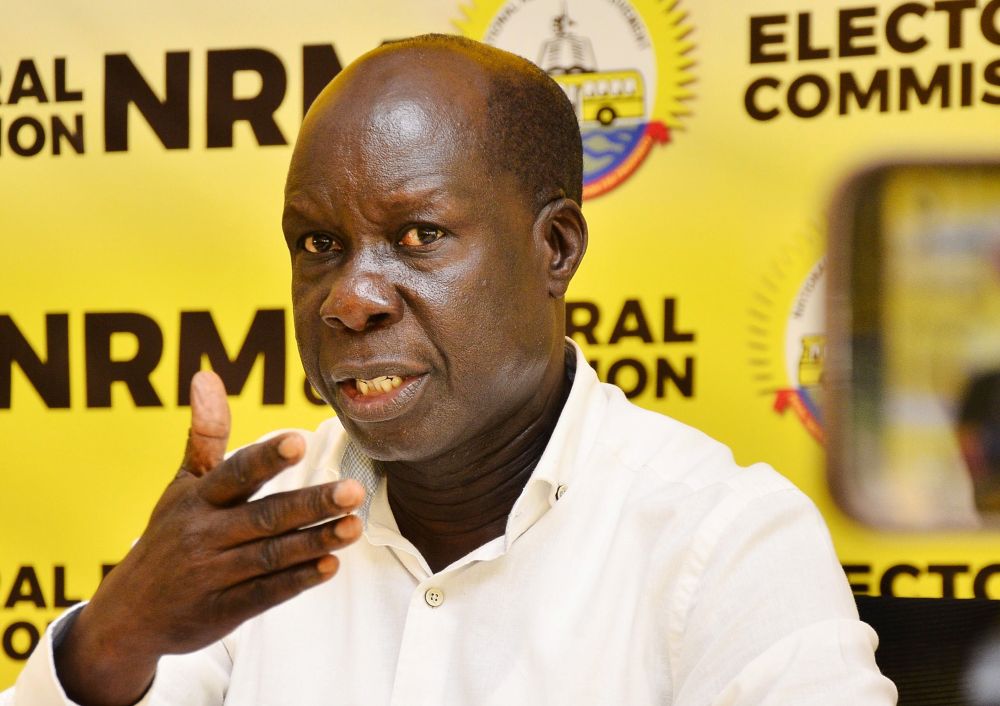
Kampala, Uganda: The High Court in Kampala has dismissed an application that sought to challenge the National Resistance Movement (NRM)’s process of nominating candidates for the East African Legislative Assembly (EALA), ruling that the matter was not suitable for judicial review and ordering the applicant to pay legal costs.
In a ruling delivered on May 29, 2026, Justice Bernard Namanya upheld a preliminary objection raised by the respondents, finding that the applicant had failed to exhaust the NRM’s internal dispute resolution mechanisms before seeking court intervention.
The case was filed by Nsubuga Jack, who challenged the NRM Electoral Commission’s handling of nominations intended to fill vacancies in the East African Legislative Assembly following the election of former EALA representatives Denis Namara and James Kakooza as Members of Parliament on January 15, 2026.
Nsubuga argued that Namara and Kakooza automatically ceased to be members of EALA upon their election to Parliament under Section 7(3)(c) of the East African Legislative Assembly Elections Act, 2011. He contended that the NRM Electoral Commission irregularly commenced the process of nominating replacements before the new Parliament had been sworn in.
He sought court orders setting aside the nominations and directing the commission to restart the exercise after the commencement of the new parliamentary term.
However, the NRM and the Chairman of the NRM Electoral Commission, Tanga Odoi, opposed the application through an affidavit sworn by NRM Director of Legal Services, Barata Enoch.

The respondents, represented by counsel Sebuufu Usaama of K&K Advocates, argued that the nomination process had initially been commenced in line with the NRM Parliamentary Caucus Rules of Procedure but was later suspended pending the swearing-in of newly elected Members of Parliament.
Court Examines Judicial Review Limits
In his ruling, Justice Namanya emphasized that judicial review is intended to supervise the legality, fairness and rationality of decisions made by public bodies and officials, rather than determine the merits of those decisions.
The judge noted that courts exercising judicial review jurisdiction are limited to examining whether decision-makers acted lawfully, reasonably and in accordance with procedural fairness.
He found that the nomination process in question had not been completed and that any challenge arising from it was therefore premature.
“The nomination process was incomplete, and any complaint arising from that process was, at the material time, premature,” Justice Namanya ruled.
Failure to Exhaust Internal Remedies
A key issue before the court was whether Nsubuga had exhausted the internal mechanisms available within the NRM before filing the application.
Although the applicant argued that he had raised his concerns through letters addressed to the NRM National Chairman and the Chairman of the NRM Electoral Commission, the court held that such correspondence did not amount to utilizing the party’s established dispute resolution structures.

Justice Namanya pointed to Regulation 42 of the NRM Election Regulations, 2025, which establishes the NRM Election Disputes Tribunal, and Regulation 43(9), which makes the tribunal’s decisions binding and final on the parties.
The court further observed that even if the applicant remained dissatisfied after completion of the nomination process, his proper recourse would be through the party’s Election Disputes Tribunal.
In reaching the decision, the judge also relied on the precedent set in Niwabiine & Others v National Resistance Movement & Another (2022), which underscored the requirement for party members and stakeholders to first utilize internal party mechanisms before seeking judicial intervention.
Application Dismissed
Having found that Nsubuga failed to exhaust the available internal remedies, the court concluded that the matter was improperly before it.
“I find and hold that the applicant, being under a legal obligation to exhaust the internal dispute resolution mechanisms provided under the NRM Elections Regulations before approaching this court, failed to do so,” Justice Namanya held.
The court consequently upheld the preliminary objection raised by the respondents and dismissed the application in its entirety.
Justice Namanya also ordered Nsubuga Jack, alias Mandela, to pay the respondents’ legal costs pursuant to Section 27 of the Civil Procedure Act.
If you would like your article/opinion to be published on Uganda’s most authoritative news platform, send your submission on: [email protected]. You can also follow DailyExpress on WhatsApp and on Twitter (X) for realtime updates.