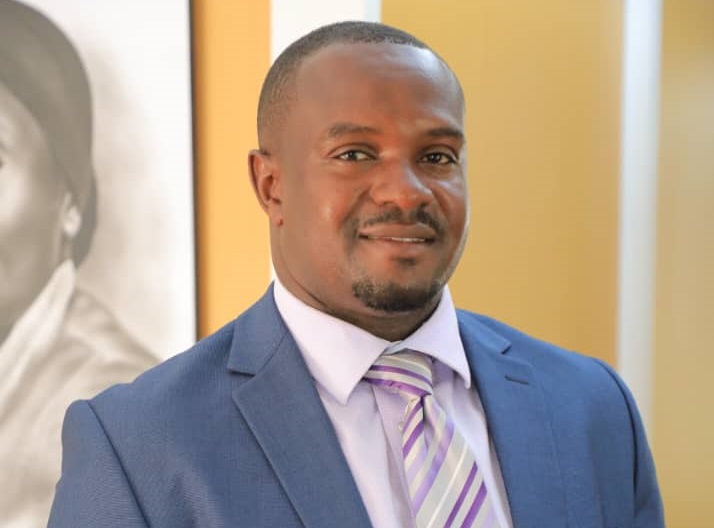
By Kazibwe Jamil
President Yoweri Kaguta Museveni’s enduring political legacy stands as one of Africa’s most influential, defined by stability, infrastructural expansion, and economic transformation. Yet, as the nation gears toward the 2026 general elections, it is increasingly evident that the National Resistance Movement (NRM) must rethink its approach when it comes to political mobilization if it is to translate that legacy into sustained political capital.
The ongoing campaign trail, into just two weeks, has already exposed cracks in the ruling party’s mobilization machinery. The grand launch of President Museveni’s 2026 campaign at Bukalasa Playground in Wobulenzi, Luweero District, a symbolic ground zero for the 1980s liberation struggle, should have attracted a sea of yellow. Instead, the event was marked by a visibly thin crowd, a disappointing sight for a leader who has ruled for nearly four decades and labeled Greater Luweero “Uganda’s Mecca.”
This underwhelming turnout is not merely a logistical misstep; it is a warning signal. Mobilization, which was once the NRM’s greatest strength, now appears commercialized, reactive, and disconnected from the grassroots structures that built the Movement’s foundation. You cannot sweep under the carpet, reports of supporters being ferried and paid to fill up venues, a far cry from the organic enthusiasm that once defined NRM’s early revolutionary years.
The situation climaxed on Thursday at Kololo during the UgandaAt63 Independence Day Celebrations, where President Museveni, before a crowd of dignitaries and foreign guests, addressed a visibly scanty audience at such a national function. One would think that since we are in the campaign period, this moment should have been a show of strength and national pride, but instead, it raised serious questions about the effectiveness of the party’s mobilization strategy.
What is the Missing Link?
At the heart of this challenge lies the need for authentic, sustained grassroots mobilization — the very strategy that propelled the NRM into power in the 1980s. In the past, the Movement’s success hinged not on money but on the spirit of volunteerism, unity, and ideological conviction. Today, however, that spirit appears diluted by factional interests, internal rivalries, and a lack of coordination between party organs and experienced mobilizers.
If not for the ongoing political turf wars within the NRM’s top leadership, such a task would perfectly suit Senior Presidential Advisor Hajjat Hadijah Namyalo. As the head of the Office of the National Chairman (ONC), Hajjat Namyalo has over the last four years demonstrated unparalleled ability to connect with the grassroots.
Her leadership in the Jajja Tova Ku Main campaign showcased a bottom-up approach that resonated widely with youth, women, and local mobilizers, effectively humanizing the President’s image and strengthening his appeal at the base.
During the NRM Register Update exercise last year, Hajjat Namyalo successfully built a formidable network of village-level cadres across the country. With Uganda’s over 72,000 villages each having between 5 to 10 cadres under ONC’s structure, that translates into a potential mobilization force of between 3.6 to 7.2 million active grassroots agents — a game-changing base if properly activated.

But a patriotic Ugandan and cadre of the ruling party knows that President Museveni’s legacy will not be defined solely by policy achievements or international recognition, but by his ability to reconnect with the people who made his political journey possible — the ordinary citizens of Luweero, Lango, Karamoja, Acholi, Busoga, Ankole, West Nile, and beyond.
What is the way forward?
The NRM leadership must, therefore, bury ego and pride and tap into the expertise of proven mobilizers like Hajjat Namyalo. Political mobilization is not a corporate exercise; it is a people-centered art rooted in empathy, presence, and ideological consistency. Uganda’s political landscape has evolved, and so must the NRM’s approach if it is to retain its revolutionary legitimacy.
Without robust grassroots mobilization, the risk is not merely electoral embarrassment; it is the erosion of the Movement’s historical bond with the very citizens it claims to have liberated. To safeguard his legacy, President Museveni must ensure that mobilization once again becomes a movement, not a transaction.
The writer is a Concerned NRM Cadre and Political Commentator
If you would like your article/opinion to be published on Uganda’s most authoritative news platform, send your submission on: [email protected]. You can also follow DailyExpress on WhatsApp and on Twitter (X) for realtime updates.