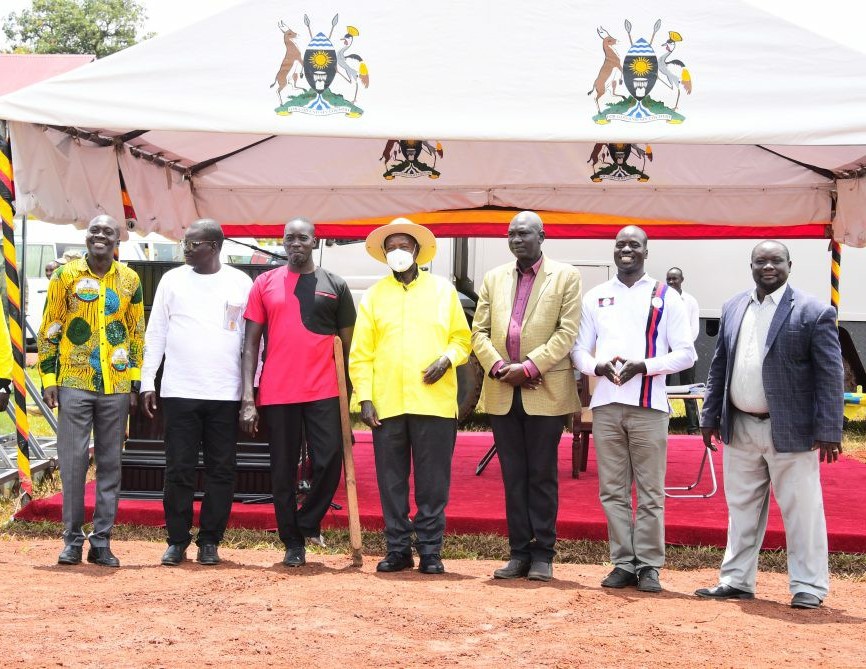
Oyam, Uganda: Residents and leaders in Oyam District have welcomed President Yoweri Kaguta Museveni’s pledge to restock Northern Uganda with livestock, describing it as a practical step toward rebuilding household economies and restoring livelihoods devastated by past insurgencies and cattle raids.
President Museveni, who is also the NRM presidential candidate for the 2026 general elections, made the announcement during a campaign rally at Oyam Boma Grounds on October 7, 2025.
The President revealed that the government plans to distribute five animals per household across the Lango, Acholi, and Teso sub-regions as part of a broader post-conflict recovery initiative.
“Some people took the matter to court and made it an illegal issue, but after spending UGX 159 billion, we are not seeing any meaningful results,” Museveni said. “That’s why I called your leaders and asked whether we could give five or fewer cows per family. They agreed that this was a good idea.”
He added that the government will start planning for restocking after receiving comprehensive reports from local leaders in the affected regions.
The cattle compensation program was originally launched in March 2022 with a budget of UGX 200 billion to compensate families in Acholi, Lango, and Teso who lost livestock and property during armed conflicts and cattle rustling.
However, the implementation has been marred by delays, court battles, and allegations of corruption in the earlier compensation phases.
If implemented as announced, Oyam District is projected to receive about 360,000 cattle, based on its estimated 72,000 households, according to the district’s Production Department.
Local Leaders Back the Plan
Albino Cox Ogwal, the Oyam District Production Officer, hailed the President’s pronouncement as a game-changer for rural development and household income enhancement. “Livestock provides essential nutrition through milk and meat and generates income for families. When homes develop, the district and the nation also grow,” Ogwal said.
Sheik Husaamah Eden, the Religious Leader of Greater West Lango Muslim District, said the initiative would have a significant multiplier effect on the local economy. “If the government helps all households through this restocking program, it will boost economic activity and improve the livelihoods of local people,” Eden said.

However, Conny Atoo, an elder from Oyam Town Council, cautioned that the plan must be implemented transparently to avoid the corruption that tainted previous compensation programs.
“Money was released for compensation, but it never reached many intended beneficiaries. Giving five cows per household is a fairer and more transparent approach,” Atoo said. “But these pronouncements should not just be campaign promises; they should be followed through.”
Felix Okot Ogong, MP for Dokolo South, described the plan as a positive shift from cash compensation to tangible household support. “This plan will increase animal numbers in the region rather than benefit a few individuals,” Okot said.
“What is left is for the government to move swiftly and start implementation. If we return to Parliament, we shall lobby for it to begin immediately.”
If rolled out effectively, the restocking program could revitalize livestock farming across Northern Uganda, which has been struggling to recover from decades of cattle rustling and armed conflict.
Economic experts in the region argue that livestock ownership directly enhances food security, savings, and family resilience — making Museveni’s restocking pledge a potentially transformative intervention for Lango and neighboring sub-regions.
If you would like your article/opinion to be published on Uganda’s most authoritative news platform, send your submission on: [email protected]. You can also follow DailyExpress on WhatsApp and on Twitter (X) for realtime updates.