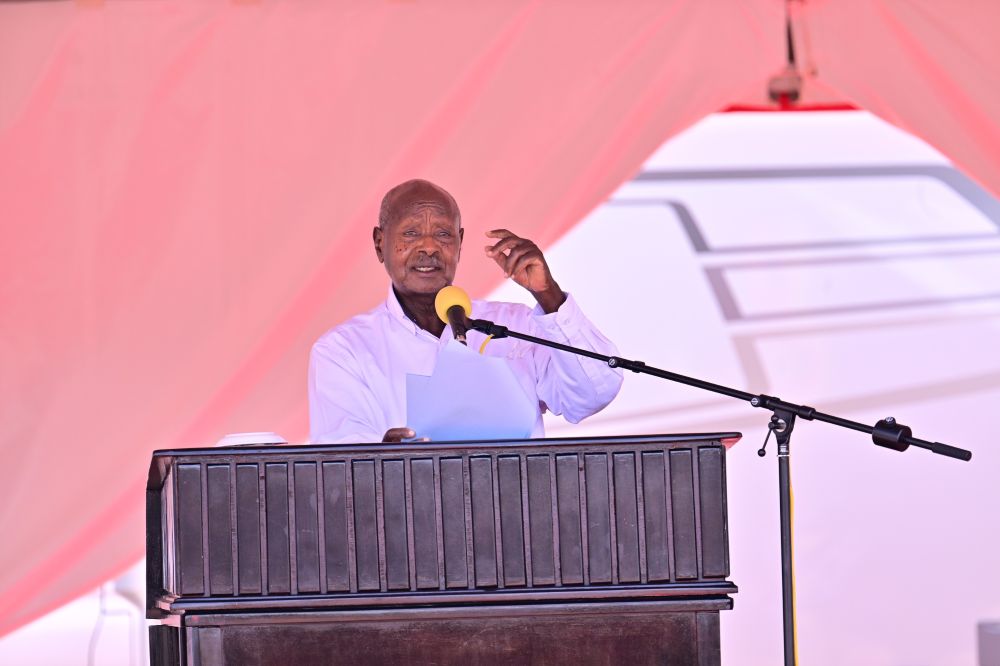
Kampala, Uganda: President Yoweri Museveni has launched a scathing attack on what he described as a growing culture of dependency among political leaders and public servants, accusing some officials of demanding allowances to perform duties for which they are already paid by taxpayers.
In one of the most striking moments of his State of the Nation Address delivered at Kololo Ceremonial Grounds on Thursday, Museveni said he was increasingly frustrated by leaders who prioritise facilitation and allowances over service delivery.
“I am tired of parasitism,” Museveni declared as he challenged leaders to emulate ordinary Ugandans who are transforming their livelihoods through government wealth-creation programmes.
The President said Uganda’s development efforts are being undermined by officials who expect additional payments before carrying out routine responsibilities such as community mobilisation, supervision of government programmes and public service delivery.
Museveni argued that leadership should be driven by commitment to the people rather than financial incentives, noting that many of Uganda’s historical leaders served under far more difficult conditions without demanding allowances.
“I used to ride a bicycle to serve my people,” Museveni said, recalling his early years of mobilisation and public service.

The President made the remarks while showcasing success stories from beneficiaries of government interventions such as the Parish Development Model (PDM), Emyooga and the four-acre model, which he described as proof that wealth creation is possible through hard work, discipline and proper utilisation of available opportunities.
He contrasted the achievements of farmers, livestock keepers, coffee growers, fish farmers and small-scale entrepreneurs with some public officials whom he accused of focusing more on allowances than on helping wananchi access government programmes.
According to Museveni, thousands of Ugandans have demonstrated that prosperity can be achieved without dependence on handouts, provided citizens embrace production and enterprise.
The President pointed to households that have significantly improved their incomes through commercial agriculture and other wealth-creation activities promoted under government programmes.
He said these success stories validate the National Resistance Movement’s long-standing message that economic transformation begins at household level through productive engagement rather than reliance on government support.
Museveni further argued that government has already put in place most of the necessary interventions required to drive Uganda toward middle-income and eventually high-income status.
“The NRM has identified almost all the requirements needed for prosperity,” he said.

The President’s criticism of allowance-seeking officials is consistent with a theme he has repeatedly raised in recent years. He has often expressed concern about what he calls a “dependence syndrome” among some leaders who expect facilitation before implementing government programmes or engaging with communities.
In previous speeches, Museveni has warned that such attitudes weaken accountability and reduce the effectiveness of government initiatives intended to improve livelihoods.
His latest remarks come at a time when government is investing billions of shillings in programmes such as PDM, Emyooga and various agricultural value chains aimed at lifting households out of subsistence production.
Museveni urged leaders at all levels of government to concentrate on educating communities, monitoring programme implementation and supporting wealth creation efforts instead of demanding additional payments.
The comments are likely to reignite debate over facilitation allowances within government institutions, where some officials argue that inadequate operational budgets often make it difficult to carry out fieldwork and supervision responsibilities effectively.
The State of the Nation Address was delivered ahead of the presentation of the 2026/27 national budget and outlined government’s achievements, challenges and priorities across various sectors of the economy.
For Museveni, however, one message stood out clearly: Uganda’s transformation will require leaders who serve rather than leaders who wait to be facilitated.
If you would like your article/opinion to be published on Uganda’s most authoritative news platform, send your submission on: [email protected]. You can also follow DailyExpress on WhatsApp and on Twitter (X) for realtime updates.