
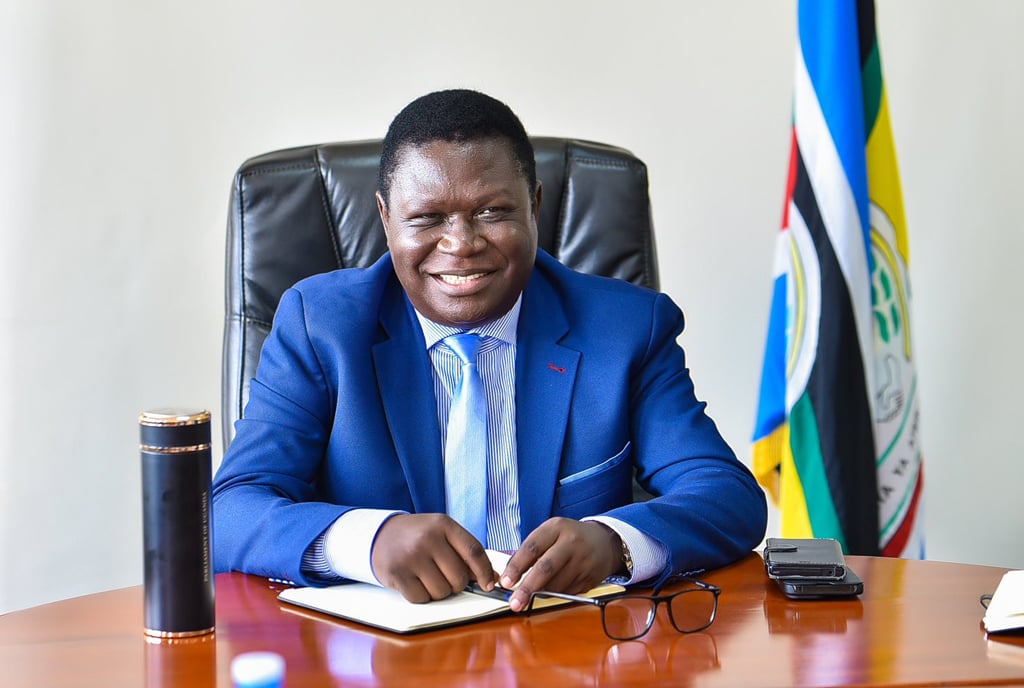
Kampala, Uganda: Justice and Constitutional Affairs Minister, Hon Norbert Mao, has moved to halt the current parliamentary roadmap, with a proposal to have the induction of Members of the 12th Parliament delayed until after the election of the Speaker and Deputy Speaker of the August House.
In a letter dated April 27, 2026, addressed to the Clerk to Parliament, Mao argued that conducting induction before electing parliamentary leadership risks distracting MPs, especially the large number of first-time legislators, from fully benefiting from orientation.
According to Mao, the induction is a critical process meant to equip MPs, many of whom are entering Parliament for the first time, with knowledge on lawmaking, ethics, and parliamentary procedures. However, he cautions that conducting it before leadership is determined may shift focus from learning to political contestation.
“Nearly two-thirds of the members are new. Anything that distracts from the objectives of induction should be discouraged,” Mao wrote, insisting that “the 12th Parliament will only be considered fully constituted after the Speaker and Deputy Speaker have been elected.”
Mao likened the current arrangement to “taking a sports team to a training camp before determining who will captain the team,” and proposed that induction be pushed to after leadership elections to ensure focus and institutional clarity.

“To take the members through an induction before the leadership of Parliament has been determined is akin to taking a sports team to a training camp before determining who will captain the team,” he stated.
Mao’s proposal runs counter to Uganda’s established parliamentary tradition, where the election of the Speaker and Deputy Speaker has consistently taken place immediately after MPs are sworn in and before any formal induction process.
Historically, from the election of Rebecca Kadaga as Speaker in 2011 and 2016, to the 2021 election of Anita Among following the death of Jacob Oulanyah, the House has often prioritized constituting leadership first, before undertaking orientation and capacity-building programmes.
However, Mao’s latest move, according to political observers, sharply contrasts with this practice and deepens simmering tensions between him and the incumbent Speaker Anita Annet Among, whom the letter appeared to attack indirectly with her name unmentioned.
In his letter, the Minister accused the outgoing Speaker of allegedly influencing the induction programme by lining up “loyalists,” particularly from the political class, as key facilitators, raising concerns that the exercise could be turned into a platform for political mobilisation rather than neutral capacity building.
“I don’t doubt the resourcefulness of the proposed speakers, but given their bias… they are likely to spend more time promoting candidature rather than imparting useful knowledge,” Mao wrote.
The remarks are widely seen as a direct swipe at Among’s influence over parliamentary processes, particularly at a time when the race for the 12th Parliament Speakership is intensifying.

Mao further referenced the recent NRM leadership retreat in Kyankwanzi, where debates over the Speakership reportedly overshadowed substantive discussions, an experience he says informed his push to shield induction from political contestation.
“For instance, when one of the aspirants queried the internal party process being followed in the election of Speaker, the attention of members was taken away from the discussions at hand. The situation wasn’t helped by the unwarranted outburst from the outgoing Speaker when she attacked me for aspiring to lead the 12th Parliament, yet I’m not a member of the NRM,” Mao wrote.
The Minister also revived a long-standing proposal to establish an independent Institute of Parliamentary Studies to handle MPs’ capacity building, arguing that such a body would eliminate political interference in training legislators.
“I propose that the idea of a well-structured Institute of Parliamentary Studies should be reintroduced. I know that the idea had been adopted and the name that had been approved (Rebecca Alitwala Kadaga Institute of Parliamentary Studies – RAKIPS) was meant to honour a woman of many firsts, but politics interfered, and the project was killed in its infancy,” Mao wrote.
The latest petition adds a fresh twist to the Speakership dynamics, with observers noting that Mao’s stance, while framed as institutional reform, carries clear political undertones in an already charged transition period.
By press time on Monday, Parliament had not yet issued an official response to Mao’s request, but insiders say the proposal is unlikely to gain traction given entrenched procedural norms and the urgency of constituting leadership ahead of the new legislative term.
As the May swearing-in approaches, Mao’s intervention has effectively opened a new front in the contest over how the 12th Parliament will be structured, and who controls its early direction.
If you would like your article/opinion to be published on Uganda’s most authoritative news platform, send your submission on: [email protected]. You can also follow DailyExpress on WhatsApp and on Twitter (X) for realtime updates.