
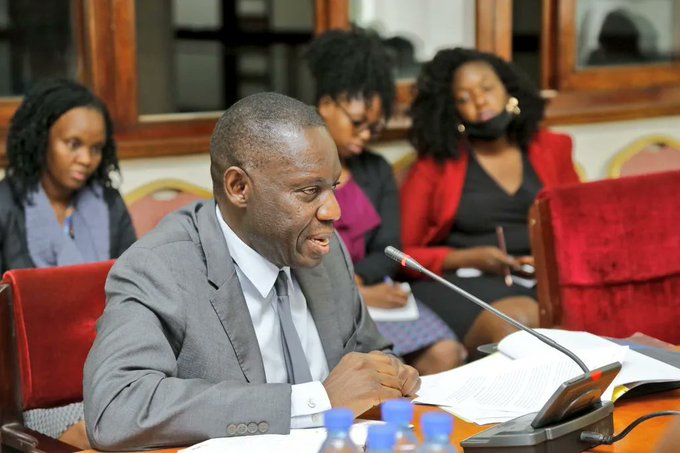
Kampala, Uganda: Bank of Uganda Governor Dr Michael Atingi-Ego has warned that the proposed Protection of Sovereignty Bill, 2026 could weaken Uganda’s economy, destabilise the shilling, and erode the country’s financial independence if passed in its current form.
Appearing before Parliament’s Joint Committee on Defence and Internal Affairs and Legal and Parliamentary Affairs on Monday, Atingi-Ego cautioned that the Bill risks triggering economic shocks by restricting financial inflows, including foreign investment, remittances, and portfolio capital.
“We are going to have a substantial depreciation of the currency because you need to make imports more expensive to equate imports to exports,” he said, warning that reduced inflows would limit Uganda’s ability to build foreign reserves and sustain its balance of payments.
“A country without reserves is not sovereign. Restricting cross-border inflows such as foreign investment, remittances, and portfolio capital will reduce the resources Uganda uses to finance imports and build reserves,” Atingi-Ego added.
He further warned that criminalising economic research or publications deemed harmful to the economy could undermine investor confidence and increase borrowing costs, noting that markets depend on access to a wide range of information for pricing decisions.

Atingi-Ego also raised concern that the Bill could create parallel oversight structures that undermine the constitutional independence of the central bank, arguing that Uganda’s economic sovereignty is anchored in financial strength rather than restrictive controls.
“True national sovereignty is built on economic strength and financial independence. While the goal of protecting national interests is legitimate, the Protection of Sovereignty Bill 2026, as currently drafted, risks reversing three decades of successful financial development through liberalisation that has sustained economic growth,” he said.
The Governor further revealed that the Bank of Uganda was not consulted during the drafting of the Bill, prompting sharp criticism from legislators over the legislative process.
Erute South MP Jonathan Odur questioned whether the central bank had been given an opportunity to advise government on the monetary implications of the proposed law, while Bugweri County MP Abdu Katuntu described the situation as a “big problem” arising from lack of consultation among government agencies.
“What we are doing today is what should have been done by the government,” Katuntu said, adding that stakeholders such as the central bank, Financial Intelligence Authority, academia, and financial institutions should have been engaged before the Bill was tabled.
He urged the Bank of Uganda to engage the Ministry of Finance to ensure better coordination and avoid future contradictions among government institutions appearing before Parliament.

In its formal submission, the Bank of Uganda warned that the Bill could destabilise Uganda’s balance of payments, cautioning that criminalising economic research that highlights fiscal risks would undermine price discovery in financial markets.
Butembo County MP David Livingstone Zijan echoed the concerns, warning that passing the law in its current form would be “the greatest gift to the enemies of this country.”
Meanwhile, Ugandans in the diaspora have urged Parliament to amend contentious provisions in the Bill, warning that classifying citizens abroad as foreigners and restricting remittances could erode trust and weaken a key source of household income and national revenue.
Timothy Kangajwe, based in the United States, stressed that diaspora remittances, estimated at about $2.5 billion annually, are critical for families and should not be politicised, while Brian Mushana Kwesiga, former President of the Uganda North America Association, warned against policies that discourage diaspora investment.
Gloria Nalule, Executive Director of Uganda Global Forum, added that a majority of diaspora respondents support amendments to the Bill, cautioning that its current framing risks creating a two-tier citizenship system.
If you would like your article/opinion to be published on Uganda’s most authoritative news platform, send your submission on: [email protected]. You can also follow DailyExpress on WhatsApp and on Twitter (X) for realtime updates.