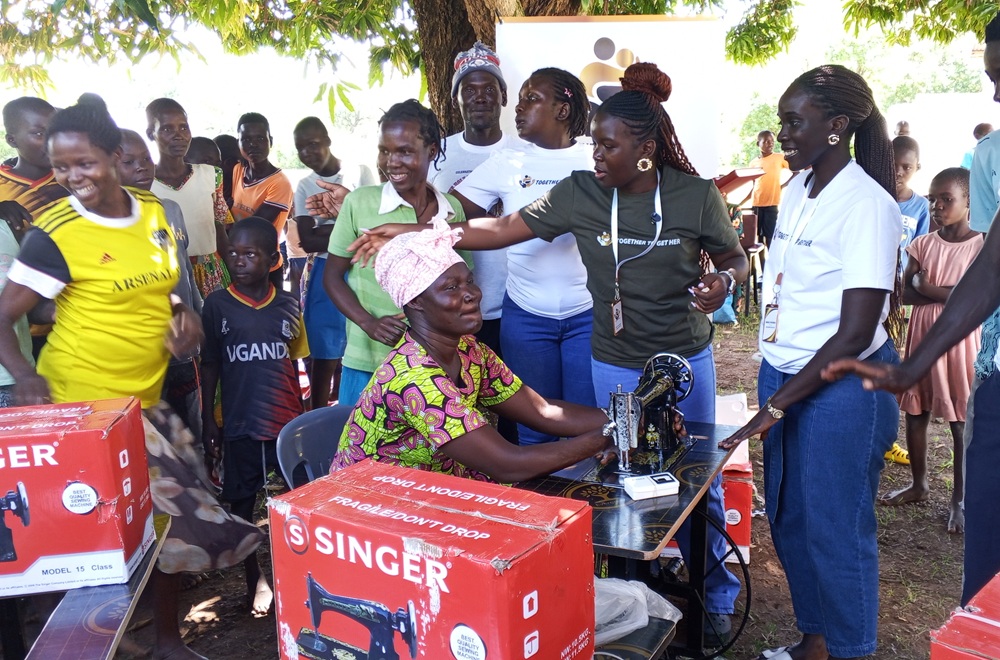
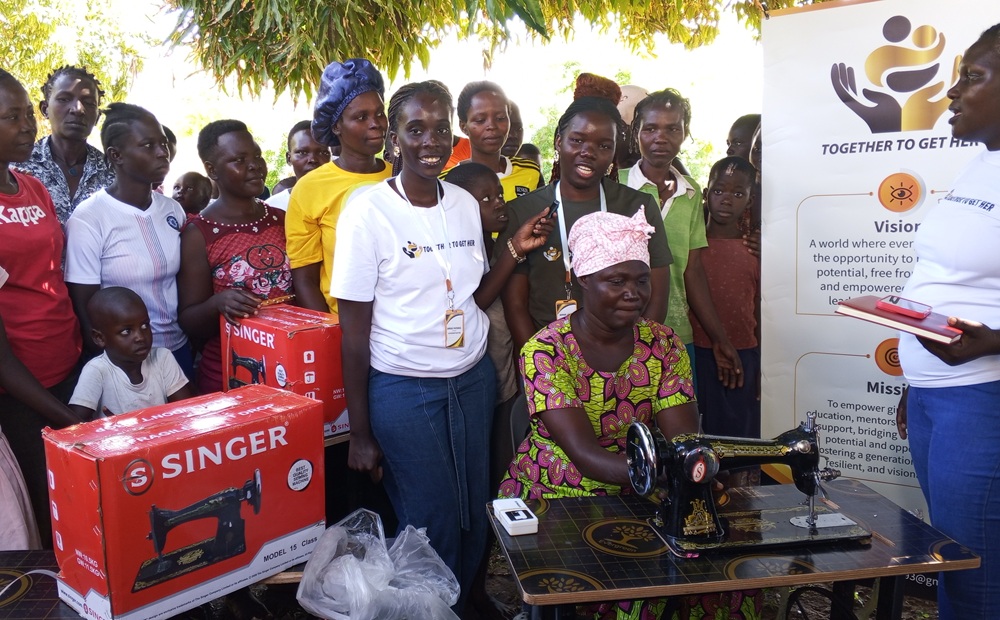
Ngora, Uganda: Excitement and celebrations filled Koloin Village in Kapir Sub-county, Ngora District, on Saturday as girls and women received sewing machines and clothing donations aimed at boosting vocational skills and menstrual health initiatives.
The donation was made by Judith Adeke, the Chief Executive Officer of a local community-based organisation, Together for Her, which focuses on empowering vulnerable girls and women through skills development and reproductive health education.
Adeke said the sewing machines would support the training of girls and women in tailoring, enabling them to generate income while also producing reusable sanitary pads.
She explained that after completing a Bachelor’s degree in Human Rights, Peace and Humanitarian Intervention from Uganda Christian University, she established Together for Her to address challenges facing girls and single mothers in her community.
According to Adeke, the organisation has already trained more than 500 girls and single mothers in Kapir Sub-county and extended its reusable sanitary pad-making programme to nearby secondary schools.
“Menstrual health was a silent but major challenge in our community. It contributes to school dropouts and exposes some girls to risky situations in search of sanitary pads, leading to teenage pregnancies and increasing the number of vulnerable single mothers,” Adeke said.
“One of our objectives is to produce affordable reusable sanitary pads and make them available at a giveaway price of Shs500 so that girls can remain in school confidently and complete their education.”
Presidential Aide Commends Initiative

The launch of the tailoring and sewing skills centre was attended by Ms Judith Apilo Ewichu, who praised Adeke for turning her vision into a project that is transforming lives in the community.
Ewichu said Adeke had demonstrated a passion for community service from a young age, a commitment that later influenced her academic and professional path.
“Adeke is my niece who started demonstrating her desire to work with communities while still in primary school. This inspired her to pursue studies in human rights and peacebuilding at university,” Ewichu said.
She noted that the initiative complements government efforts to promote skills development among young people through vocational training centres and presidential skilling hubs established across the country.
Ewichu encouraged residents to take advantage of government programmes such as the Parish Development Model (PDM), Universal Primary Education (UPE), Universal Secondary Education (USE), GROW and Emyooga to improve their livelihoods.
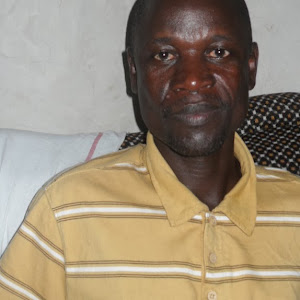
Koloin Village LC1 Chairperson David Sangadi described the project as one of the most impactful community initiatives he has witnessed during his decades of leadership.
“This is the most beneficial community skills project I have received in this village during my more than 30 years as LC1 chairperson,” Sangadi said.
Residents also welcomed the initiative, highlighting its impact on menstrual health and school attendance among girls.

Christine Acham said the reusable sanitary pad programme had already helped improve school attendance among girls in the area.
“The issue of sanitary pads may seem minor to those who can afford them, but it greatly affects school-going girls and even mothers at home,” Acham said.
“Finding Shs2,500 for a packet of pads is not easy for many families. Girls end up missing classes, and women sometimes miss community activities because they cannot access sanitary products.”
New Hope for School Leavers
The project is also creating opportunities for young people who have been unable to continue with formal education.
Annet Caroline Amongin, who completed Primary Seven at Koloin Primary School in 2025, said she failed to join secondary school because her family could not afford the required fees and school contributions.
Amongin said the new tailoring programme offers her a second chance to acquire practical skills and build a future. “My parents had hoped to take me for technical training in Soroti, but when the admission requirements of about Shs500,000 were presented, we could not afford them,” she said.
“With this project, where registration only costs Shs25,000, I will be among the first to enrol. After acquiring skills, I hope to benefit from PDM support and eventually own my own sewing machine.”
The initiative is expected to provide vocational training opportunities to dozens of girls and women in Ngora District while promoting menstrual health, self-reliance and economic empowerment.
If you would like your article/opinion to be published on Uganda’s most authoritative news platform, send your submission on: [email protected]. You can also follow DailyExpress on WhatsApp and on Twitter (X) for realtime updates.