
Kampala, Uganda: Government expects to collect a record Shs45.6 trillion in domestic revenue during the Financial Year 2026/27, a sharp increase from Shs35.7 trillion in the current financial year, as Parliament approved a raft of new tax measures targeting fuel, alcohol, motorcycles and other consumer products.
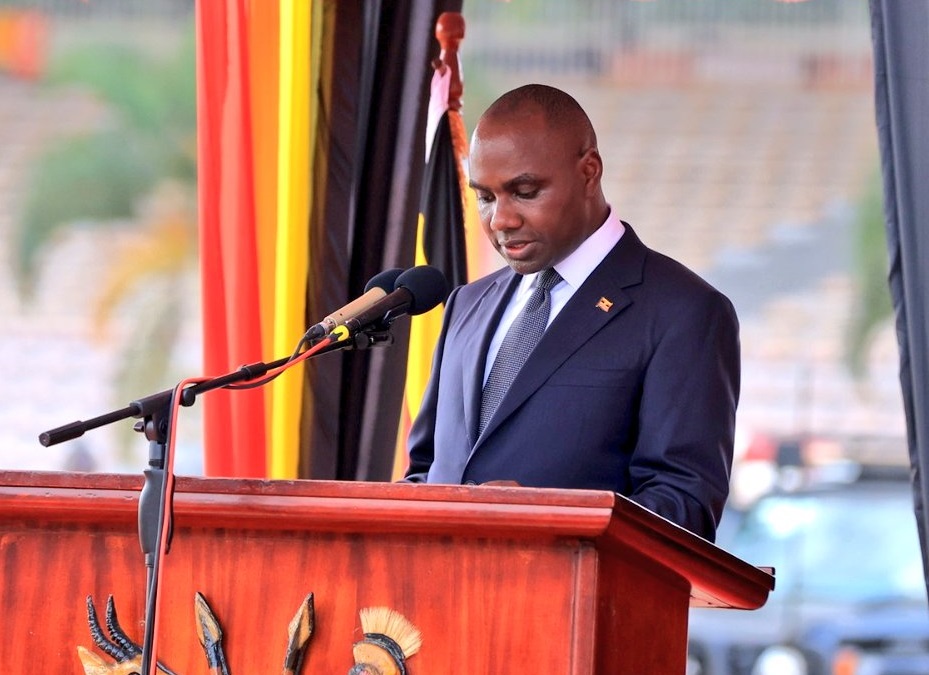
Presenting the FY2026/27 budget to Parliament, the Minister for Finance, Planning and Economic Development, Hon Henry Musasizi, said the projected revenue, equivalent to 15.9 percent of Gross Domestic Product (GDP), will finance investments in wealth creation, Agriculture, Tourism, Minerals and Science and Technology (ATMS), as well as other strategic economic enablers.
The ambitious revenue target comes as government seeks to reduce dependence on borrowing while financing its record Shs84.39 trillion national budget.
Among the most significant tax measures approved by Parliament is an increase in excise duty on petrol and diesel by Shs200 per litre, a move government expects will generate an additional Shs450 billion annually.
The fuel levy is projected to become the single largest contributor among the new revenue measures announced in the budget.
Government has also increased excise duties on selected alcoholic beverages, including Uganda Waragi, Black Label, Cognac and Amarula, from Shs1,700 to Shs3,500 per litre, a measure expected to raise Shs85 billion.

Cooking oil excise duty has been doubled from Shs200 to Shs400 per litre, generating an estimated Shs25 billion, while excise duty on sugar has increased from Shs100 to Shs200 per kilogramme, expected to yield another Shs25 billion.
Motorcycles and Vehicle Charges Rise
The first registration excise duty on motorcycles has increased from Shs200,000 to Shs500,000, projected to generate Shs26 billion.
Additionally, government has introduced a new stamp duty on motor vehicle transactions. Motorcycle, tricycle, and quadricycle registrations and transfers will attract Shs30,000, while other motor vehicles will attract Shs200,000 per transaction.
The new stamp duty is expected to generate approximately Shs30 billion.
Excise duty on cement has increased from Shs500 to Shs750 per 50-kilogramme bag, generating an estimated Shs15 billion.
In a move aimed at environmental protection, government has raised the tax on single-use plastics from 2.5 percent or USD70 per tonne to 25 percent or USD1,500 per tonne, with projected revenues of Shs10 billion.
New excise duties have also been introduced on locally manufactured paints and varnishes at 3 percent or Shs50 per litre/kilogramme, whichever is higher. Imported paints and varnishes will attract 10 percent or Shs2,000 per litre, expected to generate Shs24 billion.
Cooking fat will also attract a new excise duty of Shs500 per litre or kilogramme, generating an estimated Shs15 billion.

Alongside the new taxes, Parliament approved several tax relief measures, including a waiver of principal tax, penalties, and interest owed to the Uganda Revenue Authority (URA) by taxpayers with outstanding obligations dating back to June 30, 2016.
Government says the measure is intended to improve tax compliance while enabling businesses to regularise their tax affairs.
Public Debt Reaches Shs126 Trillion
Minister Musasizi also revealed that Uganda’s total public debt stood at USD34.86 billion (approximately Shs126.19 trillion) as of December 2025.
Of this amount, USD15.84 billion was external debt, while USD19.02 billion was domestic debt. The debt stock translates into a debt-to-GDP ratio of approximately 53 percent, according to the Finance Ministry.
Despite concerns about rising debt levels, government maintains that Uganda’s debt remains sustainable and is largely financing productive investments in infrastructure, energy, transport and economic transformation projects.
The new tax measures are expected to play a central role in financing government’s development agenda as it pursues its ambition of transforming Uganda into a US$500 billion economy over the coming decades.
The FY2026/27 budget, valued at Shs84.39 trillion, is the largest in Uganda’s history and signals government’s intention to rely increasingly on domestic resource mobilisation to finance its ambitious development agenda.
If you would like your article/opinion to be published on Uganda’s most authoritative news platform, send your submission on: [email protected]. You can also follow DailyExpress on WhatsApp and on Twitter (X) for realtime updates.