
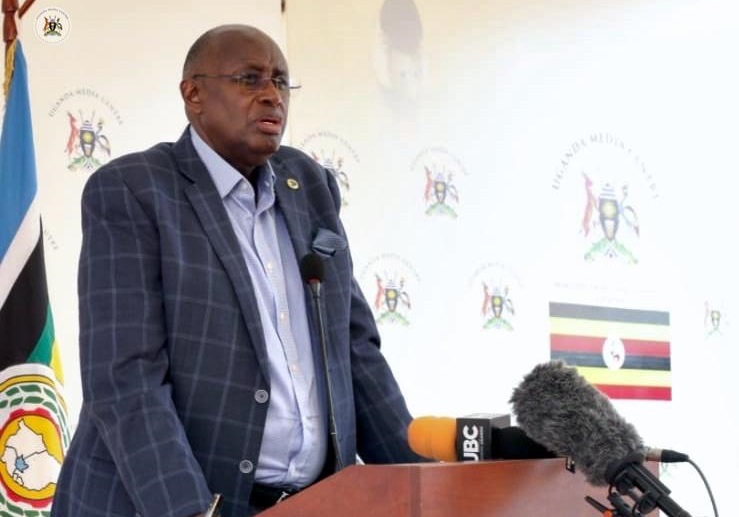
Kampala, Uganda: The government has launched Uganda’s largest-ever livestock vaccination campaign, targeting an estimated 45.5 million animals in a nationwide effort to eliminate recurring outbreaks of Foot-and-Mouth Disease (FMD) and protect the country’s growing livestock industry.
The mass vaccination exercise, scheduled to run from July to August 2026, will cover cattle, goats, sheep and pigs under a newly introduced compulsory biannual vaccination programme.
Speaking during a media briefing on Sunday morning, Minister of State for Animal Industry Bright Rwamirama said the campaign is intended to build herd immunity, reduce disease outbreaks and strengthen Uganda’s livestock trade both regionally and internationally.
“We are now finalising preparations for the first nationwide mass vaccination campaign that will begin in July and end in August this year. The campaign targets Uganda’s estimated 45.5 million susceptible animals comprising 16.5 million cattle, 17.4 million goats, 4.4 million sheep and approximately eight million pigs,” Rwamirama said.
Under the new vaccination policy, livestock farmers will be required to vaccinate susceptible animals every six months. Farmers will contribute Shs8,000 per dose for cattle and pigs and Shs4,000 per dose for goats and sheep, while government will shoulder the costs of vaccine procurement, transportation, distribution, supervision and disease surveillance.
FMD Threat to Livestock Industry
Foot-and-Mouth Disease remains one of the most serious threats facing Uganda’s livestock sector due to its highly contagious nature and devastating impact on animal productivity.
The viral disease affects cloven-hoofed animals including cattle, goats, sheep, pigs and some wildlife species. It spreads through direct contact with infected animals, contaminated equipment, animal products, vehicles and even people moving between farms.

According to Rwamirama, FMD outbreaks often result in quarantines, disrupted trade, reduced milk production, slower animal growth and restricted access to export markets.
“Foot-and-mouth disease remains one of the primary threats to progress because outbreaks often result in quarantine, trade disruption, reduced productivity and restricted access to export markets,” he said.
The minister noted that controlling the disease is critical for sustaining growth in Uganda’s dairy, beef and livestock export industries.
Uganda’s dairy exports generated approximately $385 million (about Shs1.45 trillion) in 2025, up from $285 million (about Shs1.07 trillion) the previous year. Exports of hides and skins earned an additional $12.9 million (about Shs48.4 billion).
To support the campaign, government has procured 53.6 million doses of high-potency quadrivalent vaccine designed to protect livestock against the major FMD virus strains circulating in the region.
The Ministry of Agriculture has also strengthened vaccine storage and distribution infrastructure by expanding storage facilities at Entebbe and establishing 53 solar-powered district vaccine storage centres during the 2025/26 financial year.
An additional 40 district storage facilities are expected to be constructed during FY2026/27. “These investments ensure that vaccines remain safe, effective and readily accessible to livestock farmers nationwide,” Rwamirama said.
Government says preparations are progressing steadily ahead of the July rollout. As of June 12, more than 20,000 livestock farmers had been registered under the national vaccination programme, while approximately 3.5 million animals had already been enrolled.

Registration and sensitisation activities have been conducted in key livestock-producing districts including Kiruhura, Isingiro, Ntungamo, Nakaseke, Kyankwanzi, Rakai, Mbarara, Kazo, Mubende, Kasanda, Kyegegwa, Kayunga, Kiboga, Mpigi, Gomba, Kasese and Rukungiri.
District veterinary officers are currently finalising local vaccination plans and farmer mobilisation exercises.
Government is targeting at least 80 percent vaccination coverage during every cycle, a threshold experts consider necessary to achieve effective herd immunity.
Farmers Welcome Initiative
Livestock farmers have welcomed the programme, describing it as a cost-effective intervention compared to losses caused by disease outbreaks.
Dr. Jolly Kabirizi, Director of Kyakuwa Mixed Farm and a member of the Dairy Farmers Network (DAFAN), said treatment costs for infected animals are significantly higher than vaccination costs.
“Treating affected animals is very expensive, costing over Shs100,000 compared to the Shs8,000 required under the cost-sharing scheme. We should all embrace this move because when animals get sick, farmers lose milk, meat and sometimes entire animals,” she said.
Henry Sight Lugoloobi, Director of Sight Farm in Namulonge and Chairman of the Uganda Best Farmers Coalition, urged livestock keepers to fully support the programme.
“A single cow can cost between Shs2 million and Shs5 million. Spending Shs8,000 to protect such an investment should not be difficult for any serious farmer,” he said.
He also called for strict enforcement to ensure full compliance. “As we live in a global village, we need to understand that we are also farming under a global herd. If one farm is affected, the disease can spread widely and cause quarantines and trade bans that affect everyone,” Lugoloobi noted.
If you would like your article/opinion to be published on Uganda’s most authoritative news platform, send your submission on: [email protected]. You can also follow DailyExpress on WhatsApp and on Twitter (X) for realtime updates.