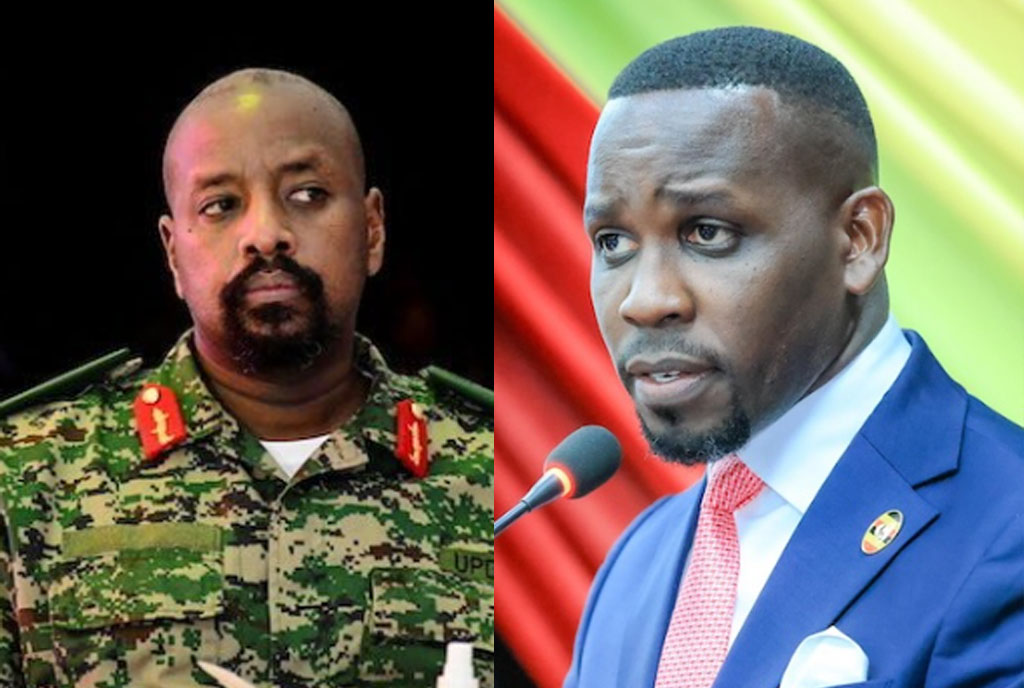
Kampala City, Uganda: Political tensions escalated Thursday after Chief of Defence Forces (CDF) Gen. Muhoozi Kainerugaba publicly declared his intention to remove Nakawa West MP Joel Ssenyonyi from his position as Leader of the Opposition (LoP) in Parliament, in what observers say signals growing pressure on Uganda’s opposition leadership.
The latest developments come amid heightened scrutiny over the treatment of opposition politicians, activists, and government critics, following a string of high-profile arrests, detentions, and abductions that have drawn concern from rights groups, legal bodies, and sections of the international community.
In a series of posts on X, formerly Twitter, Gen. Muhoozi said he had instructed the Patriotic League of Uganda (PLU), which he leads, to explore avenues for removing Ssenyonyi from the influential parliamentary position.
“I have instructed Patriotic League of Uganda to study how to remove @JoelSsenyonyi from being leader of the opposition as soon as possible,” Muhoozi wrote. “I want a new leader of the opposition in Parliament. And I will get him. He will be endorsed by me,” he added in another post.
The remarks were followed by a response from former PLU Secretary General and Kasambya County MP David Kabanda, who replied: “Ok, Sir. Mine is to implement.”
The exchange has sparked fresh debate about the independence of parliamentary opposition structures and the extent to which external political actors can influence leadership positions traditionally determined by opposition parties themselves.
Joel Ssenyonyi, the Nakawa West Member of Parliament and former journalist, became Leader of the Opposition following internal changes within the National Unity Platform (NUP).
He succeeded Mathias Mpuuga after NUP leadership removed the Masaka City MP from the position amid disagreements linked to a controversial parliamentary service award payment that triggered divisions within the party.
Ssenyonyi’s appointment was later reaffirmed by NUP, cementing his position as the chief opposition voice in Parliament and placing him at the centre of government accountability efforts.
As Leader of the Opposition, Ssenyonyi heads the shadow cabinet and coordinates opposition oversight of government policies and expenditure.
Muhoozi’s latest comments have introduced a new dimension to Uganda’s political contest, with analysts questioning how a parliamentary office controlled by opposition parties could be altered through outside political influence.
Under Uganda’s parliamentary rules, the Leader of the Opposition is nominated by the largest opposition party in Parliament and formally recognized by the Speaker.
With NUP currently holding the majority of opposition seats, any change would ordinarily have to originate from within the party’s structures.
However, Muhoozi’s declaration has intensified speculation about possible efforts to reshape Uganda’s opposition landscape ahead of the 2031 political cycle.

The comments also come amid increasing visibility of the Patriotic League of Uganda, a political pressure group associated with Muhoozi that has steadily expanded its presence across the country.
Opposition Figures Face Growing Pressure
The latest remarks coincide with ongoing controversies surrounding opposition figures who have recently faced arrests, detentions or reported abductions.
Among the most prominent cases is that of veteran opposition leader Dr. Kizza Besigye, who remains entangled in legal battles that have attracted domestic and international attention.
Former Kampala Lord Mayor Erias Lukwago was this week charged with misprision of treason and remanded to Luzira Prison until June 22 after appearing before the Makindye Chief Magistrate’s Court.
Rights Groups Raise Alarm
Human rights defenders and legal organizations have repeatedly called for adherence to due process and constitutional protections.
The Uganda Law Society, Human Rights Network for Journalists (HRNJ-Uganda), Chapter Four Uganda and other civil society organizations have consistently urged authorities to ensure that all arrests and detentions comply with the law.
Regional and international rights groups, including Amnesty International and Human Rights Watch, have also raised concerns over what they describe as shrinking civic space and increasing pressure on opposition voices in Uganda.
Western diplomatic missions and international observers have on several occasions emphasized the importance of political tolerance, rule of law and respect for fundamental freedoms as key pillars of democratic governance.
If you would like your article/opinion to be published on Uganda’s most authoritative news platform, send your submission on: [email protected]. You can also follow DailyExpress on WhatsApp and on Twitter (X) for realtime updates.