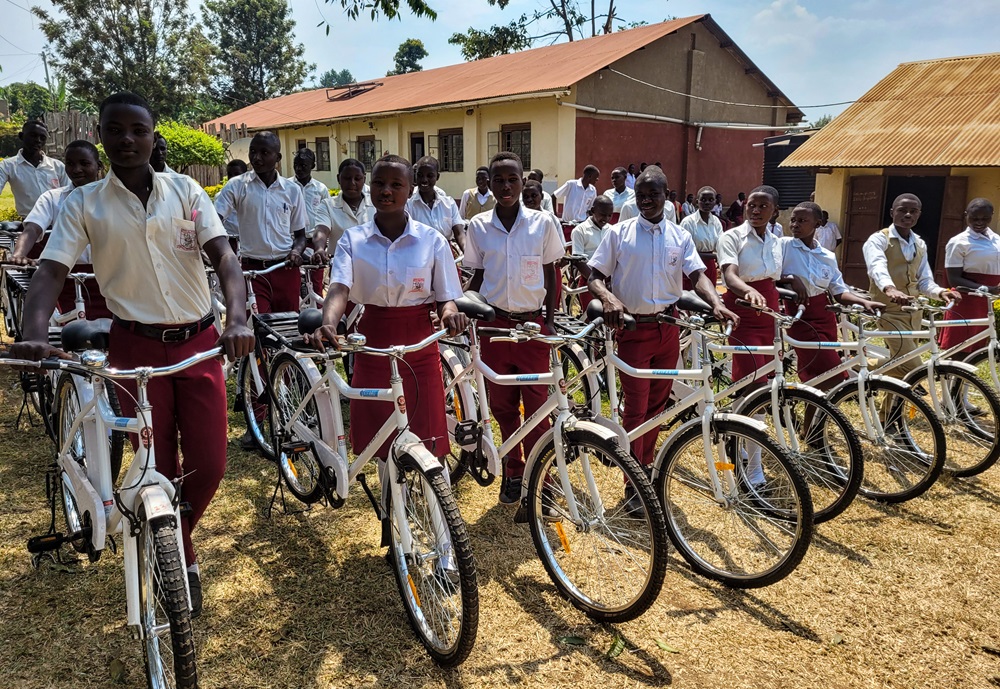
Kampala, Uganda: For thousands of learners across rural Uganda, getting to school is often the hardest part of receiving an education.
Many secondary school students wake before dawn and walk between five and 15 kilometres every day, navigating rough roads, isolated paths, harsh weather and, for many girls, the constant threat of harassment and gender-based violence. By the time they arrive in class, fatigue has already set in, while others never make it at all.
It is this challenge that the WeLearn-WeTeach Bicycle Empowerment Programme (BEP) seeks to address through an ambitious initiative that will place 728 bicycles into the hands of learners across 14 secondary schools in Kyegegwa, Adjumani and Kamuli districts during June and July 2026.
Implemented by CooP-Uganda in partnership with Enabel, the Ministry of Education and Sports, the European Union, and Belgium, the programme is designed to remove one of the biggest yet often overlooked barriers to education—transport.
Rather than simply donating bicycles, the initiative introduces an integrated mobility model combining bicycle ownership systems, maintenance training, school management committees, cycling clubs, parking infrastructure and long-term monitoring to ensure the bicycles remain functional for years.
More Than Transport
Education experts have long identified transport poverty as a major contributor to absenteeism and school dropout in rural Uganda.
For many learners, especially girls, the daily journey to school is physically demanding and often unsafe. Long walking distances reduce study time, increase fatigue and expose children to accidents, exploitation and violence.
The programme recognises that improving access to education is not only about constructing classrooms or recruiting teachers. Sometimes, the simplest intervention, reducing the distance between home and school, can dramatically improve learning outcomes.
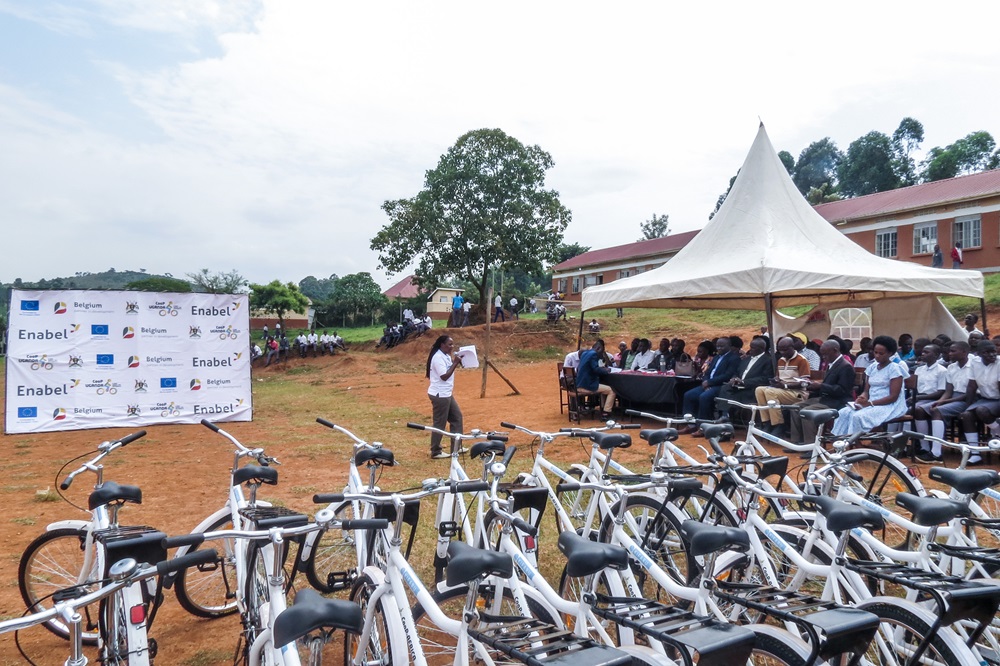
According to the programme concept, bicycles are expected to improve punctuality, increase attendance, reduce dropout rates and ultimately contribute to better academic performance, particularly among female learners.

Although Kyegegwa, Adjumani and Kamuli differ geographically and socially, they share one common obstacle: many learners travel long distances to school every day.
The programme began in Kyegegwa District, where 208 bicycles are being distributed across four secondary schools; Rwentuha Seed Secondary School, Mpara Secondary School, Kakabara Secondary School and Kibuye Secondary School.
The district, located in the Rwenzori region, has many rural communities where transport remains limited.
Programme implementers observed that long distances and safety concerns, particularly for girls, contribute significantly to irregular attendance, late arrivals and school dropout.
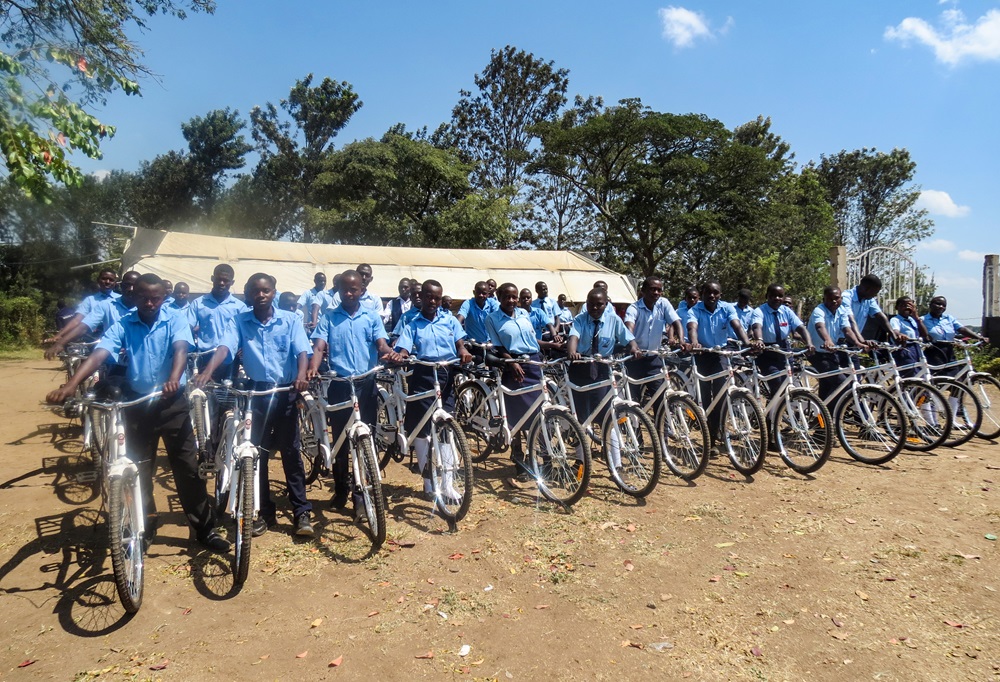
Attention then shifts north to Adjumani District, where 260 bicycles will benefit learners in Pagirinya SS, Adjumani SS, Dzaipi SS, Lewa SS and Ofua Seed SS.
Unlike many other districts, Adjumani hosts one of the world’s largest refugee settlements. Here, both refugee and host-community learners attend the same schools, often travelling long distances under difficult conditions.
Programme designers believe the bicycle initiative will not only improve access to education but also strengthen social cohesion by supporting learners from both communities equally.
The final phase will take place in Kamuli District between July 6 and July 10, where another 260 bicycles will be handed over to learners at Namasagali College, St John Bosco Secondary School, St Paul Secondary School Mbulamuti, Bulopa Secondary School and Luzinga Secondary School.
Kamuli represents more than just another distribution exercise. It marks the completion of the entire WeLearn-WeTeach fleet rollout, bringing the total number of bicycles distributed under the programme to 728 across 14 schools.
Beyond Bicycles
One of the programme’s distinguishing features is that the bicycles remain school property rather than individual possessions. Each participating school receives 50 learner bicycles and two additional spare bicycles, ensuring that transport remains available even when repairs are needed.

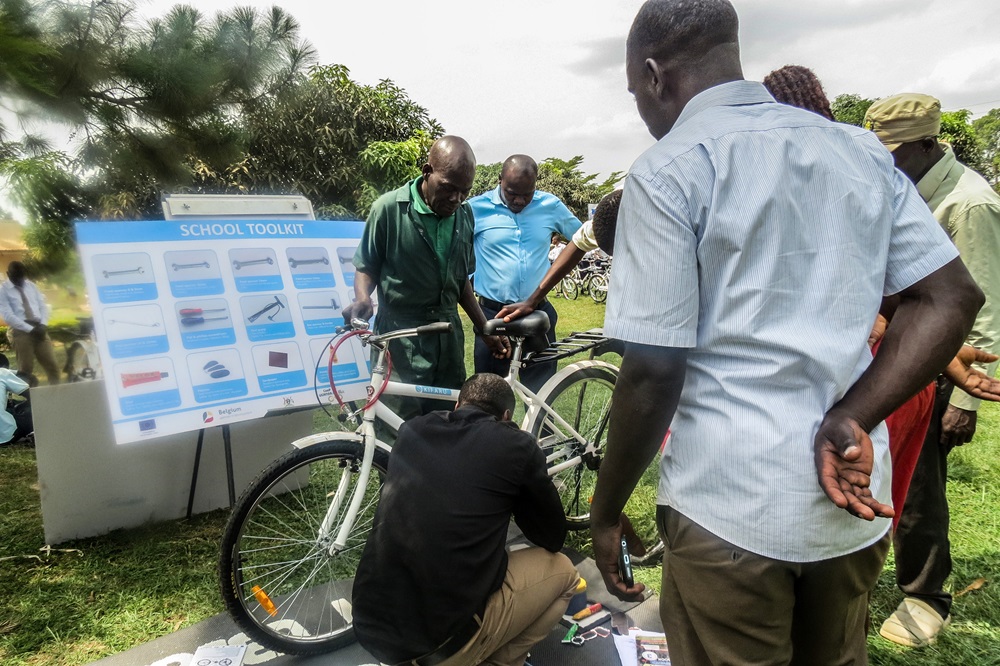
Every school also receives bicycle maintenance toolkits, covered bicycle parking facilities, bicycle management committees, training for learners and teachers, community mechanic training, learner cycling clubs, scheduled maintenance visits, and continuous monitoring of educational outcomes.
The bicycle management systems have been developed jointly with schools, communities and Enabel, with clear guidelines on learner selection, maintenance schedules and accountability mechanisms.
Importantly, the programme sets a minimum target of 40 percent female beneficiaries, recognising that girls often face the greatest mobility challenges when accessing secondary education.
The initiative is also creating practical opportunities beyond education. Selected community members are being trained as bicycle mechanics to provide long-term maintenance support. Learners themselves are acquiring practical mechanical skills while school cycling clubs promote road safety, leadership and environmental awareness.
Programme organisers believe these additional components will create sustainable local support systems rather than dependence on external assistance.
Investing in Sustainable Mobility
Unlike short-term donation projects, the Bicycle Empowerment Programme has been designed as a long-term investment in sustainable education access.
Researchers will continue monitoring attendance, punctuality, learner safety and school retention after distribution to measure the programme’s impact.
The findings could help inform future national education policies and demonstrate how sustainable mobility solutions can contribute to improved learning outcomes.
By the end of July, the programme will have reached its target of 728 bicycles, making it one of Uganda’s most comprehensive school bicycle initiatives.
Beyond improving access to education, the programme seeks to demonstrate that relatively simple transport interventions can help tackle persistent barriers keeping thousands of children, especially girls, out of school.
As Uganda continues pursuing universal access to quality secondary education, initiatives such as WeLearn-WeTeach illustrate how mobility, infrastructure and community ownership can work together to ensure learners spend less time walking and more time learning.
If you would like your article/opinion to be published on Uganda’s most authoritative news platform, send your submission on: [email protected]. You can also follow DailyExpress on WhatsApp and on Twitter (X) for realtime updates.