
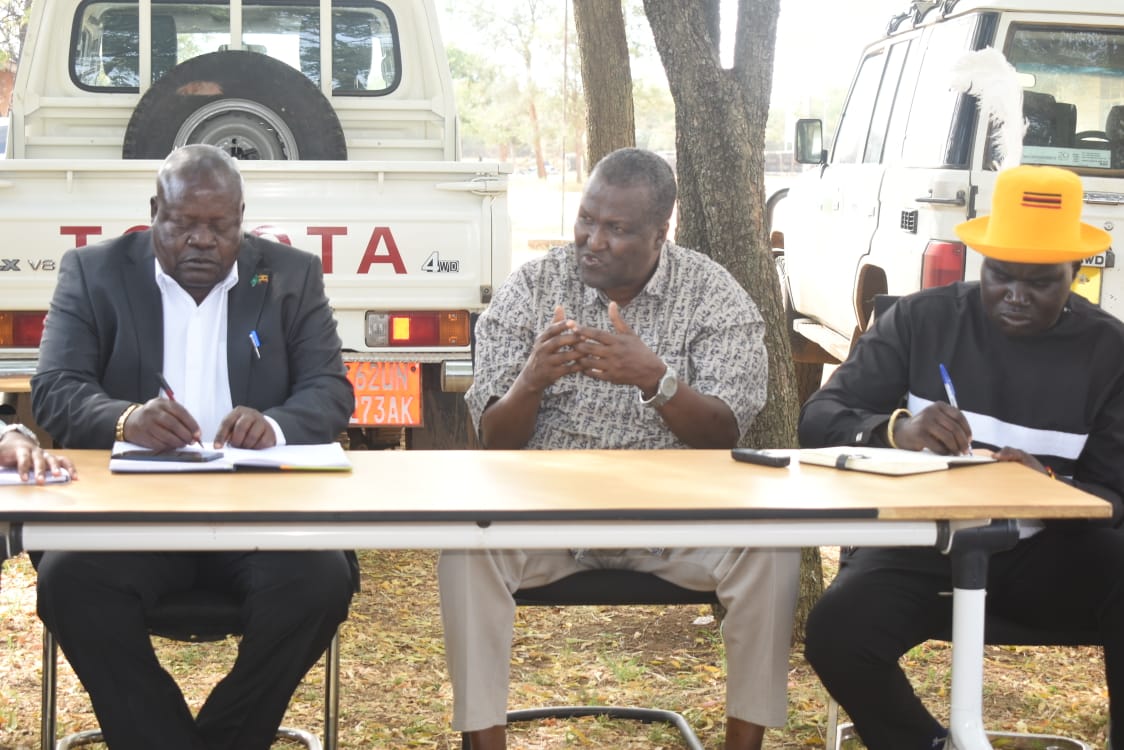
Kotido, Uganda: Thousands of drought-stricken Turkana pastoralists from northern Kenya are expected to seek refuge in Uganda’s Karamoja Sub-region as a prolonged dry spell continues to deplete water sources and grazing land, prompting renewed calls for structured cross-border resource sharing and peaceful coexistence.
The appeal was made by Kenya’s Special Peace Envoy for the Ateker Region, John Munyes, during a cross-border peace dialogue held in Kotido, where leaders from Uganda and Kenya discussed measures to manage the anticipated influx of pastoralists while preventing resource-based conflicts.
Munyes said the severe drought has devastated key water sources in Turkana County, including Kobebe Dam, leaving herders with few options but to move into Uganda’s Kotido and Kaabong districts in search of water and pasture.
“There is no water in Kenya, but you, our brothers, have water. The only hope for our people is to push into Kotido and Kaabong,” Munyes said.
The Kenyan envoy urged communities in Karamoja to receive the Turkana peacefully, saying the two communities are bound by centuries of shared history, culture and ancestry.
He described the Turkana and Jie as one people separated only by colonial boundaries. “History tells us that the Turkana community descended from the Jie. We are brothers,” Munyes said.
He also commended President Yoweri Kaguta Museveni for championing regional peace and integration, describing him as a key architect of East African unity.
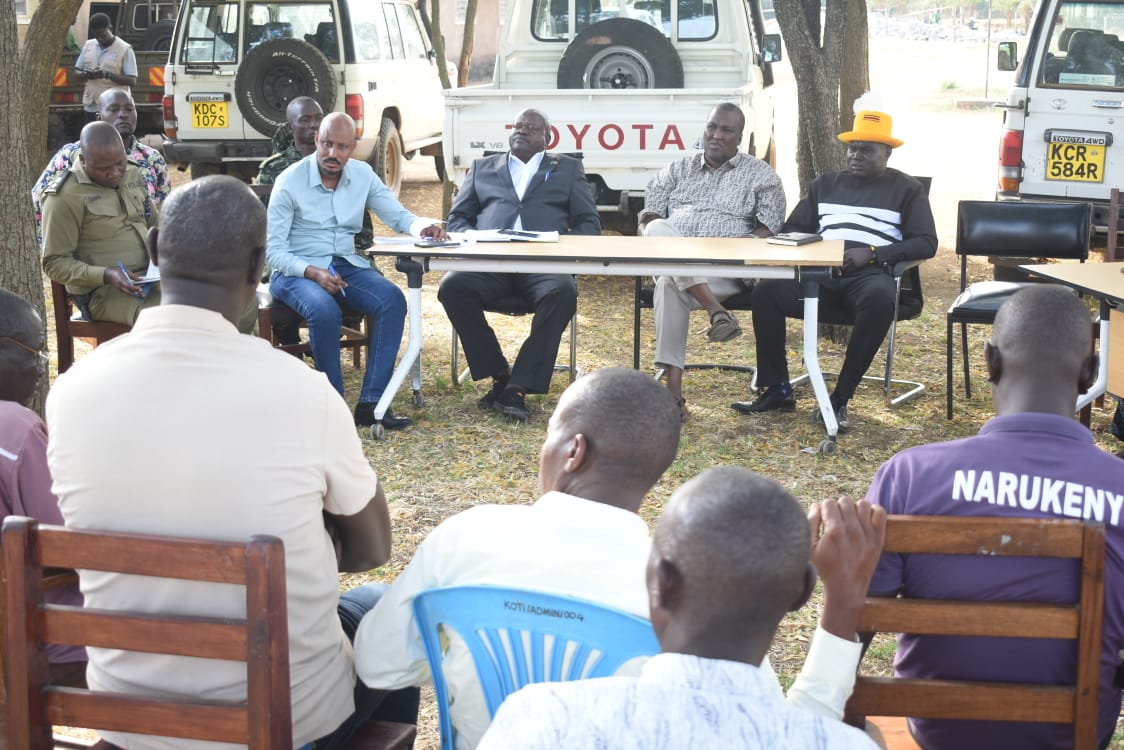
Munyes revealed that Uganda and Kenya are finalising a Memorandum of Understanding (MoU) that will establish formal guidelines governing cross-border livestock movement, including designated grazing corridors, watering points, security arrangements and resource sharing.
According to him, the agreement will introduce gazetted livestock transit routes and clear operational procedures aimed at preventing conflicts while facilitating peaceful seasonal migration.

The envoy further highlighted Kenya’s ongoing disarmament programme targeting pastoral communities, including the Turkana, Pokot and Samburu, urging residents to voluntarily surrender illegal firearms.
“As ambassadors of peace, let us remove the guns and open all borders,” he said.
Karamoja opens doors despite challenges
Kotido District LCV Chairperson Paul Lotee Komol welcomed the Turkana pastoralists, saying Karamoja would continue demonstrating solidarity despite experiencing its own water shortages. “Water is not enough, but we accept you because you are our brothers. There is no need to suffer,” Lotee said.
He disclosed that local communities had already been encouraged to move further west within Kotido to create space for Turkana herders expected to cross into Uganda.
Lotee also thanked the Government of Uganda for constructing the 1.7-kilometre Nagololo Dam, saying the project will significantly improve water availability, strengthen livestock production and stimulate livestock trade through the establishment of a nearby market.
He appealed to the Kenyan government to prioritise the rehabilitation and desilting of Kobebe Dam, arguing that restoring the facility would offer a sustainable solution to recurring drought-related migration. “Let Kenya take the initiative to desilt Kobebe Dam. Let us support one another,” he said.
He further encouraged Turkana leaders to negotiate access to Arecek Dam in neighbouring Napak District, where water remains available.
Kotido LCIII Chairperson and Chairperson of the Chiefs Peace Forum, Stephen Kiyonga, urged communities crossing the border to respect the laws and customs of their host country. “Your rules are yours and ours are ours. Kindly inform your people to respect Uganda’s laws,” Kiyonga said.
He cautioned against illegal trade in alcohol and narcotics, saying such activities have historically fuelled tensions among border communities.

Kiyonga also appealed to Kenyan authorities to ensure fair taxation of Ugandan traders conducting business in Turkana County.
Civil society backs dialogue
Executive Director of Nakere Rural Women Activists (NARWOA), Jesca Ruth Ataa, called on governments, local leaders and communities to fully implement resolutions agreed upon during the dialogue.
She said peaceful coexistence and responsible management of shared natural resources will become increasingly important as climate change intensifies pressure on pastoral livelihoods.
“Let us work hand in hand with government and implement our resolutions so that our communities continue living peacefully,” she said.
Similarly, Augustine Kai Lopie, Executive Director of the Lokichoggio Development Organization (LOKADO), urged pastoralists to strictly observe agreed grazing routes, watering points and migration procedures to minimise conflicts.
Nakapelimoru District Councillor Peter Lomilo, whose area serves as one of the main entry points for Turkana pastoralists, also called for strict adherence to agreed protocols as livestock movement increases.
Closing the meeting, Kotido Resident District Commissioner Charles Ichogor welcomed Kenya’s disarmament efforts and expressed optimism that the pending bilateral Memorandum of Understanding would strengthen management of cross-border migration.
“We are all waiting for the signing of the MoU. Routes, watering points and the dos and don’ts will be discussed. We shall guide you so that we can coexist peacefully,” Ichogor said.
He also commended NARWOA and LOKADO for their continued contribution to peacebuilding between Uganda and Kenya.
The dialogue concluded with leaders from both countries reaffirming their commitment to peaceful coexistence, shared management of water and pasture resources, and stronger regional cooperation as climate change continues to threaten pastoral livelihoods across the Ateker region.
If you would like your article/opinion to be published on Uganda’s most authoritative news platform, send your submission on: [email protected]. You can also follow DailyExpress on WhatsApp and on Twitter (X) for realtime updates.